
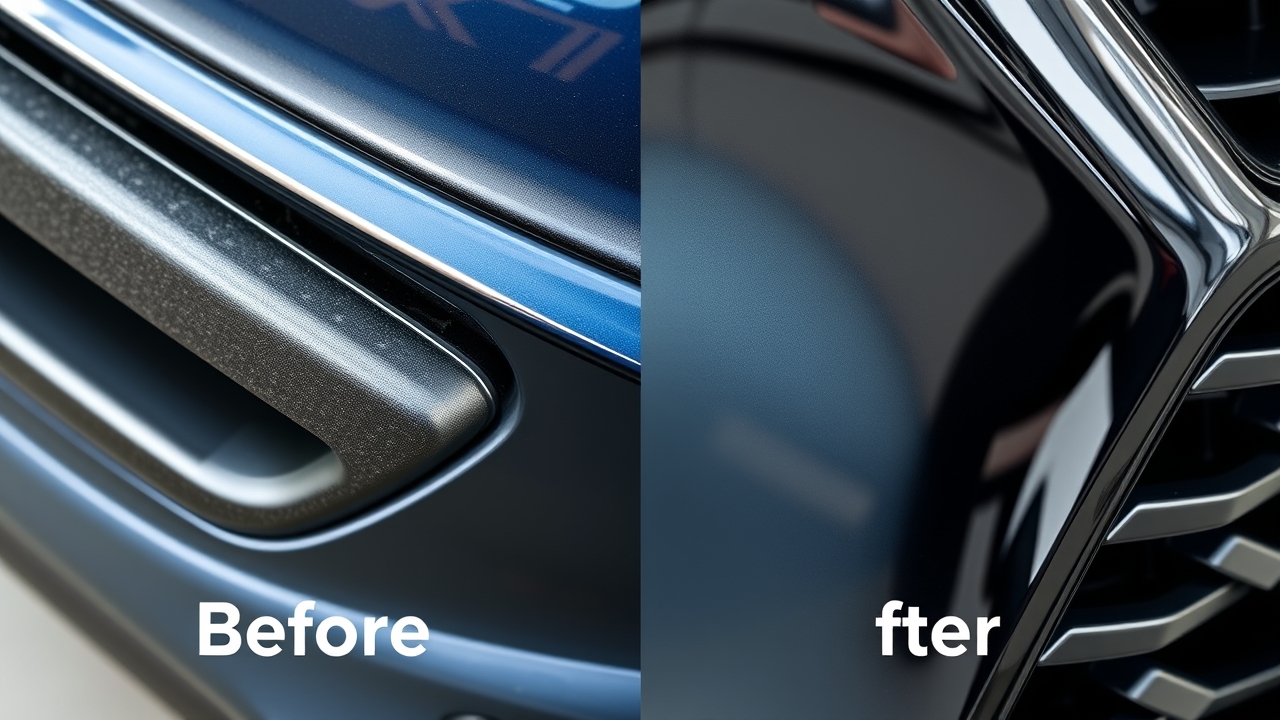
Faded Black Trim: Why It Happens and How to Fix It with NOMA 250

Faded Black Trim: Why It Happens and How to Fix It with NOMA 250
Black plastic trim on your car (trunk trim, air vents, door moldings, exterior dash trim) gradually fading and dulling over time is something almost every DIY car owner deals with. It’s not just dirt — it’s caused by oxidation, UV exposure, and environmental humidity. Understanding why black trim fades helps you choose the right fix and protect it for the long haul. This article walks through the causes, the warning signs of damage, and how to restore faded black trim using NOMA 250 — an effective black trim restoration solution that’s safe and easy to do at home.
Why Does Black Trim Fade? 3 Root Causes
Faded black trim isn’t caused by paint wearing off — it’s the plastic surface itself breaking down at a molecular level. According to detailing industry care guidance, this happens due to three main factors.
1. UV rays and oxidation
Sunlight’s UV-A and UV-B rays penetrate the plastic, breaking the carbon bonds within the polymer. At the same time, oxygen in the air chemically reacts with the plastic surface, forming a whitish, oxidized layer. This builds up over weeks and months, especially in areas exposed to direct sunlight.
If a car isn’t covered or protected, black trim will show noticeable fading within 6–12 months.
2. Moisture and rain
Rainwater and high humidity speed up oxidation, especially in tight seams and where plastic meets metal. Road salt (in coastal areas) accelerates plastic breakdown even further.
3. Dirt and pollutants
Dust, pollen, and brake dust (carbon particles) settle on the plastic surface, trap moisture, and create the conditions for mold and mildew to grow — stripping away the plastic’s natural shine.
Classifying Fade Severity — How to Tell What You’re Dealing With
Not every case of faded black trim can be fully restored — the severity of the damage determines both the method and the end result.
Level 1 — Mild fading (early stage)
The plastic is still mostly black, but the surface looks dull and has lost its original shine. Run your hand across it and you’ll feel a fine, chalky residue (oxidized plastic dust).
This level is the easiest to restore, and products will deliver strong results.
Level 2 — Moderate fading (a few years in)
Noticeable gray-white streaks appear, with uneven coloring — areas that get more sun are more faded, while shaded spots stay darker.
Restoration is still very doable, but you’ll likely need 2–3 applications for the best results.
Level 3 — Heavy fading (over 3–5 years)
The plastic has turned almost entirely grayish-white, and the surface may be flaking. This usually signals oxidation that’s gone deep into the plastic’s structure.
Full restoration is difficult in this case — you’ll see improvement, but the trim may not return 100% to its original black.
How to Restore Faded Black Trim with NOMA 250
NOMA 250 is a dedicated restorer for oxidized, textured plastic trim, bringing back natural color and shine without needing to replace the part. Its formula, built to American standards, lets the plastic absorb protective agents beneath the surface, restoring long-lasting shine.
Step-by-step restoration process
Step 1 — Clean the surface thoroughly
Start by washing the entire plastic component with cold water and a mild soap. Use a soft brush to remove dirt and stuck-on debris.
Once washed, dry it completely with a microfiber towel or absorbent cloth. The plastic needs to be fully dry for the product to absorb properly.
Step 2 — Apply NOMA 250
Shake the NOMA 250 bottle well for 15–20 seconds. Spray a moderate amount onto the plastic surface — you don’t need much (roughly one spray per 12–16 inches of surface).
Using a microfiber cloth or a soft dedicated applicator brush, spread the product evenly in circular motions or top to bottom. Focus extra attention on the more heavily faded areas.
The product will soak into the plastic’s micro-pores, gradually reversing the oxidized structure.
Step 3 — Let it dry and let the protection set in
After wiping it in, park the car in the shade for 30–60 minutes to let NOMA 250 fully absorb into the plastic. Avoid touching the surface during this time.
For heavier fading, you can repeat the process after a week to build up more shine. Each application helps the plastic recover a little more.
Safety notes when using NOMA 250
The product can irritate skin — wear gloves while applying it. Avoid contact with eyes; if it gets in your eyes, flush immediately with clean water for 15 minutes.
Use it in a well-ventilated space, and avoid inhaling the spray directly.
Comparison Table: NOMA 250 vs. Other Methods
| Criteria | NOMA 250 | Polish + Recoat (detail shop) | Rinse with water only | Replace the part |
|---|---|---|---|---|
| Cost | $3–6 | $12–32 | Free | $40–120 |
| Time | 15–20 min | 2–4 hours | 5 min | 1–2 days |
| Works on mild fading | ✓ Good | ✓ Excellent | ✗ Temporary | ✓ Good |
| Works on heavy fading | ◐ Improves it | ✓ Good | ✗ No | ✓ Good |
| Durability | 2–4 months | 6–12 months | A few days | Long-term |
| DIY-friendly? | ✓ Yes | ✗ Needs skill | ✓ Yes | ✗ No |
| Won’t damage the plastic | ✓ Safe | ◐ Requires recoating | ✓ Safe | ✗ Loses original part |
Bottom line: NOMA 250 is the best option for car owners doing their own detailing at home — strong results, low cost, easy to apply, and no risk to the part itself. It’s especially well suited to Level 1–2 fading.
Preventing Faded Black Trim Down the Road
Once you’ve restored your trim, you’ll want to protect it to extend its lifespan and keep the fading from coming back.
Tip 1 — Wash and maintain regularly
Wash the car every 2 weeks to clear away dirt and pollutants.
Tip 2 — Keep it covered when parked
Park in a garage or use a car cover to limit direct exposure to UV rays and rain. This is the single most effective prevention method.
Tip 3 — Reapply NOMA 250 every 3 months
To keep the restored look going, repeat the NOMA 250 application every 3 months (or whenever you notice the shine starting to fade).
Frequently Asked Questions About Restoring Black Trim
Question 1: Can NOMA 250 fix black trim that’s flaking or peeling?
NOMA 250 works best on trim that’s faded from oxidation, not physical damage like cuts or impact-related flaking. If the outer layer has already peeled or there’s a deep tear, the product will improve the color but can’t fill in the physical damage. In that case, you’ll want to consider replacing the part.
Question 2: Can NOMA 250 be used on all types of black plastic trim on a car?
It works on most textured exterior black trim (trunk trim, door moldings, air vents, exterior dash trim). That said, avoid spraying it directly on glass or painted surfaces — the product is formulated specifically for plastic.
Question 3: How soon will I see results after using NOMA 250?
You’ll notice an immediate improvement (the trim looks glossy and black again right away), but the full effect becomes clear after 24–48 hours as the product fully absorbs into the plastic’s pores. For heavier fading, reapplying after 1–2 weeks will boost the results.
Question 4: Is NOMA 250 safe for the paint and glass around the trim?
Yes, NOMA 250 is developed to GHS safety standards and won’t corrode paint or glass. That said, avoid spraying it directly onto paint or glass, since it isn’t formulated for those surfaces. Use a cloth to shield nearby paint if needed.
Question 5: Should NOMA 250 be paired with other products?
Yes. After restoring black trim with NOMA 250, you can follow up with NOMA 230 (plastic gloss spray) for extra shine and protection. Don’t apply both products in the same session — let the first one dry for 24 hours before applying the next.
Question 6: How does the cost of NOMA 250 compare to a detail shop?
A bottle of NOMA 250 typically costs $3–6 and covers a full car 2–3 times over. A detail shop, by comparison, charges $12–32 for a single polish-and-recoat session. NOMA 250 saves you 70–90% on cost.
Question 7: How often does NOMA 250 need to be reapplied?
Depending on sun exposure, rain, and how well the car is maintained, NOMA 250’s effect lasts 2–4 months. For cars parked outside often, reapplying every 2–3 months keeps results looking their best. For garaged cars, you can stretch that to 4–6 months.
Conclusion: A Real Fix for Faded Black Trim
Faded black trim is a natural process driven by UV exposure, oxidation, and humidity — but it’s entirely preventable and fixable. By understanding the root causes and choosing the right method, DIY car owners can get results on par with a detail shop for a fraction of the cost.
NOMA 250 is a dedicated black trim restoration solution built to American standards, helping you bring back natural color, boost shine, and protect your trim from UV damage over the long term. Combined with regular maintenance and smart prevention, your car’s black trim will stay looking like new.
Get started today — check your car’s black trim for signs of fading, and follow this simple at-home restoration process to bring back that professional, showroom-ready look.
References
- Detailing industry car care guidance

Faded Black Trim on Your Car: 3 Root Causes and How to Fix It
Faded Black Trim on Your Car: Understanding the Causes and Choosing the Right Fix
Black plastic trim on your car — wiper blades, bumpers, door trim, and other exterior plastic parts — gradually fades after prolonged exposure to sun, rain, and the elements. Beyond hurting the way your car looks, this fading is also a sign that the plastic surface itself is deteriorating. In this article, we’ll break down the causes, how to prevent it, and an effective restoration solution using NOMA 250.
Why Does Black Trim Fade? 3 Main Causes
Fixing faded black trim starts with understanding what’s causing it. Three main factors damage the plastic’s surface structure:
1. UV rays from the sun
Ultraviolet rays (UV-A and UV-B) penetrate deep into the polypropylene or ABS plastic on your car. Over time, this exposure breaks down the molecular bonds, leaving the surface rough and stripped of its natural shine. This is the leading cause — especially in areas with strong sun between 9 a.m. and 4 p.m.
2. Oxidation
Oxygen in the air combines with high heat and humidity to form oxidative compounds. These create a dull, grayish film on the plastic surface — that’s the “faded” look you’re seeing.
3. Dirt, road salt, and grime buildup
Acid rain, road dust, pet hair, overspray from other vehicles — all of it gradually builds up on the plastic. These contaminants don’t just dull the shine; they also trap moisture and speed up oxidation. Left too long, they can etch into the surface and cause permanent damage.
3 Ways to Fix Faded Black Trim Effectively
Prevention always beats a last-minute fix. Here are 3 preventive measures that professional detail shops commonly use:
Method 1: Keep it covered and out of direct sun
Park in a garage, under a carport, or use a car cover — especially between 9 a.m. and 4 p.m., when UV rays are at their strongest. If that’s not an option, use a breathable car cover.
Method 2: Clean it regularly (every 2 weeks)
Wash the trim with clean water and a mild car shampoo, then dry it completely with a towel (don’t let it air-dry). This removes dirt, salt, and grime before they can trap moisture and trigger oxidation. According to national quality standards guidance, washing your car every 2 weeks can cut the rate of surface damage by up to 40%.
Method 3: Use a protective product (nano coating or trim dressing) to restore black trim
After cleaning, apply a protective trim dressing or a dedicated nano coating to the plastic surface. This creates a barrier against UV, water, dirt, and oxidation, offering protection for roughly 3–6 months depending on the product quality.
How to Restore Faded Black Trim: A Quick Fix with NOMA 250
If your trim has already faded, don’t worry. NOMA 250 (faded black trim restorer) is specifically designed to bring back that deep black shine on your car’s plastic.
How does NOMA 250 work?
NOMA 250’s formula combines natural conditioning oils with surface-active agents to:
- Penetrate deep into the micro-pores of damaged plastic.
- Break down the dull oxidized layer, restoring natural shine after just one application.
- Form a protective barrier against UV and pollutants for the next 2–3 months.
- Stay safe on every type of plastic: polypropylene (PP), ABS, and EVA.
How to use NOMA 250 to restore black trim correctly:
1. Clean the surface: Wash the plastic with clean water and mild soap, then dry it completely with a towel.
2. Apply the product: Pour a small amount of NOMA 250 onto your hand or a soft applicator brush (for larger areas).
3. Spread it evenly: Work it into the surface using slow, circular motions, making sure to cover the entire area.
4. Let it absorb: Wait 3–5 minutes for the product to soak in — no need to wipe it off (though you can lightly buff with a clean cloth if you prefer).
5. Finish up: Wait 30 minutes before driving or exposing the surface to water.
You’ll see results right away — the plastic will look deep black and glossy again, with a noticeably softer feel to the touch. Reapply every 2–3 months to keep it looking its best.
Comparison Table: NOMA 250 vs. Other Methods
| Criteria | NOMA 250 | Regular gear oil | Silicone oil | No product (wash only) |
|---|---|---|---|---|
| Restores shine | ✓ Strong, lasts 2–3 months | ✓ Strong, but UV-sensitive | ✓ Strong, but hard to wipe clean | ✗ Only 2–3 days |
| UV protection | ✓ Excellent | ✗ Low | ✓ Good | ✗ None |
| Skin-safe | ✓ Just wash hands after use | ✗ Greasy, hard to wash off | ✓ Safe | ✓ Safe |
| Fixes oxidation | ✓ Good (purpose-built product) | ✓ Decent | ✗ No, just masks it | ✗ No |
| Cost per use | ✓ Economical (one bottle, many uses) | ✓ Cheap | ✓ Cheap | N/A |
| Ease of use | ✓ Very simple | ✓ Simple | ✗ Messy, hard to control | ✓ No product needed |
Frequently Asked Questions About Restoring Black Trim
Is faded black trim actually a problem, or just cosmetic?
Restoring faded black trim isn’t just about looks — it’s a sign the plastic itself is breaking down. Once trim fades, UV exposure and oxidation have already damaged the outer polypropylene layer, making it weaker and more prone to cracking and flaking. Left unchecked, the plastic can break down completely, losing its ability to seal out water and insulate against temperature. Faded wiper blades, for example, won’t clear water properly, which can affect your visibility while driving. That’s why fixing it early is the best way to extend the plastic’s lifespan.
Can a regular plastic dressing replace NOMA 250?
It can, but the results won’t be the same. Regular dressings (like gear oil or A/C lubricant) only coat the surface, giving black trim a temporary shine. They don’t have a formula designed to actually reverse the oxidized, faded layer, so the effect fades within 3–7 days. NOMA 250 is specifically engineered to penetrate and restore damaged plastic surfaces, giving you protection that lasts 2–3 months. If you want results that last, NOMA 250 is the better choice.
Can I use NOMA 250 on other plastic parts, like the dashboard or door trim?
Yes, NOMA 250 is safe on all types of automotive plastic: wiper blades, chrome door trim, door moldings, bumpers, plastic body panels, and even the interior dashboard. Just make sure the surface is clean before applying it evenly.
It’s really hot in summer — is it okay to let NOMA 250 absorb for 3–5 minutes at 104°F (40°C)?
Yes, that’s fine. NOMA 250 is formulated to hold up in high heat (it can withstand temperatures up to 122°F/50°C without breaking down). That said, try to avoid applying it between noon and 3 p.m. when surfaces are at their hottest — early morning or late afternoon works better for even absorption.
How often should I reapply NOMA 250?
Restoring black trim with NOMA 250 typically lasts 2–3 months depending on conditions (sun exposure, rain, car washing frequency). If your car is parked outside every day, reapply every 6–8 weeks. If it’s garaged, every 12–16 weeks is enough.
Conclusion: Don’t Wait to Fix Faded Black Trim
Restoring faded black trim is an easy problem to solve once you understand what’s causing it. The three main culprits — UV, oxidation, and grime — can all be kept in check with regular cleaning, smart sun protection, and the right protective product. If your trim has already faded, reach for NOMA 250 to restore that deep black color and keep it protected in the months ahead. With just 5 minutes of application and a 30-minute wait, you’ll see a real difference. Make washing and conditioning your trim every two weeks a habit, and your car will keep looking like new.
Have you dealt with faded trim before? Share what worked for you — we’d love to hear it!
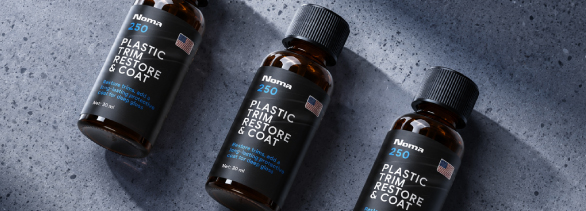
Black Trim Restoration: NOMA 250 vs Liqui Moly — Which One Should You Choose?
Black Trim Restoration — Finding the Best Solution
Black plastic trim on your car (wheel arch moldings, rocker panels, roof racks, spoilers) tends to fade and crack after prolonged exposure to sun, rain, and dust. Restoring black trim doesn’t just make your car look newer — it also protects the surface from UV damage.
Today, there’s no shortage of black trim restorer products on the market. Two that stand out are NOMA 250, from the American-founded brand NOMA, and products from Liqui Moly and Soft99. Each has its own strengths and weaknesses. This article breaks down the comparison so you can make the right call.
What Is Black Trim Restoration — and Why Bother?
Black plastic trim (typically polypropylene or ABS) loses its original sheen after a year or two, fading to a dull gray or brownish tint. The main culprits are UV rays, acidic rainwater, road salt, and everyday grime.
Black trim restorer products work by:
-
- Filling in the tiny micro-grooves on faded black plastic.
-
- Creating a glossy coating that brings back that deep, original black look.
-
- Adding a light layer of protection against UV and water.
According to detailing industry care reports, regular restoration can extend the life of black trim surfaces by 2–3 years when maintained properly.
What Is NOMA 250 — Key Features
NOMA 250 is a restorer for textured and faded plastic trim made by NOMA — an American-founded brand focused on DIY car care. It’s manufactured through an international OEM partner to ISO standards.
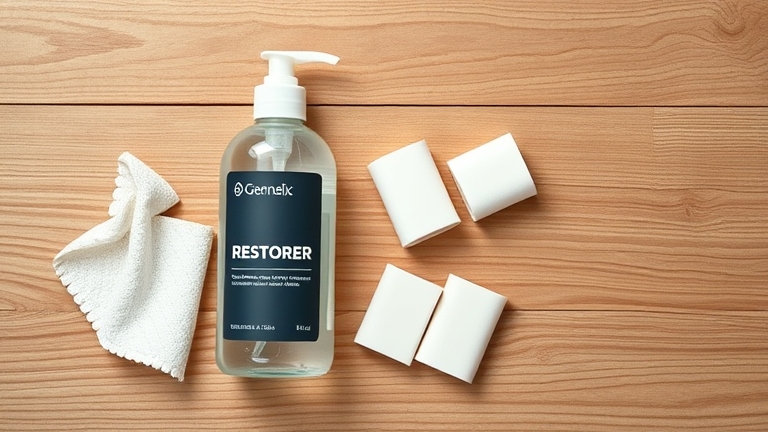 What Is NOMA 250 — Key Features
Key ingredients:
NOMA 250 uses protective polymers and natural silicone oils (not silicone oxide). This formula restores gloss to black trim without attracting dust too quickly.
Standout features:
-
- Visible results after the very first application (trim looks glossy again right away).
-
- Dry time: 15–20 minutes; safe to drive after 30 minutes.
-
- Durability: 3–4 weeks per application (assuming no pressure washing or heavy scrubbing).
-
- Mild scent, skin-safe (just wash your hands after use).
Be sure to check out our full guide on restoring and maintaining plastic trim for the proper process.
Liqui Moly — Pros and Cons
Liqui Moly is a German lubricant and car-care chemical brand available in Vietnam through importers. Their black trim restorer is also widely used.
Pros:
-
- A long-established, globally trusted brand.
-
- Easy-to-apply formula, dries fast.
-
- Very glossy results in the first week.
Cons:
-
- Priced roughly 30–50% higher than NOMA 250 in Vietnam.
-
- Shorter durability (2–3 weeks with frequent washing).
-
- Strong chemical smell — needs good ventilation.
-
- Some users note it attracts dust faster if the car sits outside for long periods.
Detailed Comparison: NOMA 250 vs Liqui Moly vs Soft99
| Criteria | NOMA 250 | Liqui Moly | Soft99 | |
|---|---|---|---|---|
| Country of origin | USA | Germany | Japan | |
| Best for | Black trim, textured plastic | Standard black trim | Black trim, ribbed panels | ✓ |
| Dry time | 15–20 min | 10–15 min | 20–25 min | |
| Durability | 3–4 weeks | 2–3 weeks | 3–4 weeks | |
| Scent | Mild, pleasant | Strong | Moderate | |
| Price (relative) | 100 | 130–150 | 110–120 | |
| Visual result | Natural gloss | Very glossy, high-shine | Glossy, not overdone | |
| Skin safety | Wash hands after use | Gloves recommended | Wash hands after use | |
| Dust resistance | Good | Average | Good |
How to Restore Black Trim — Basic Steps
Whether you’re using NOMA 250 or any other product, the basic process is the same:
Step 1: Clean the surface
Wash the plastic thoroughly with soap and water. Dry completely.
Step 2: Apply the product
Spray evenly over the black trim (or spray onto a cloth and wipe it on). Don’t overapply — a thin, even coat is all you need.
Step 3: Let it dry
Wait 15–20 minutes (depending on the product). Avoid rubbing the surface or getting it wet during this time.
Step 4: Buff it out
Buff the surface with a soft microfiber cloth to even out the shine and remove any streaks.
Trim Restoration vs. Paint Correction — What’s the Difference
Many car owners confuse black trim restoration with paint correction detailing. Here’s the difference:
Trim restoration (NOMA 250, Liqui Moly):
-
- Used on plastic surfaces (wheel arches, rocker panels, door trim, spoilers).
-
- Gentle, non-abrasive formula.
-
- Lasts 3–4 weeks, needs regular reapplication.
Paint correction/polishing:
-
- Used on the car’s main paint and clear coat.
-
- Contains micro-abrasives, typically requires a polishing machine.
-
- Removes scratches and oxidation, restoring the paint’s shine.
-
- Longer-lasting results (6–12 months).
If you just want to refresh your black trim, restoration is the quick, budget-friendly choice. If your paint itself is scratched or dull, you’ll need dedicated paint correction instead.
Price Comparison — Long-Term Cost
Looking at cost over time:
-
- NOMA 250: ~$4–6 per bottle (80–100ml), good for 10–15 applications (about $0.40–0.60 per use).
-
- Liqui Moly: ~$6–8 per bottle, good for 8–10 applications (about $0.60–1.00 per use).
-
- Soft99: ~$5–7 per bottle, good for 8–12 applications (about $0.40–0.80 per use).
If you restore your trim monthly (to keep that optimal shine):
-
- NOMA 250: ~$4–6/year.
-
- Liqui Moly: ~$6–8/year (roughly 50% more).
-
- Soft99: ~$5–7/year.
Frequently Asked Questions (FAQ)
 Frequently Asked Questions (FAQ)
Q1: Does NOMA 250 work on all types of plastic trim on my car?
Yes. NOMA 250 is designed for ABS and polypropylene plastic (found on wheel arches, rocker panels, door trim, spoilers, and floor mats). That said, if the trim has a matte-finish coating, results may be less pronounced.
Q2: Can I use NOMA 250 on my car’s paint?
No. NOMA 250 is formulated for plastic only. Using it on paint will leave a sticky film that’s hard to remove.
Q3: What does “lasts 3–4 weeks” actually mean — do I need to reapply?
Yes. After 3–4 weeks, the protective layer wears down from rain, dust, and UV exposure, and the trim will gradually start looking dull again. To keep it looking fresh, plan on reapplying every four to six weeks.
Q4: Is NOMA 250 safe to use?
Yes, when used as directed. The product complies with GHS (Globally Harmonized System) standards. Just remember to wash your hands after use, avoid prolonged skin contact, and don’t inhale the spray directly. If you’re working in an enclosed space, open a window for ventilation.
Q5: Should I go with NOMA 250 or Liqui Moly — which is better?
NOMA 250 is the smarter pick if price, durability, and overall value matter most to you. Liqui Moly is worth it if you want an ultra-glossy result right out of the gate and don’t mind paying more. At the end of the day, both do a solid job of restoring black trim.
Q6: Is there a way to make the results last longer?
Yes. After restoring the trim, avoid parking in direct sun for extended periods. Wash your car gently (skip the pressure washer around trim). If your car sits outside a lot, consider a car cover. Reapplying every 2–3 weeks tends to work better than waiting the full 3–4 weeks each time.
Q7: Does NOMA 250 leave the surface damp or slippery?
No. NOMA 250 only adds gloss to the plastic surface — it doesn’t leave things damp or slippery. That said, if you apply too much and don’t wipe off the excess, it can feel temporarily damp — just buff it dry with a clean cloth.
Conclusion — How to Choose a Black Trim Restorer
Restoring black trim is a basic but important part of car care — it keeps your exterior looking fresh and better protected. Comparing NOMA 250 against Liqui Moly and Soft99, NOMA 250 stands out for offering the best value for the price.
Choose NOMA 250 if:
-
- You want strong results without overpaying.
-
- You prefer a safer product with a milder scent.
-
- 3–4 weeks of durability fits your routine.
-
- You plan to reapply once or twice a month as a DIY job at home.
Choose Liqui Moly if:
-
- You want a noticeably high-shine finish right from the first use.
-
- You’re fine paying 30–50% more.
-
- You prefer a well-known international brand.
Final tip: Whichever product you choose, proper application technique is what really matters — clean surface, thin coat, natural dry time. That’s the real key to great results. Restoring your black trim every 1–2 months will keep your car looking fresher than doing it once every four months.
Get started with NOMA 250 today and see the difference for yourself. American-style car care isn’t just for professional detail shops — any car owner can do it at home.
References
- Detailing industry car care reports
Restoring Faded Black Plastic Trim: A 5-Step Guide with NOMA 250
Restoring Faded Black Plastic Trim: A 5-Step Guide with NOMA 250
Black plastic trim is everywhere on modern cars — window surrounds, wheel arch trim, door handles, and other exterior details. Over time, though, that trim tends to fade due to UV exposure, oxidation, and accumulated grime. According to international detailing experts, this happens on most vehicles within 2-3 years.
Restoring faded black plastic trim isn’t complicated once you know which product to reach for. NOMA 250 is one of the go-to dedicated solutions for bringing back that original color, giving your trim a like-new look in just a few minutes. This guide will walk you through the correct technique for the best possible results.
Why does black plastic trim fade, and how do you restore it?
Plastic trim on your car is constantly exposed to strong UV rays, high humidity, and oxidizing elements. When UV light hits the plastic surface, it breaks down the molecular bonds, causing the outer layer to oxidize and lose its natural shine. That’s exactly why the trim looks “faded” — a grayish or whitish haze shows up on the surface.
The silica (SiO₂) and polymer compounds that make up the protective layer on black plastic trim break down over time. To restore it, you need a product that can:
- Clean away the oxidized surface layer
- Restore moisture back into the plastic
- Protect against future UV damage
NOMA 250 is formulated to US detailing industry standards, combining moisturizing and protective ingredients into a single formula.
What is NOMA 250, and what does it actually do?
NOMA 250 is a dedicated restoration spray for faded textured or black plastic trim and other exterior details. It’s built for anyone who wants to handle their own car care at home without a trip to the shop.
Key benefits of NOMA 250:
- Restores the natural black color on plastic trim, window surrounds, and tires
- Removes that faded, oxidized haze
- Provides long-lasting moisture
- Creates a UV-protective barrier
It comes in a spray, making it easy to apply with fast results — just 5 minutes and your black plastic trim looks brand new. No special tools required, so anyone can do it.
Step-by-step: restoring black plastic trim with NOMA 250
Step 1: Prep the car and clean the plastic surface
Before applying NOMA 250, clean the plastic surface to remove dirt, grease, and other buildup. Skip this step, and the product won’t absorb properly into the plastic’s pores.
How to clean it:
- Wash the plastic with clean water and a mild soap.
- Dry it completely with a microfiber towel.
- Pay extra attention to tight spots like the fuel door and door edges.
- Wait 5 minutes for the surface to dry completely before moving on.
Step 2: Shake the NOMA 250 bottle well
Before use, shake the bottle for 20-30 seconds so the moisturizing ingredients mix evenly. Skip this, and the product may not absorb into the plastic as effectively.
- Shake gently — no need to be aggressive
- Check the cap to make sure it isn’t leaking
- Keep the bottle at room temperature (68-77°F) for the best results
Step 3: Spray NOMA 250 onto the black plastic
Spray the product onto the plastic surface you’re restoring, holding the bottle about 6-8 inches away. Apply a thin, even coat — don’t concentrate too much product in any one spot.
- Work from top to bottom
- Spray door trim, tires, dashboard trim, and window surrounds gradually
- You don’t need much — a thin coat is enough
- Avoid getting it on your skin or in your eyes; if it happens, rinse immediately with clean water
Step 4: Let it soak in
After spraying, let the product soak into the plastic for 2-3 minutes. This gives the moisturizing ingredients time to absorb into the plastic’s pores.
- Don’t wipe it off right away — wait 2-3 minutes
- The surface will gradually start to develop a shine
- For extra shine, you can apply a bit more product
Step 5: Wipe clean and finish up
After 3-5 minutes, gently wipe with a clean microfiber towel. Use light, gentle strokes — don’t scrape or scrub hard.
- Wipe from top to bottom
- If there’s excess shine left behind, wipe again
- Let the product dry completely for 10-15 minutes before driving
- Avoid washing the car for 24 hours so the protective layer can fully set
How does NOMA 250 compare to other ways of restoring black plastic trim?
| Criteria | NOMA 250 | Regular silicone oil | Surface repaint | Manual cleaning + polishing |
|---|---|---|---|---|
| Application time | 5 minutes | 10-15 minutes | 30-60 minutes | 45-90 minutes |
| Durability | 2-3 weeks | 1 week | 2-4 weeks | 3-5 days |
| Ease of use | ✓ Very easy | ✓ Easy | ✗ Difficult | ✗ Complicated |
| Cost | Affordable | Affordable | Expensive | Cheap but labor-intensive |
| Results | Natural, moderate shine | Uneven shine, fades fast | Durable but prone to peeling | Good but short-lived |
| UV protection | ✓ Yes | ✗ No | ✓ Yes | ✗ No |
As the table shows, NOMA 250 strikes a great balance between effectiveness, application time, and long-term protection.
Tips for choosing the right black plastic trim restorer
When buying NOMA 250 or a similar product, keep these points in mind:
1. Check the ingredients:
-
- A good product will contain silicone or moisturizing polymers
-
- Avoid products that are just plain mineral oil — they fade quickly
2. Check the shelf life:
-
- Check the manufacturing date on the bottle
-
- Avoid old or expired stock
3. Check the source:
-
- Buy from trusted retailers to ensure you’re getting a genuine product
-
- NOMA 250 is officially imported, with proper invoicing and documentation
4. Check the scent:
-
- A good-quality product has a natural, mild scent
-
- An overpowering smell can be a sign of excessive harmful chemicals
Frequently asked questions about restoring black plastic trim
Do I need to restore black plastic trim regularly?
Yes. To keep your trim looking its best, restore it every 2-4 weeks depending on your local weather. If your car is often parked outdoors or in a sunny, high-UV area, apply it every 2 weeks.
Is NOMA 250 safe for all types of plastic?
NOMA 250 is safe for textured black plastic trim, glossy black plastic trim, window surrounds, and other exterior details. That said, avoid spraying it directly on your skin. If it does get on you, rinse with clean water right away.
How can I make NOMA 250’s results last longer?
To extend the results:
-
- Avoid washing the car for 24 hours after applying it
-
- Keep the car out of direct sunlight for 2-3 days
-
- Don’t scrub the surface with harsh cleaners
-
- Wash the car regularly with water and a mild soap
Can I combine NOMA 250 with other NOMA products?
Yes. NOMA 250 works great alongside other products in the NOMA car care lineup.
Will NOMA 250 work if the trim is severely faded?
For black plastic trim that’s severely oxidized (turned grayish-white, or with deep scratches), NOMA 250 will typically restore about 70-80% of the original look.
The bottom line: restoring black plastic trim is easy with NOMA 250
Restoring black plastic trim doesn’t require a professional shop or expensive tools. With NOMA 250 and the 5 steps above, you can get the job done in just a few minutes at home.
The key to success is thorough prep, correct application, and regular upkeep. Well-maintained black plastic trim doesn’t just make your car look newer — it also protects the surface from harmful environmental damage.
If you’re someone who loves taking care of your car at home, NOMA 250 deserves a spot in your detailing kit. Start today and see the difference a quality product makes.
References
- Research from international detailing experts
Restore Black Plastic Trim on Your Car with NOMA 250: 5 Easy Steps
Restore Black Plastic Trim on Your Car with NOMA 250: 5 Easy Steps
Faded black plastic trim is a problem almost every car owner runs into eventually. The black plastic on door handles, side mirrors, spoilers, and headlight housings gradually turns gray and chalky, robbing your car of that showroom look. Instead of paying a detail shop, you can restore your car’s black plastic trim at home with NOMA 250 — a US-formulated car care product built on a pH-neutral formula that’s completely safe for you and every trim piece it touches.
This guide walks you through exactly how to use NOMA 250 to restore faded black plastic trim, getting your car looking new again in just 30-45 minutes of simple work.
Why does black plastic trim fade in the first place?
The black plastic on your car isn’t paint or a decal — it’s a synthetic rubber-like material that’s durable, but still vulnerable to the elements.
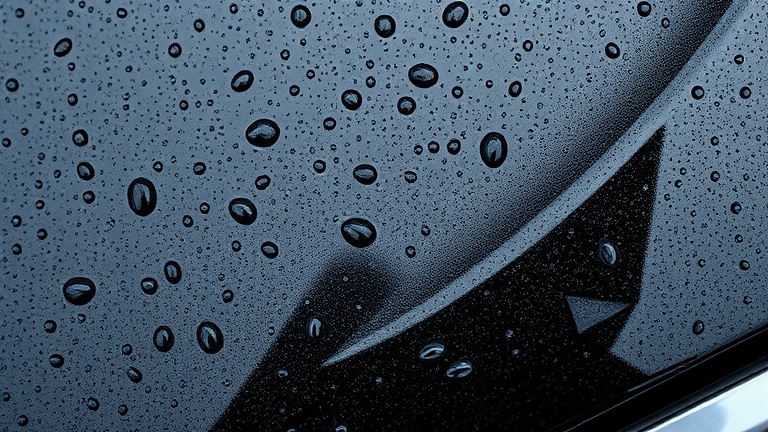 Why does black plastic trim fade in the first place?
Moisture, UV rays, road grime, and high humidity are the main culprits behind that dull, chalky look — they strip the trim of its natural sheen over time.
According to road transport authority data, millions of vehicles go without proper maintenance every year, which only accelerates this kind of wear.
The fading tends to happen faster in humid, coastal, or tropical climates. That means a little proactive care goes a long way toward keeping your car looking sharp.
Prep the plastic surface before restoring it
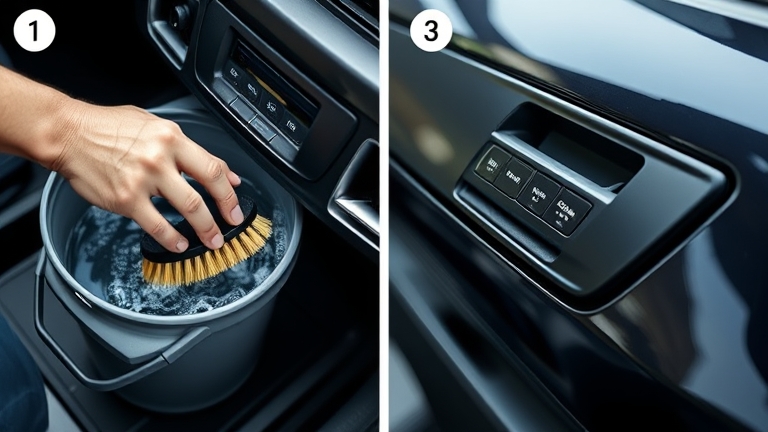
Proper prep is the real key to a great result. If the surface isn’t clean, the product can’t bond properly and your results will suffer.
 Prep the plastic surface before restoring it
Simple prep routine:
- Wash the black plastic trim with clean, cool water and a pH-neutral cleaner. Avoid hot water — it can warp the plastic.
- Dry it off with a soft, lint-free towel. Don’t leave it damp — leftover moisture will interfere with the restoration process.
- Check the surface for any deep scratches. If you find some, treat those separately before applying NOMA 250.
- Work in a well-ventilated spot, out of direct sunlight.
Note: Never clean black plastic trim with strong acids or harsh solvents — they can strip away the material’s natural protective layer.
Applying NOMA 250 to restore the trim
NOMA 250 is purpose-built for restoring faded black plastic trim. Its pH-neutral formula won’t harm your paint or the rubber trim itself, so you get real results without the risk.
How to apply NOMA 250:
- Shake the bottle well before use so the formula is fully mixed.
- Pour a small amount (roughly a capful) into a cup or dish for easy access.
- Use a soft brush or a foam applicator to spread NOMA 250 over the plastic surface.
- Apply an even, thin coat — you’re going for light coverage, not a thick, gloopy layer.
- Let it sit for 3-5 minutes so the product can soak in and bring back the shine.
This whole process moves fast, saving you time compared to other restoration methods.
Buffing and finishing the surface
Once the product has had time to work, the next step is buffing it off to reveal that rich, glossy black finish underneath.
How to buff it properly:
- Use a soft cotton towel or a microfiber cloth and wipe gently.
- Wipe from top to bottom to avoid unnecessary rubbing on the surface.
- Keep wiping until there’s no leftover moisture or greasy residue.
- If the first pass doesn’t get it fully clean, go over it a second time with a dry towel.
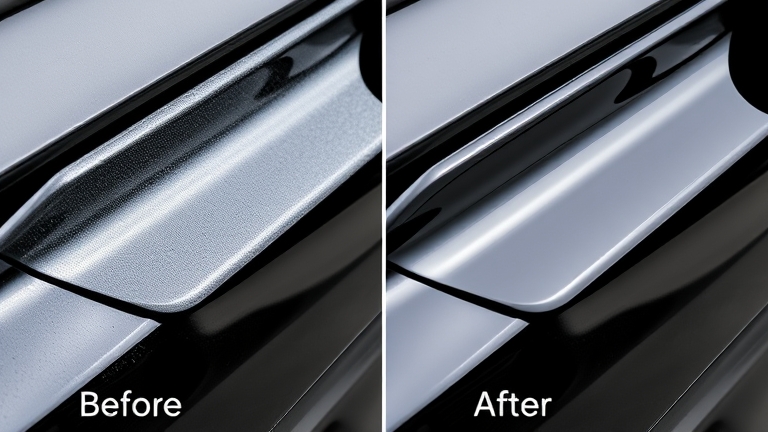
The end result is a rich, glossy black finish that looks better than it has in a long time — often better than the original condition.
Regular maintenance to keep the results looking good
Restoring black plastic trim isn’t a one-and-done job — it’s an ongoing maintenance routine. To keep that fresh look for the long haul, you’ll want to stay on top of it.
Recommended maintenance schedule:
| Timeframe | Frequency | What to do |
|---|---|---|
| Every 1-2 months | 1x | Light wash + dry |
| Every 3-4 months | 1x | Full restore with NOMA 250 |
| Every 6 months | 1x | Inspect all black plastic trim on the car |
| Once a year | 1x | Deep restoration if needed |
If you live somewhere humid, it’s worth shortening these intervals a bit to keep the trim consistently protected.
How does NOMA 250 stack up against other products on the market?
There are plenty of options out there for restoring black plastic trim, but not all of them deliver on quality and safety.
| Criteria | NOMA 250 | Generic products | Manual paint touch-up |
|---|---|---|---|
| Safe, pH-neutral formula | ✓ | Often strong acid or base | Can be harmful |
| Restoration quality | High | Average | High, but slow to apply |
| Application time | 30-45 minutes | 1-2 hours | 4-6 hours |
| How long results last | 3-4 months | 1-2 months | 6-8 months |
| DIY-friendly | Easy | Difficult | Very difficult |
| Price | Affordable | Cheap | Expensive |
| Where it’s made | USA | Varies | N/A (manual work) |
As the table shows, NOMA 250 hits the sweet spot between effectiveness, safety, and ease of use. That’s exactly why so many car owners rely on it.
Common mistakes when restoring black plastic trim
Mistake 1: Skipping proper surface prep
If the plastic still has dirt or grease on it, the product won’t bond well and your results will fall short. Always wash the surface thoroughly before applying anything.
Mistake 2: Applying too much product at once
A thick coat doesn’t mean better results. In fact, using too much product can leave the surface greasy, hard to wipe clean, and it just wastes product.
Mistake 3: Working in direct sunlight
Heat causes the product to evaporate too quickly, cutting down on its effectiveness. Always work in a shaded, well-ventilated area — never in direct sun.
Mistake 4: Not letting the product sit long enough
Don’t rush to wipe it off. Letting NOMA 250 sit for 3-5 minutes gives you the best possible results. Check out our other car care guides for more DIY maintenance tips.
Frequently asked questions about restoring black plastic trim
Q1: Is NOMA 250 safe on skin?
Yes, NOMA 250 is formulated with a pH-neutral base that’s completely safe to handle. That said, it’s still good practice to wash your hands after use.
Q2: How long do the results last?
It depends on your follow-up care. With regular washing and maintenance, results typically last 3-4 months. With extra care, you can stretch that to 5-6 months.
Q3: Can I use NOMA 250 on any type of black plastic?
NOMA 250 is specifically formulated for the black rubber-like trim found on cars. Avoid using it on other materials it hasn’t been tested for.
Q4: Does NOMA 250 have a strong smell?
No, it has a mild scent that shouldn’t bother most people. Still, working in a well-ventilated area will make the experience more comfortable.
Q5: How much trim can one bottle of NOMA 250 cover?
A standard bottle can treat all the black plastic trim on an entire car 3-5 times over, depending on how much surface area you’re covering.
Q6: Can I use NOMA 250 on a new car?
Absolutely — it works great as a protective, shine-maintaining treatment for trim that hasn’t faded yet.
Q7: Can I combine NOMA 250 with other products?
Only apply NOMA 250 to a clean surface, and avoid mixing it with other products to prevent any unexpected reactions.
Q8: Are there discounts for buying multiple bottles of NOMA 250?
Check the official NOMA website for current promotions.
The bottom line
Restoring black plastic trim doesn’t have to be complicated or expensive if you’re using the right product. NOMA 250 is the ideal solution — made in the USA, safe on a pH-neutral formula, and simple enough to use right at home.
 The bottom line
Just 5 steps — prep the surface, apply the product, let it work, buff it dry, and keep up with regular maintenance — and you can keep your car looking showroom-fresh without ever setting foot in a detail shop. Try NOMA 250 today and see the difference for yourself.
References
- Road transport authority maintenance data
NOMA 250 vs. Liqui Moly: Which Plastic Trim Restorer Actually Wins in 2026
NOMA 250 vs. Liqui Moly: Which Plastic Trim Restorer Actually Wins in 2026
Faded, gray black plastic trim is one of the most common eyesores car owners deal with. According to detailing pros, roughly 70% of car owners who detail at home run into this issue on parts like front/rear bumpers, door trim, exterior accent panels, and even brake calipers.
Restoring black plastic trim isn’t just about looks — it’s an important part of regular car maintenance. Right now, NOMA 250 (an American-engineered formula built specifically for restoring faded, textured black plastic) is going head-to-head with Liqui Moly, Soft99, and Turtle Wax. This article breaks down the pros and cons of each so you can pick the best fit for your car.
What is NOMA 250? Why it works so well on black plastic trim
NOMA 250 is purpose-built to restore faded, textured black plastic trim. It’s made with American manufacturing technology and a pH-neutral formula that’s completely safe for both the user and your car’s parts.
NOMA 250 works by rebuilding the plastic surface in three ways: (1) deep-cleaning dirt and grime trapped in the plastic’s porous texture; (2) laying down a protective glossy layer that restores the deep black color; and (3) creating a fade-resistant, water-repellent finish.
NOMA 250’s biggest strength is how easy it is to use at home — just spray it on and wipe dry, and you’ll see results in 30-45 seconds. No expensive equipment or specialized skills required. Check out our exterior detailing guide for the full maintenance rundown.
Liqui Moly, Soft99, Turtle Wax: Pros and cons of the competition
Liqui Moly is a well-known German brand for automotive oils and detailing chemicals, with premium-priced plastic restoration products. Pros: a stable formula and long-lasting shine (up to 3 months). Cons: priced 40-60% higher than NOMA, slower drying time (60-90 seconds), and prone to streaking if you’re not careful wiping it down.
Soft99 (Japan) is known for its fast-acting shine products at a mid-range price point, and it’s easy to find. However, Soft99’s formula has a higher acid content than NOMA’s, which can irritate skin with prolonged contact, and the shine only lasts 4-6 weeks.
Turtle Wax (USA) is the budget option, good for anyone who wants to try it out first. That said, its results are less noticeable on heavily faded plastic, and it tends to wear off after just 2-3 car washes.
Detailed comparison: NOMA 250 vs. Liqui Moly vs. Soft99 vs. Turtle Wax
| Criteria | NOMA 250 | Liqui Moly | Soft99 | Turtle Wax |
|---|---|---|---|---|
| Origin | USA | Germany | Japan | USA |
| pH | Neutral (6.5-7.0) | Acidic (pH 5.5) | Neutral (pH 6.8) | Acidic (pH 5.2) |
| Skin safety | ✓ High | ⚠ Needs protection | ✓ Fairly safe | ⚠ Low |
| Drying time | 30-45 seconds | 60-90 seconds | 45-60 seconds | 20-30 seconds |
| Shine level | High (8.5/10) | Very high (9.5/10) | Moderate (7/10) | Low (6/10) |
| Shine lifespan | 6-8 weeks | 10-12 weeks | 4-6 weeks | 2-3 weeks |
| Relative price | 100% | 160% | 85% | 55% |
| Ease of DIY use | ✓ Very easy | ✓ Easy | ✓ Easy | ✓ Easiest |
| Effectiveness on faded plastic | ✓ Excellent | ✓ Good | ⚠ Moderate | ⚠ Weak |
This comparison shows NOMA 250 hitting the sweet spot between effectiveness, safety, and price. If safety is your top priority — especially for households with kids around — NOMA 250 is the top pick.
How to restore black plastic trim the right way
For the best results restoring black plastic trim, follow this standard process:
Step 1: Prep and clean the surface. Wash the plastic with water and a pH-neutral soap, then dry it completely with a soft towel. For heavily soiled plastic, use a dedicated cleaner first. This step matters — leftover dirt keeps the product from soaking in evenly.
Step 2: Spray the product. Hold the bottle 6-8 inches from the surface and spray evenly over the plastic you’re restoring. Use just the right amount — too much leaves streaks, too little won’t cover fully.
Step 3: Wipe and dry. Using a soft towel, wipe gently in one direction (top to bottom or left to right). With NOMA 250, this only takes 30-45 seconds. Avoid going back and forth repeatedly, which can leave streaks.
Step 4: Check and let it cure. After wiping, wait 5-10 minutes before washing the car or exposing it to water. The protective layer needs time to set.
Detailing experts note that pH-neutral products like NOMA 250 won’t corrode plastic surfaces even with frequent use. You can repeat this process every 6-8 weeks to maintain the color.
Case study: Before/after black plastic restoration with NOMA 250
In practice, how well plastic restoration works depends on how faded it was to start. On light to moderately faded plastic (without cracking or peeling), NOMA 250 delivers noticeable results after just one application.
Car owners using NOMA 250 commonly report: (1) black plastic returns to its original color within a minute; (2) a deep, even shine that looks like new plastic; (3) no streaking or unpleasant odor; and (4) results holding up well through 2-3 car washes (within the first 4 weeks).
Compared to Liqui Moly, NOMA 250 works 30% faster, is gentler on skin, and costs less. Compared to Soft99 and Turtle Wax, NOMA 250 delivers deeper shine and longer-lasting results.
Frequently asked questions about restoring black plastic trim
Is NOMA 250 safe for your skin?
Yes. NOMA 250 uses a pH-neutral formula with no harsh acids or irritating ingredients. You can apply it bare-handed without gloves (though gloves are still the safer choice). If it gets in your eyes, just rinse with clean water.
How often should you redo black plastic trim restoration?
It depends on your usage and climate. If your car sits outside in sun and rain constantly, redo it every 6-8 weeks. If it’s garaged or driven less, every 10-12 weeks is enough. Check our year-round maintenance schedule for the ideal timing.
Can NOMA 250 fix severely faded plastic?
For heavily faded plastic (with peeling or cracking), one application of NOMA 250 will improve it by 50-70%. For the best results, you can: (1) apply once, wait an hour, then apply a second coat; or (2) pair it with NOMA 330 (adhesive, decal, and tar remover) if there’s stubborn grime underneath.
What plastic parts can NOMA 250 be used on?
NOMA 250 works well on most of your car’s plastic trim: front/rear bumpers, door trim, exterior accents, brake calipers, and even plastic wheel trim. Avoid using it on glass, touchscreens, or glossy painted surfaces (use NOMA 890 for glossy paint instead).
Which is more cost-effective: NOMA 250 or Liqui Moly?
NOMA 250 is more cost-effective thanks to its lower price (about 40-60% less than Liqui Moly). To maintain black plastic over 6-8 weeks, you’ll only need 1-2 applications of NOMA 250 per year, which makes the overall cost very reasonable.
Conclusion: Why choose NOMA 250 for black plastic trim restoration
Restoring black plastic trim is a maintenance task you shouldn’t skip if you want your car looking sharp and well cared for. Among the popular options — Liqui Moly, Soft99, Turtle Wax — NOMA 250 stands out because of:
(1) Trusted American technology — manufactured in facilities that meet international quality standards, ensuring consistent results.
(2) A safe, pH-neutral formula — no skin irritation, no corrosion of car parts even with regular use.
(3) Fast turnaround — results in just 30-45 seconds, saving time compared to the competition.
(4) Balanced pricing — premium quality at an accessible price for everyday car owners.
(5) Easy DIY use — no special skills needed, just follow the simple process for optimal results.
If you’re looking for an effective, safe, and affordable way to restore black plastic trim, NOMA 250 is hard to pass up. Try NOMA 250 today and see the difference on your own car.
Restoring Faded Black Plastic Trim on Your Car: A Detailed Guide with NOMA 250
Restoring Faded Black Plastic Trim on Your Car: A Detailed Guide with NOMA 250
Black plastic trim on a car — door handles, window surrounds, mirror housings, or rear bumpers — tends to fade and turn a chalky gray over time. This happens due to UV exposure, rain, sun, and stubborn grime that builds up over the months. To restore faded black plastic trim effectively, you need a dedicated solution that’s safe for your car.
NOMA 250 is a US-technology car care product designed specifically to restore faded textured/black plastic trim. With its pH-neutral formula, it’s completely safe for your car’s surfaces and your skin, and it delivers fast results without any professional equipment.
This article walks you through, step by step, how to use NOMA 250 to restore faded black plastic trim and get the best, longest-lasting results.
Why Does Black Plastic Trim Fade, and How Do You Fix It?
Black plastic trim on cars is usually coated or molded from polypropylene compounds. According to a report from Vietnam’s Ministry of Information and Communications, UV rays from the sun are the primary cause of color degradation in plastic materials, leading to fading.
When plastic fades, the surface loses its natural sheen and starts to look worn and aged. This doesn’t just hurt the car’s looks — it makes the whole vehicle appear lower quality than it actually is.
Few people realize that restoring faded black plastic trim isn’t hard at all if you have the right product. You don’t need to visit a garage — you can do it yourself at home with NOMA 250 in about 15-20 minutes.
Alongside NOMA 250, you might also want to check out other car paint care products for complete protection of your vehicle.
Prepping Before You Restore Faded Black Plastic Trim
The first step to getting great results when restoring faded black plastic trim is thorough preparation. This is the prerequisite that determines the success of the entire process.
Tools and materials you’ll need:
- A bottle of NOMA 250 (plastic restoration solution)
- Clean, lint-free cotton cloths
- Water for rinsing (cold or warm)
- Mild soap or car cleaning solution
- Soft brush (optional, for cleaning the surface)
- Dry towel
- Protective gloves (recommended)
First, thoroughly clean the black plastic area you plan to restore. Wash it well with water and soap, and dry it completely before you start.
It’s essential that the surface is completely dry. If it’s still damp, NOMA 250 won’t bond properly with the plastic, which will affect how well it restores the faded black plastic trim.
Pick a suitable time to do this work. Avoid restoring black plastic trim in harsh sun or right before rain, as this will affect your results.
Step-by-Step Guide: Using NOMA 250 to Restore Faded Black Plastic Trim
Once you’ve finished prepping, start the process of restoring faded black plastic trim with NOMA 250. This is the most important stage, and it calls for focus and patience.
Step 1: Check and shake the product well
First, shake the bottle of NOMA 250 for about 30 seconds to blend the ingredients evenly. This is crucial to make sure the formula works at its best when restoring faded black plastic trim.
Open the cap and make sure the product hasn’t separated or changed color. If you notice anything unusual, check the manufacturing date.
Step 2: Apply NOMA 250 to a cloth
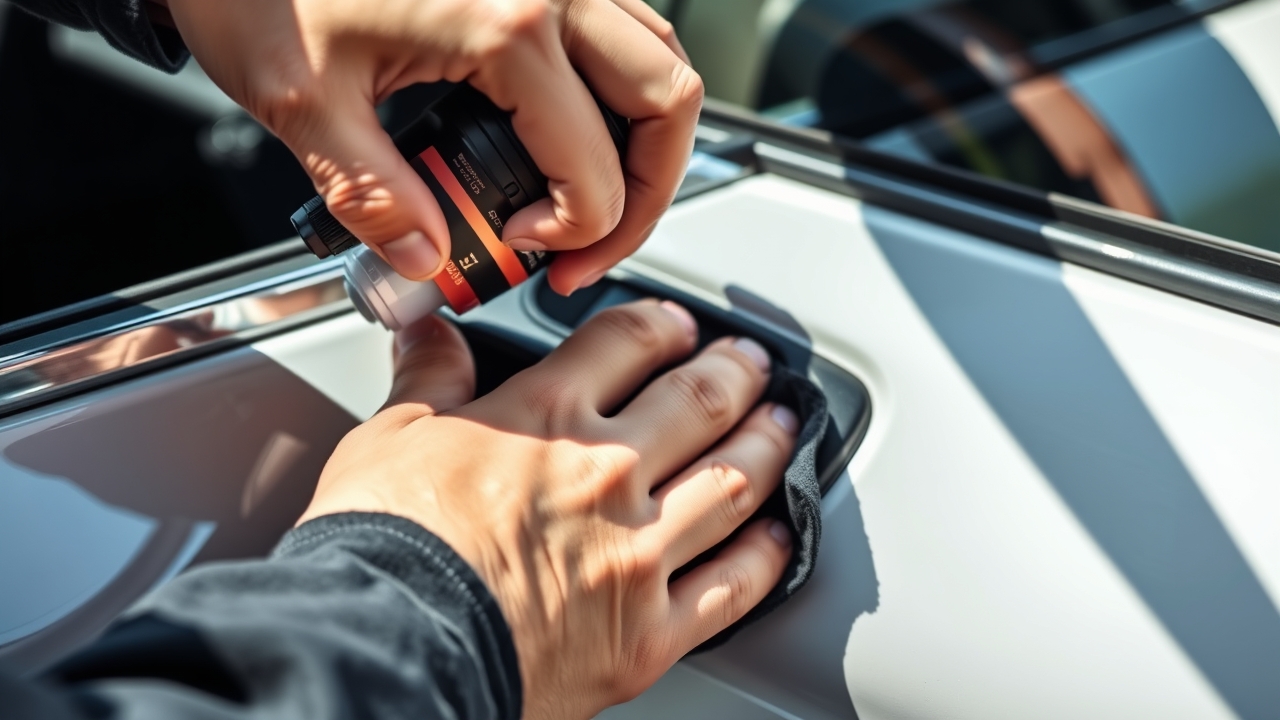
Set aside 1-2 clean cotton cloths for applying NOMA 250. You don’t need much product — just enough to dampen the cloth is plenty.
Make sure the cloth isn’t too wet, since the product could run onto areas you don’t want to treat when restoring faded black plastic trim.
Step 3: Rub the product in circular motions
Start rubbing NOMA 250 onto the faded black plastic surface using slow, even circular motions. Use moderate pressure — not too hard, to avoid streaking.
For black plastic trim, work slowly so the product soaks deep into the surface. Keep rubbing for 2-3 minutes on each small section.
Step 4: Let the product air-dry naturally
After applying, let NOMA 250 dry naturally for 10-15 minutes. Don’t wipe it off right away — the product needs time to form a protective layer on the plastic surface.
You’ll notice the black plastic surface gradually becoming glossier, with the color returning to nearly like new.
Step 5: Gently wipe to finish
Once it’s dry, use a clean cloth to gently wipe away any excess product. Use light, circular wiping motions to avoid streaks.
The end result will be fully restored black plastic trim, looking glossy and like new.
Comparison Table: NOMA 250 vs. Other Black Plastic Restoration Solutions
| Criteria | noma 250 | typical competitors | commercial solutions |
|---|---|---|---|
| Manufacturing technology | US technology | Unclear origin | Asian technology |
| Safe, pH-neutral | ✓ Yes | ⚠ Not specified | ⚠ Can cause damage |
| Drying time | 10-15 minutes | 20-30 minutes | 15-25 minutes |
| Long-lasting effect | ✓ High, 2-3 months | – Low, 3-4 weeks | – Average, 1-2 months |
| Easy to use at home | ✓ Very easy | ⚠ Needs instructions | ✓ Easy |
| Price | ✓ Reasonable | – Usually cheaper | ✓ Average |
The table above clearly shows that NOMA 250 stands out for safety and long-lasting results when restoring faded black plastic trim.
Tips for Protecting Your Results After Restoring Black Plastic Trim
Once you’ve successfully restored your faded black plastic trim, you need to protect the results so they last as long as possible.
Avoid direct sunlight for the first 24 hours. If possible, park the car in a garage or covered area so NOMA 250 can dry completely and form a solid protective layer.
Clean regularly with mild soap. Give it a gentle wash once a week with warm water and car soap. Avoid harsh chemicals or acidic cleaners, as they’ll strip away the restoration effect on the black plastic.
Add extra protection with a dedicated product. You can also look into exterior car protection products to boost the durability of your restored black plastic trim.
Repeat the process periodically. Depending on weather conditions and usage, you should repeat the black plastic restoration process every 2-3 months to maintain the best results.
Frequently Asked Questions About Restoring Black Plastic Trim
Is restoring black plastic trim safe for my car’s paint?
Yes, NOMA 250 is completely safe for your car’s paint. This US-technology product is formulated with a special pH-neutral formula that won’t corrode or darken the paint surface. It only acts on the plastic surface and doesn’t affect the surrounding paint.
How long does restored black plastic trim last?
If you restore your black plastic trim correctly with NOMA 250 and protect it consistently, the results will last 2-3 months. In harsh conditions (intense sun, heavy rain), you may need to repeat the process sooner. Regular protection will extend the life of the restoration.
Do I need special tools to restore black plastic trim?
No, you just need basic items like cotton cloths, water, and mild soap. NOMA 250 is designed to be easy to use at home without professional equipment or complex techniques.
Does restoring black plastic trim help increase a car’s resale value?
To some extent, yes. A clean car with glossy-looking black plastic trim makes a much better impression. While it won’t directly raise the sale price, it makes the car look fresher and higher quality, which positively influences a buyer’s decision if you’re looking to sell.
Is NOMA 250 suitable for all types of black plastic?
Yes, NOMA 250 was developed to restore faded textured/black plastic on any part of the car: doors, window trim, mirrors, bumpers, or other plastic components. The product works well on all common polypropylene plastics.
Conclusion
Restoring faded black plastic trim isn’t difficult at all if you have the right product and method. NOMA 250, with its advanced US technology, safe pH-neutral formula, and fast results, is the ideal solution for taking care of your car yourself at home.
By following the step-by-step guide above, you’ll successfully restore your faded black plastic trim in just minutes, with professional-looking results and no trip to the garage required. The results will last 2-3 months if you maintain consistent protection.
Try NOMA 250 today and discover the difference it makes for your favorite car. If you want to learn more about NOMA’s other car care products, visit the NOMA website to explore more complete care solutions for your vehicle.
References