
Restore Black Plastic Trim on Your Car with NOMA 250: 5 Easy Steps

Restore Black Plastic Trim on Your Car with NOMA 250: 5 Easy Steps
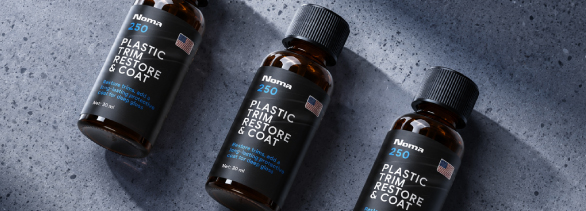
Faded black plastic trim is a problem almost every car owner runs into eventually. The black plastic on door handles, side mirrors, spoilers, and headlight housings gradually turns gray and chalky, robbing your car of that showroom look. Instead of paying a detail shop, you can restore your car’s black plastic trim at home with NOMA 250 — a US-formulated car care product built on a pH-neutral formula that’s completely safe for you and every trim piece it touches.
This guide walks you through exactly how to use NOMA 250 to restore faded black plastic trim, getting your car looking new again in just 30-45 minutes of simple work.
Why does black plastic trim fade in the first place?
The black plastic on your car isn’t paint or a decal — it’s a synthetic rubber-like material that’s durable, but still vulnerable to the elements.
 Why does black plastic trim fade in the first place?
Moisture, UV rays, road grime, and high humidity are the main culprits behind that dull, chalky look — they strip the trim of its natural sheen over time.
According to road transport authority data, millions of vehicles go without proper maintenance every year, which only accelerates this kind of wear.
The fading tends to happen faster in humid, coastal, or tropical climates. That means a little proactive care goes a long way toward keeping your car looking sharp.
Prep the plastic surface before restoring it
Proper prep is the real key to a great result. If the surface isn’t clean, the product can’t bond properly and your results will suffer.
 Prep the plastic surface before restoring it
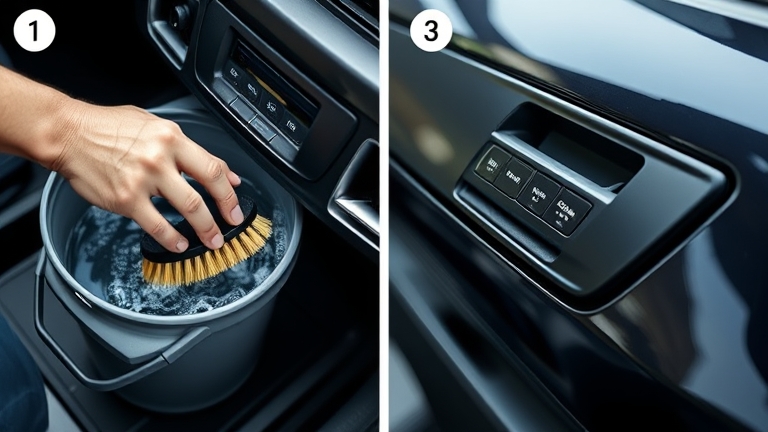
Simple prep routine:
- Wash the black plastic trim with clean, cool water and a pH-neutral cleaner. Avoid hot water — it can warp the plastic.
- Dry it off with a soft, lint-free towel. Don’t leave it damp — leftover moisture will interfere with the restoration process.
- Check the surface for any deep scratches. If you find some, treat those separately before applying NOMA 250.
- Work in a well-ventilated spot, out of direct sunlight.
Note: Never clean black plastic trim with strong acids or harsh solvents — they can strip away the material’s natural protective layer.
Applying NOMA 250 to restore the trim
NOMA 250 is purpose-built for restoring faded black plastic trim. Its pH-neutral formula won’t harm your paint or the rubber trim itself, so you get real results without the risk.
How to apply NOMA 250:
- Shake the bottle well before use so the formula is fully mixed.
- Pour a small amount (roughly a capful) into a cup or dish for easy access.
- Use a soft brush or a foam applicator to spread NOMA 250 over the plastic surface.
- Apply an even, thin coat — you’re going for light coverage, not a thick, gloopy layer.
- Let it sit for 3-5 minutes so the product can soak in and bring back the shine.
This whole process moves fast, saving you time compared to other restoration methods.
Buffing and finishing the surface
Once the product has had time to work, the next step is buffing it off to reveal that rich, glossy black finish underneath.
How to buff it properly:
- Use a soft cotton towel or a microfiber cloth and wipe gently.
- Wipe from top to bottom to avoid unnecessary rubbing on the surface.
- Keep wiping until there’s no leftover moisture or greasy residue.
- If the first pass doesn’t get it fully clean, go over it a second time with a dry towel.
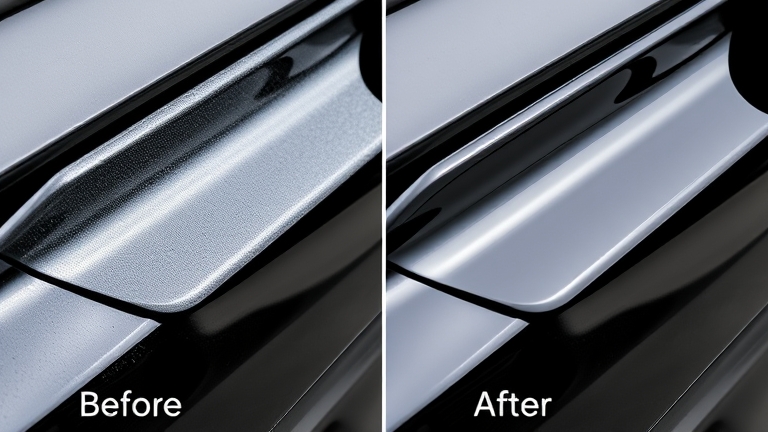
The end result is a rich, glossy black finish that looks better than it has in a long time — often better than the original condition.
Regular maintenance to keep the results looking good
Restoring black plastic trim isn’t a one-and-done job — it’s an ongoing maintenance routine. To keep that fresh look for the long haul, you’ll want to stay on top of it.
Recommended maintenance schedule:
| Timeframe | Frequency | What to do |
|---|---|---|
| Every 1-2 months | 1x | Light wash + dry |
| Every 3-4 months | 1x | Full restore with NOMA 250 |
| Every 6 months | 1x | Inspect all black plastic trim on the car |
| Once a year | 1x | Deep restoration if needed |
If you live somewhere humid, it’s worth shortening these intervals a bit to keep the trim consistently protected.
How does NOMA 250 stack up against other products on the market?
There are plenty of options out there for restoring black plastic trim, but not all of them deliver on quality and safety.
| Criteria | NOMA 250 | Generic products | Manual paint touch-up |
|---|---|---|---|
| Safe, pH-neutral formula | ✓ | Often strong acid or base | Can be harmful |
| Restoration quality | High | Average | High, but slow to apply |
| Application time | 30-45 minutes | 1-2 hours | 4-6 hours |
| How long results last | 3-4 months | 1-2 months | 6-8 months |
| DIY-friendly | Easy | Difficult | Very difficult |
| Price | Affordable | Cheap | Expensive |
| Where it’s made | USA | Varies | N/A (manual work) |
As the table shows, NOMA 250 hits the sweet spot between effectiveness, safety, and ease of use. That’s exactly why so many car owners rely on it.
Common mistakes when restoring black plastic trim
Mistake 1: Skipping proper surface prep
If the plastic still has dirt or grease on it, the product won’t bond well and your results will fall short. Always wash the surface thoroughly before applying anything.
Mistake 2: Applying too much product at once
A thick coat doesn’t mean better results. In fact, using too much product can leave the surface greasy, hard to wipe clean, and it just wastes product.
Mistake 3: Working in direct sunlight
Heat causes the product to evaporate too quickly, cutting down on its effectiveness. Always work in a shaded, well-ventilated area — never in direct sun.
Mistake 4: Not letting the product sit long enough
Don’t rush to wipe it off. Letting NOMA 250 sit for 3-5 minutes gives you the best possible results. Check out our other car care guides for more DIY maintenance tips.
Frequently asked questions about restoring black plastic trim
Q1: Is NOMA 250 safe on skin?
Yes, NOMA 250 is formulated with a pH-neutral base that’s completely safe to handle. That said, it’s still good practice to wash your hands after use.
Q2: How long do the results last?
It depends on your follow-up care. With regular washing and maintenance, results typically last 3-4 months. With extra care, you can stretch that to 5-6 months.
Q3: Can I use NOMA 250 on any type of black plastic?
NOMA 250 is specifically formulated for the black rubber-like trim found on cars. Avoid using it on other materials it hasn’t been tested for.
Q4: Does NOMA 250 have a strong smell?
No, it has a mild scent that shouldn’t bother most people. Still, working in a well-ventilated area will make the experience more comfortable.
Q5: How much trim can one bottle of NOMA 250 cover?
A standard bottle can treat all the black plastic trim on an entire car 3-5 times over, depending on how much surface area you’re covering.
Q6: Can I use NOMA 250 on a new car?
Absolutely — it works great as a protective, shine-maintaining treatment for trim that hasn’t faded yet.
Q7: Can I combine NOMA 250 with other products?
Only apply NOMA 250 to a clean surface, and avoid mixing it with other products to prevent any unexpected reactions.
Q8: Are there discounts for buying multiple bottles of NOMA 250?
Check the official NOMA website for current promotions.
The bottom line
Restoring black plastic trim doesn’t have to be complicated or expensive if you’re using the right product. NOMA 250 is the ideal solution — made in the USA, safe on a pH-neutral formula, and simple enough to use right at home.
 The bottom line
Just 5 steps — prep the surface, apply the product, let it work, buff it dry, and keep up with regular maintenance — and you can keep your car looking showroom-fresh without ever setting foot in a detail shop. Try NOMA 250 today and see the difference for yourself.
References
- Road transport authority maintenance data