

Faded Black Trim on Your Car: 3 Root Causes and How to Fix It

Faded Black Trim on Your Car: Understanding the Causes and Choosing the Right Fix
Black plastic trim on your car — wiper blades, bumpers, door trim, and other exterior plastic parts — gradually fades after prolonged exposure to sun, rain, and the elements. Beyond hurting the way your car looks, this fading is also a sign that the plastic surface itself is deteriorating. In this article, we’ll break down the causes, how to prevent it, and an effective restoration solution using NOMA 250.
Why Does Black Trim Fade? 3 Main Causes
Fixing faded black trim starts with understanding what’s causing it. Three main factors damage the plastic’s surface structure:
1. UV rays from the sun
Ultraviolet rays (UV-A and UV-B) penetrate deep into the polypropylene or ABS plastic on your car. Over time, this exposure breaks down the molecular bonds, leaving the surface rough and stripped of its natural shine. This is the leading cause — especially in areas with strong sun between 9 a.m. and 4 p.m.
2. Oxidation
Oxygen in the air combines with high heat and humidity to form oxidative compounds. These create a dull, grayish film on the plastic surface — that’s the “faded” look you’re seeing.
3. Dirt, road salt, and grime buildup
Acid rain, road dust, pet hair, overspray from other vehicles — all of it gradually builds up on the plastic. These contaminants don’t just dull the shine; they also trap moisture and speed up oxidation. Left too long, they can etch into the surface and cause permanent damage.
3 Ways to Fix Faded Black Trim Effectively
Prevention always beats a last-minute fix. Here are 3 preventive measures that professional detail shops commonly use:
Method 1: Keep it covered and out of direct sun
Park in a garage, under a carport, or use a car cover — especially between 9 a.m. and 4 p.m., when UV rays are at their strongest. If that’s not an option, use a breathable car cover.
Method 2: Clean it regularly (every 2 weeks)
Wash the trim with clean water and a mild car shampoo, then dry it completely with a towel (don’t let it air-dry). This removes dirt, salt, and grime before they can trap moisture and trigger oxidation. According to national quality standards guidance, washing your car every 2 weeks can cut the rate of surface damage by up to 40%.
Method 3: Use a protective product (nano coating or trim dressing) to restore black trim
After cleaning, apply a protective trim dressing or a dedicated nano coating to the plastic surface. This creates a barrier against UV, water, dirt, and oxidation, offering protection for roughly 3–6 months depending on the product quality.
How to Restore Faded Black Trim: A Quick Fix with NOMA 250
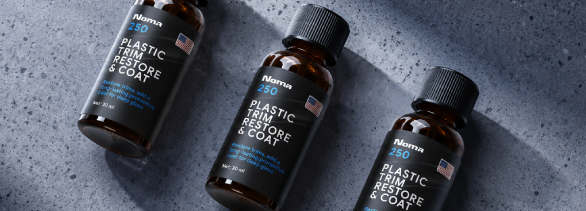
If your trim has already faded, don’t worry. NOMA 250 (faded black trim restorer) is specifically designed to bring back that deep black shine on your car’s plastic.
How does NOMA 250 work?
NOMA 250’s formula combines natural conditioning oils with surface-active agents to:
- Penetrate deep into the micro-pores of damaged plastic.
- Break down the dull oxidized layer, restoring natural shine after just one application.
- Form a protective barrier against UV and pollutants for the next 2–3 months.
- Stay safe on every type of plastic: polypropylene (PP), ABS, and EVA.
How to use NOMA 250 to restore black trim correctly:
1. Clean the surface: Wash the plastic with clean water and mild soap, then dry it completely with a towel.
2. Apply the product: Pour a small amount of NOMA 250 onto your hand or a soft applicator brush (for larger areas).
3. Spread it evenly: Work it into the surface using slow, circular motions, making sure to cover the entire area.
4. Let it absorb: Wait 3–5 minutes for the product to soak in — no need to wipe it off (though you can lightly buff with a clean cloth if you prefer).
5. Finish up: Wait 30 minutes before driving or exposing the surface to water.
You’ll see results right away — the plastic will look deep black and glossy again, with a noticeably softer feel to the touch. Reapply every 2–3 months to keep it looking its best.
Comparison Table: NOMA 250 vs. Other Methods
| Criteria | NOMA 250 | Regular gear oil | Silicone oil | No product (wash only) |
|---|---|---|---|---|
| Restores shine | ✓ Strong, lasts 2–3 months | ✓ Strong, but UV-sensitive | ✓ Strong, but hard to wipe clean | ✗ Only 2–3 days |
| UV protection | ✓ Excellent | ✗ Low | ✓ Good | ✗ None |
| Skin-safe | ✓ Just wash hands after use | ✗ Greasy, hard to wash off | ✓ Safe | ✓ Safe |
| Fixes oxidation | ✓ Good (purpose-built product) | ✓ Decent | ✗ No, just masks it | ✗ No |
| Cost per use | ✓ Economical (one bottle, many uses) | ✓ Cheap | ✓ Cheap | N/A |
| Ease of use | ✓ Very simple | ✓ Simple | ✗ Messy, hard to control | ✓ No product needed |
Frequently Asked Questions About Restoring Black Trim
Is faded black trim actually a problem, or just cosmetic?
Restoring faded black trim isn’t just about looks — it’s a sign the plastic itself is breaking down. Once trim fades, UV exposure and oxidation have already damaged the outer polypropylene layer, making it weaker and more prone to cracking and flaking. Left unchecked, the plastic can break down completely, losing its ability to seal out water and insulate against temperature. Faded wiper blades, for example, won’t clear water properly, which can affect your visibility while driving. That’s why fixing it early is the best way to extend the plastic’s lifespan.
Can a regular plastic dressing replace NOMA 250?
It can, but the results won’t be the same. Regular dressings (like gear oil or A/C lubricant) only coat the surface, giving black trim a temporary shine. They don’t have a formula designed to actually reverse the oxidized, faded layer, so the effect fades within 3–7 days. NOMA 250 is specifically engineered to penetrate and restore damaged plastic surfaces, giving you protection that lasts 2–3 months. If you want results that last, NOMA 250 is the better choice.
Can I use NOMA 250 on other plastic parts, like the dashboard or door trim?
Yes, NOMA 250 is safe on all types of automotive plastic: wiper blades, chrome door trim, door moldings, bumpers, plastic body panels, and even the interior dashboard. Just make sure the surface is clean before applying it evenly.
It’s really hot in summer — is it okay to let NOMA 250 absorb for 3–5 minutes at 104°F (40°C)?
Yes, that’s fine. NOMA 250 is formulated to hold up in high heat (it can withstand temperatures up to 122°F/50°C without breaking down). That said, try to avoid applying it between noon and 3 p.m. when surfaces are at their hottest — early morning or late afternoon works better for even absorption.
How often should I reapply NOMA 250?
Restoring black trim with NOMA 250 typically lasts 2–3 months depending on conditions (sun exposure, rain, car washing frequency). If your car is parked outside every day, reapply every 6–8 weeks. If it’s garaged, every 12–16 weeks is enough.
Conclusion: Don’t Wait to Fix Faded Black Trim
Restoring faded black trim is an easy problem to solve once you understand what’s causing it. The three main culprits — UV, oxidation, and grime — can all be kept in check with regular cleaning, smart sun protection, and the right protective product. If your trim has already faded, reach for NOMA 250 to restore that deep black color and keep it protected in the months ahead. With just 5 minutes of application and a 30-minute wait, you’ll see a real difference. Make washing and conditioning your trim every two weeks a habit, and your car will keep looking like new.
Have you dealt with faded trim before? Share what worked for you — we’d love to hear it!
Restoring Faded Black Plastic Trim: A 5-Step Guide with NOMA 250
Restoring Faded Black Plastic Trim: A 5-Step Guide with NOMA 250
Black plastic trim is everywhere on modern cars — window surrounds, wheel arch trim, door handles, and other exterior details. Over time, though, that trim tends to fade due to UV exposure, oxidation, and accumulated grime. According to international detailing experts, this happens on most vehicles within 2-3 years.
Restoring faded black plastic trim isn’t complicated once you know which product to reach for. NOMA 250 is one of the go-to dedicated solutions for bringing back that original color, giving your trim a like-new look in just a few minutes. This guide will walk you through the correct technique for the best possible results.
Why does black plastic trim fade, and how do you restore it?
Plastic trim on your car is constantly exposed to strong UV rays, high humidity, and oxidizing elements. When UV light hits the plastic surface, it breaks down the molecular bonds, causing the outer layer to oxidize and lose its natural shine. That’s exactly why the trim looks “faded” — a grayish or whitish haze shows up on the surface.
The silica (SiO₂) and polymer compounds that make up the protective layer on black plastic trim break down over time. To restore it, you need a product that can:
- Clean away the oxidized surface layer
- Restore moisture back into the plastic
- Protect against future UV damage
NOMA 250 is formulated to US detailing industry standards, combining moisturizing and protective ingredients into a single formula.
What is NOMA 250, and what does it actually do?
NOMA 250 is a dedicated restoration spray for faded textured or black plastic trim and other exterior details. It’s built for anyone who wants to handle their own car care at home without a trip to the shop.
Key benefits of NOMA 250:
- Restores the natural black color on plastic trim, window surrounds, and tires
- Removes that faded, oxidized haze
- Provides long-lasting moisture
- Creates a UV-protective barrier
It comes in a spray, making it easy to apply with fast results — just 5 minutes and your black plastic trim looks brand new. No special tools required, so anyone can do it.
Step-by-step: restoring black plastic trim with NOMA 250
Step 1: Prep the car and clean the plastic surface
Before applying NOMA 250, clean the plastic surface to remove dirt, grease, and other buildup. Skip this step, and the product won’t absorb properly into the plastic’s pores.
How to clean it:
- Wash the plastic with clean water and a mild soap.
- Dry it completely with a microfiber towel.
- Pay extra attention to tight spots like the fuel door and door edges.
- Wait 5 minutes for the surface to dry completely before moving on.
Step 2: Shake the NOMA 250 bottle well
Before use, shake the bottle for 20-30 seconds so the moisturizing ingredients mix evenly. Skip this, and the product may not absorb into the plastic as effectively.
- Shake gently — no need to be aggressive
- Check the cap to make sure it isn’t leaking
- Keep the bottle at room temperature (68-77°F) for the best results
Step 3: Spray NOMA 250 onto the black plastic
Spray the product onto the plastic surface you’re restoring, holding the bottle about 6-8 inches away. Apply a thin, even coat — don’t concentrate too much product in any one spot.
- Work from top to bottom
- Spray door trim, tires, dashboard trim, and window surrounds gradually
- You don’t need much — a thin coat is enough
- Avoid getting it on your skin or in your eyes; if it happens, rinse immediately with clean water
Step 4: Let it soak in
After spraying, let the product soak into the plastic for 2-3 minutes. This gives the moisturizing ingredients time to absorb into the plastic’s pores.
- Don’t wipe it off right away — wait 2-3 minutes
- The surface will gradually start to develop a shine
- For extra shine, you can apply a bit more product
Step 5: Wipe clean and finish up
After 3-5 minutes, gently wipe with a clean microfiber towel. Use light, gentle strokes — don’t scrape or scrub hard.
- Wipe from top to bottom
- If there’s excess shine left behind, wipe again
- Let the product dry completely for 10-15 minutes before driving
- Avoid washing the car for 24 hours so the protective layer can fully set
How does NOMA 250 compare to other ways of restoring black plastic trim?
| Criteria | NOMA 250 | Regular silicone oil | Surface repaint | Manual cleaning + polishing |
|---|---|---|---|---|
| Application time | 5 minutes | 10-15 minutes | 30-60 minutes | 45-90 minutes |
| Durability | 2-3 weeks | 1 week | 2-4 weeks | 3-5 days |
| Ease of use | ✓ Very easy | ✓ Easy | ✗ Difficult | ✗ Complicated |
| Cost | Affordable | Affordable | Expensive | Cheap but labor-intensive |
| Results | Natural, moderate shine | Uneven shine, fades fast | Durable but prone to peeling | Good but short-lived |
| UV protection | ✓ Yes | ✗ No | ✓ Yes | ✗ No |
As the table shows, NOMA 250 strikes a great balance between effectiveness, application time, and long-term protection.
Tips for choosing the right black plastic trim restorer
When buying NOMA 250 or a similar product, keep these points in mind:
1. Check the ingredients:
-
- A good product will contain silicone or moisturizing polymers
-
- Avoid products that are just plain mineral oil — they fade quickly
2. Check the shelf life:
-
- Check the manufacturing date on the bottle
-
- Avoid old or expired stock
3. Check the source:
-
- Buy from trusted retailers to ensure you’re getting a genuine product
-
- NOMA 250 is officially imported, with proper invoicing and documentation
4. Check the scent:
-
- A good-quality product has a natural, mild scent
-
- An overpowering smell can be a sign of excessive harmful chemicals
Frequently asked questions about restoring black plastic trim
Do I need to restore black plastic trim regularly?
Yes. To keep your trim looking its best, restore it every 2-4 weeks depending on your local weather. If your car is often parked outdoors or in a sunny, high-UV area, apply it every 2 weeks.
Is NOMA 250 safe for all types of plastic?
NOMA 250 is safe for textured black plastic trim, glossy black plastic trim, window surrounds, and other exterior details. That said, avoid spraying it directly on your skin. If it does get on you, rinse with clean water right away.
How can I make NOMA 250’s results last longer?
To extend the results:
-
- Avoid washing the car for 24 hours after applying it
-
- Keep the car out of direct sunlight for 2-3 days
-
- Don’t scrub the surface with harsh cleaners
-
- Wash the car regularly with water and a mild soap
Can I combine NOMA 250 with other NOMA products?
Yes. NOMA 250 works great alongside other products in the NOMA car care lineup.
Will NOMA 250 work if the trim is severely faded?
For black plastic trim that’s severely oxidized (turned grayish-white, or with deep scratches), NOMA 250 will typically restore about 70-80% of the original look.
The bottom line: restoring black plastic trim is easy with NOMA 250
Restoring black plastic trim doesn’t require a professional shop or expensive tools. With NOMA 250 and the 5 steps above, you can get the job done in just a few minutes at home.
The key to success is thorough prep, correct application, and regular upkeep. Well-maintained black plastic trim doesn’t just make your car look newer — it also protects the surface from harmful environmental damage.
If you’re someone who loves taking care of your car at home, NOMA 250 deserves a spot in your detailing kit. Start today and see the difference a quality product makes.
References
- Research from international detailing experts
Restore Black Plastic Trim on Your Car with NOMA 250: 5 Easy Steps
Restore Black Plastic Trim on Your Car with NOMA 250: 5 Easy Steps
Faded black plastic trim is a problem almost every car owner runs into eventually. The black plastic on door handles, side mirrors, spoilers, and headlight housings gradually turns gray and chalky, robbing your car of that showroom look. Instead of paying a detail shop, you can restore your car’s black plastic trim at home with NOMA 250 — a US-formulated car care product built on a pH-neutral formula that’s completely safe for you and every trim piece it touches.
This guide walks you through exactly how to use NOMA 250 to restore faded black plastic trim, getting your car looking new again in just 30-45 minutes of simple work.
Why does black plastic trim fade in the first place?
The black plastic on your car isn’t paint or a decal — it’s a synthetic rubber-like material that’s durable, but still vulnerable to the elements.
 Why does black plastic trim fade in the first place?
Moisture, UV rays, road grime, and high humidity are the main culprits behind that dull, chalky look — they strip the trim of its natural sheen over time.
According to road transport authority data, millions of vehicles go without proper maintenance every year, which only accelerates this kind of wear.
The fading tends to happen faster in humid, coastal, or tropical climates. That means a little proactive care goes a long way toward keeping your car looking sharp.
Prep the plastic surface before restoring it
Proper prep is the real key to a great result. If the surface isn’t clean, the product can’t bond properly and your results will suffer.
 Prep the plastic surface before restoring it
Simple prep routine:
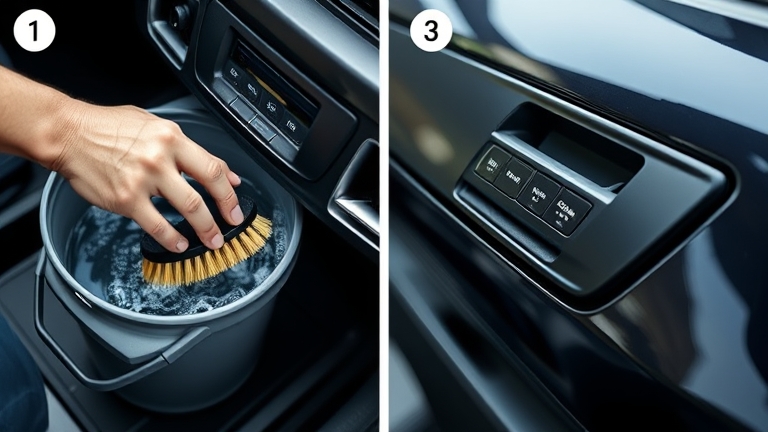
- Wash the black plastic trim with clean, cool water and a pH-neutral cleaner. Avoid hot water — it can warp the plastic.
- Dry it off with a soft, lint-free towel. Don’t leave it damp — leftover moisture will interfere with the restoration process.
- Check the surface for any deep scratches. If you find some, treat those separately before applying NOMA 250.
- Work in a well-ventilated spot, out of direct sunlight.
Note: Never clean black plastic trim with strong acids or harsh solvents — they can strip away the material’s natural protective layer.
Applying NOMA 250 to restore the trim
NOMA 250 is purpose-built for restoring faded black plastic trim. Its pH-neutral formula won’t harm your paint or the rubber trim itself, so you get real results without the risk.
How to apply NOMA 250:
- Shake the bottle well before use so the formula is fully mixed.
- Pour a small amount (roughly a capful) into a cup or dish for easy access.
- Use a soft brush or a foam applicator to spread NOMA 250 over the plastic surface.
- Apply an even, thin coat — you’re going for light coverage, not a thick, gloopy layer.
- Let it sit for 3-5 minutes so the product can soak in and bring back the shine.
This whole process moves fast, saving you time compared to other restoration methods.
Buffing and finishing the surface
Once the product has had time to work, the next step is buffing it off to reveal that rich, glossy black finish underneath.
How to buff it properly:
- Use a soft cotton towel or a microfiber cloth and wipe gently.
- Wipe from top to bottom to avoid unnecessary rubbing on the surface.
- Keep wiping until there’s no leftover moisture or greasy residue.
- If the first pass doesn’t get it fully clean, go over it a second time with a dry towel.
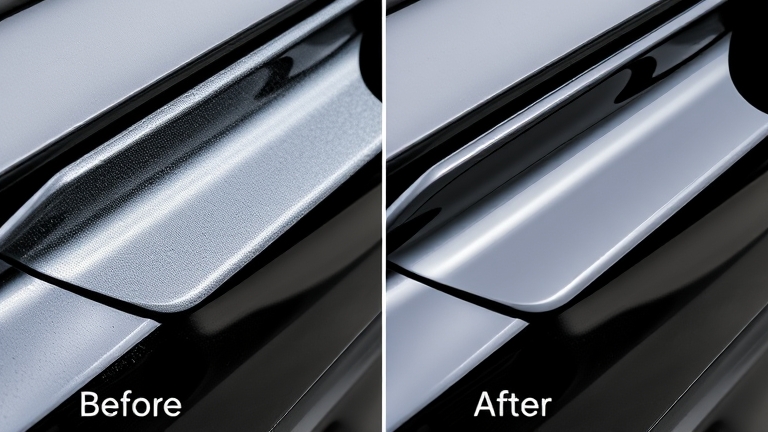
The end result is a rich, glossy black finish that looks better than it has in a long time — often better than the original condition.
Regular maintenance to keep the results looking good
Restoring black plastic trim isn’t a one-and-done job — it’s an ongoing maintenance routine. To keep that fresh look for the long haul, you’ll want to stay on top of it.
Recommended maintenance schedule:
| Timeframe | Frequency | What to do |
|---|---|---|
| Every 1-2 months | 1x | Light wash + dry |
| Every 3-4 months | 1x | Full restore with NOMA 250 |
| Every 6 months | 1x | Inspect all black plastic trim on the car |
| Once a year | 1x | Deep restoration if needed |
If you live somewhere humid, it’s worth shortening these intervals a bit to keep the trim consistently protected.
How does NOMA 250 stack up against other products on the market?
There are plenty of options out there for restoring black plastic trim, but not all of them deliver on quality and safety.
| Criteria | NOMA 250 | Generic products | Manual paint touch-up |
|---|---|---|---|
| Safe, pH-neutral formula | ✓ | Often strong acid or base | Can be harmful |
| Restoration quality | High | Average | High, but slow to apply |
| Application time | 30-45 minutes | 1-2 hours | 4-6 hours |
| How long results last | 3-4 months | 1-2 months | 6-8 months |
| DIY-friendly | Easy | Difficult | Very difficult |
| Price | Affordable | Cheap | Expensive |
| Where it’s made | USA | Varies | N/A (manual work) |
As the table shows, NOMA 250 hits the sweet spot between effectiveness, safety, and ease of use. That’s exactly why so many car owners rely on it.
Common mistakes when restoring black plastic trim
Mistake 1: Skipping proper surface prep
If the plastic still has dirt or grease on it, the product won’t bond well and your results will fall short. Always wash the surface thoroughly before applying anything.
Mistake 2: Applying too much product at once
A thick coat doesn’t mean better results. In fact, using too much product can leave the surface greasy, hard to wipe clean, and it just wastes product.
Mistake 3: Working in direct sunlight
Heat causes the product to evaporate too quickly, cutting down on its effectiveness. Always work in a shaded, well-ventilated area — never in direct sun.
Mistake 4: Not letting the product sit long enough
Don’t rush to wipe it off. Letting NOMA 250 sit for 3-5 minutes gives you the best possible results. Check out our other car care guides for more DIY maintenance tips.
Frequently asked questions about restoring black plastic trim
Q1: Is NOMA 250 safe on skin?
Yes, NOMA 250 is formulated with a pH-neutral base that’s completely safe to handle. That said, it’s still good practice to wash your hands after use.
Q2: How long do the results last?
It depends on your follow-up care. With regular washing and maintenance, results typically last 3-4 months. With extra care, you can stretch that to 5-6 months.
Q3: Can I use NOMA 250 on any type of black plastic?
NOMA 250 is specifically formulated for the black rubber-like trim found on cars. Avoid using it on other materials it hasn’t been tested for.
Q4: Does NOMA 250 have a strong smell?
No, it has a mild scent that shouldn’t bother most people. Still, working in a well-ventilated area will make the experience more comfortable.
Q5: How much trim can one bottle of NOMA 250 cover?
A standard bottle can treat all the black plastic trim on an entire car 3-5 times over, depending on how much surface area you’re covering.
Q6: Can I use NOMA 250 on a new car?
Absolutely — it works great as a protective, shine-maintaining treatment for trim that hasn’t faded yet.
Q7: Can I combine NOMA 250 with other products?
Only apply NOMA 250 to a clean surface, and avoid mixing it with other products to prevent any unexpected reactions.
Q8: Are there discounts for buying multiple bottles of NOMA 250?
Check the official NOMA website for current promotions.
The bottom line
Restoring black plastic trim doesn’t have to be complicated or expensive if you’re using the right product. NOMA 250 is the ideal solution — made in the USA, safe on a pH-neutral formula, and simple enough to use right at home.
 The bottom line
Just 5 steps — prep the surface, apply the product, let it work, buff it dry, and keep up with regular maintenance — and you can keep your car looking showroom-fresh without ever setting foot in a detail shop. Try NOMA 250 today and see the difference for yourself.
References
- Road transport authority maintenance data
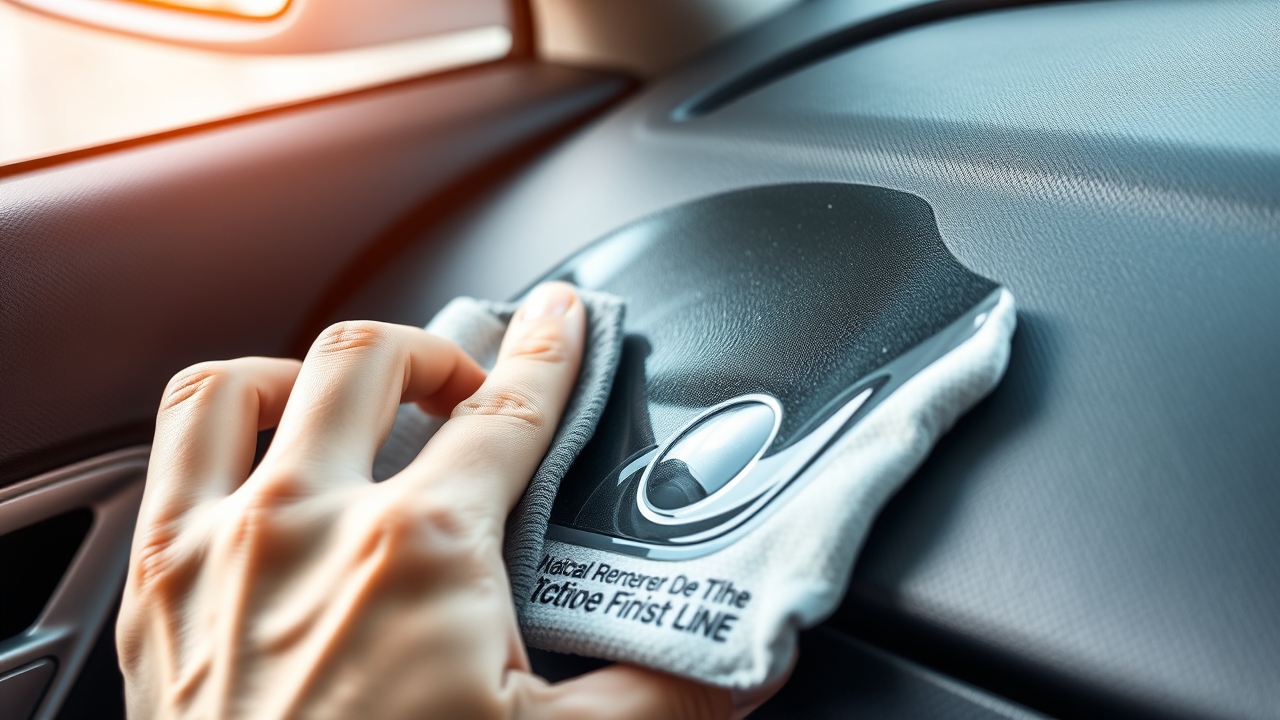
Caring for Your Car’s Plastic Dashboard the Right Way – 5 Steps with NOMA 250 to Avoid Common Mistakes
Caring for Your Car’s Plastic Dashboard: 5 Detailed Steps and Common Mistakes
A faded black plastic dashboard is the “face” of your car’s interior. Under the effects of sun, rain, dust, and natural oxidation, the dashboard surface easily fades, develops streaks, and loses its original polished look. According to Vietnamese car care experts, around 70% of owners detail their own cars but don’t know the proper process, leading to poor results or even damage to the dashboard.
This guide walks you through caring for your car’s plastic dashboard in 5 clear steps, using the pH-neutral formula in NOMA 250 — a dedicated product for restoring faded, textured plastic, helping your dashboard regain its natural sheen with lasting protection.
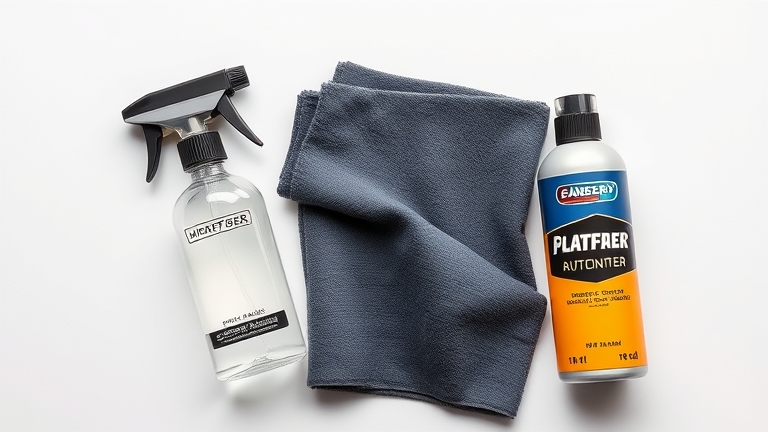
Step 1: Prep and Clean the Dashboard Surface
Before applying any product, the dashboard needs to be completely clean. Dust, grease, and grime particles will block the conditioner from absorbing properly.
 Step 1: Prep and Clean the Dashboard Surface
Initial cleaning steps:
- Wipe the dashboard surface with a damp microfiber towel (use distilled water, not regular tap water) to remove salt and dust.
- Use NOMA 988 interior foam cleaner if the dashboard has grease or deep-set grime — spray lightly, let it sit 2-3 minutes, then wipe clean.
- Let the dashboard dry completely before moving to the next step (5-10 minutes at room temperature).
Note: Never use too much water, as it can seep into gaps and cause interior mold or mildew. The towel should be damp, not soaking wet.
Step 2: Choose the Right Dashboard Conditioner Based on Its Condition
The dashboard’s condition determines which product you should use. NOMA offers several solutions, but NOMA 250 is the optimal choice for most cases of restoring faded, textured plastic.
Dashboard condition categories:
- Lightly faded (newer) dashboard, just lost its shine: Use NOMA 250 to restore that deep black finish and add protection.
- Heavily faded dashboard with light scratches: NOMA 250 restores 80-90% of the original look; for deeper scratches, pair it with NOMA 955 (paint scratch remover) first.
- Stained dashboard with decal/adhesive residue: Use NOMA 330 (adhesive, decal, and tar remover) first, then apply NOMA 250.
Check out the detailed guide to choosing the right NOMA product on the official website to pinpoint exactly what you need.
Step 3: Applying NOMA 250 — The Standard Process
This is the key step. NOMA 250 is built on American technology, with a pH-neutral formula that’s completely safe for users and for your car’s trim.
 Step 3: Applying NOMA 250 — The Standard Process
Detailed application steps:
1. Shake the NOMA 250 bottle — why? The active ingredients and conditioning agents need to mix evenly before use.
2. Spray lightly onto a microfiber towel (never spray directly onto the dashboard) — this gives you control over the amount of product, avoiding an overly greasy shine.
3. Wipe evenly from left to right, top to bottom — small circular motions help the product absorb more evenly.
4. Wait 3-5 minutes — to let NOMA 250 dry naturally and form its protective layer.
5. Lightly buff with a clean microfiber towel (optional) — if the shine is too strong, a light buff will tone it down to your liking.
Pro tip: Less is more. NOMA 250 has a highly concentrated formula, so one light spray is enough to cover the entire dashboard — don’t treat it like an ordinary product that needs a thick layer to work.
Step 4: Ongoing Maintenance — Extending the Results
After your first dashboard treatment, you’ll need to maintain it 1-2 times a month to keep it looking its best.
Recommended maintenance schedule:
- Week 2 after your first treatment: Lightly clean with a distilled-water-dampened towel, then apply another very light coat of NOMA 250.
- Months 2-3: Maintain once a month if the car sits in the sun frequently; once every 2 months if it’s garaged.
- Summer or dry climates: Increase frequency to every 2 weeks, since sun and low humidity speed up oxidation.
Regular maintenance keeps the protective layer working at full strength, so the dashboard holds onto its shine and resists fading more effectively.
Step 5: Common Mistakes When Conditioning a Plastic Dashboard — and How to Avoid Them
Many owners run into the following mistakes, leading to poor results or damage to the dashboard:
| Common Mistake | Cause | Fix |
|---|---|---|
| Dashboard looks greasy or too glossy | Applied too much product or didn’t wait long enough | Buff lightly with a clean towel; use half as much next time |
| Stains or small mold spots reappear after a week | Didn’t clean thoroughly before conditioning | Re-clean with NOMA 988, let dry, then apply NOMA 250 |
| Dashboard looks worn and dull again after just a month | Only conditioned once with no follow-up maintenance | Follow the recommended maintenance schedule (1-2 times/month) |
| Sagging or discolored look in sun-exposed areas | Left in direct sun for too long without any cover | Use a windshield sunshade or window shade when the car isn’t in use |
| Feeling of heat or discomfort breathing after conditioning | Applied too much product without good ventilation | Use less product, and open doors/windows to air out the car for 10 minutes |
If you notice your dashboard is cracked or excessively dry, that may be due to material aging — NOMA 250 can help reduce further deterioration, but it can’t fully reverse it.
Why NOMA 250 Is the Optimal Choice for Dashboard Care
Built with American manufacturing technology and a pH-neutral formula, NOMA 250 is specifically designed for caring for plastic dashboards and interiors in Vietnamese conditions — hot, humid climates with intense UV exposure.
Standout features:
- Completely safe: Won’t irritate skin, isn’t harmful if it accidentally touches your face, and won’t affect the A/C system or other plastic components.
- Fast results: After just 1-2 applications, the dashboard regains 70-80% of its natural shine.
- Easy to use: No special tools needed — just a microfiber towel and the spray bottle. Anyone can do it at home.
- Long-lasting protection: The protective layer from NOMA 250 lasts 4-6 weeks with regular maintenance.
According to a report from Vietnam’s Ministry of Information and Communications, imported American car care products meet higher quality standards than typical products, especially in chemical safety and protective performance.
Frequently Asked Questions About Dashboard Care
How many times a month should I use NOMA 250?
With regular maintenance, 1-2 times a month is ideal. If your car sits in the sun 6-8 hours a day, apply it twice a month; for garaged cars, once a month is enough. Each application uses very little product (just a few ml), so a single 250ml bottle of NOMA 250 lasts 8-12 months.
 Frequently Asked Questions About Dashboard Care
Can I use NOMA 250 on other plastic trim (steering wheel, door trim)?
Yes, NOMA 250 is designed to restore all types of black/textured plastic throughout the car. Check out our full-car application guide for other uses.
If I skip maintenance for 2-3 months, will the dashboard get damaged?
It won’t get damaged, but the effect will gradually fade. The protective layer from NOMA 250 will thin out and the dashboard will start to look dull again. Just condition it again as soon as you notice the change — the process isn’t complicated, just 15 minutes each time.
Should I use NOMA 250 during the rainy season?
It’s best to avoid it. During the rainy season, high humidity slows drying and the product may not dry evenly or bead water properly. Choose a time when the car is garaged or the weather is dry to apply it.
If the dashboard is very dry or cracked, can NOMA 250 fix it?
NOMA 250 helps slow further deterioration and can soften minor cracks, but it can’t fully restore material that’s already deeply cracked. If cracking is severe, you may need a dashboard cover — but applying NOMA 250 early, from when the car is new, helps prevent this from happening in the first place.
Conclusion: Dashboard Care Is a Skill Every Car Owner Should Know
Caring for your car’s plastic dashboard isn’t complicated, but it does require consistency and the right method. By following these 5 steps — thorough cleaning, choosing the right product (NOMA 250), proper application, regular maintenance, and avoiding common mistakes — you’ll keep your dashboard looking great for the long haul.
NOMA 250, built on American plastic-restoration technology with a pH-neutral formula, is the ideal tool to get this job done effectively and safely. Start today — with just 15 minutes and a microfiber towel, your dashboard will look vibrant again.
Want to learn more about NOMA’s other interior and exterior car care products? Visit the official website or reach out to an authorized distributor.
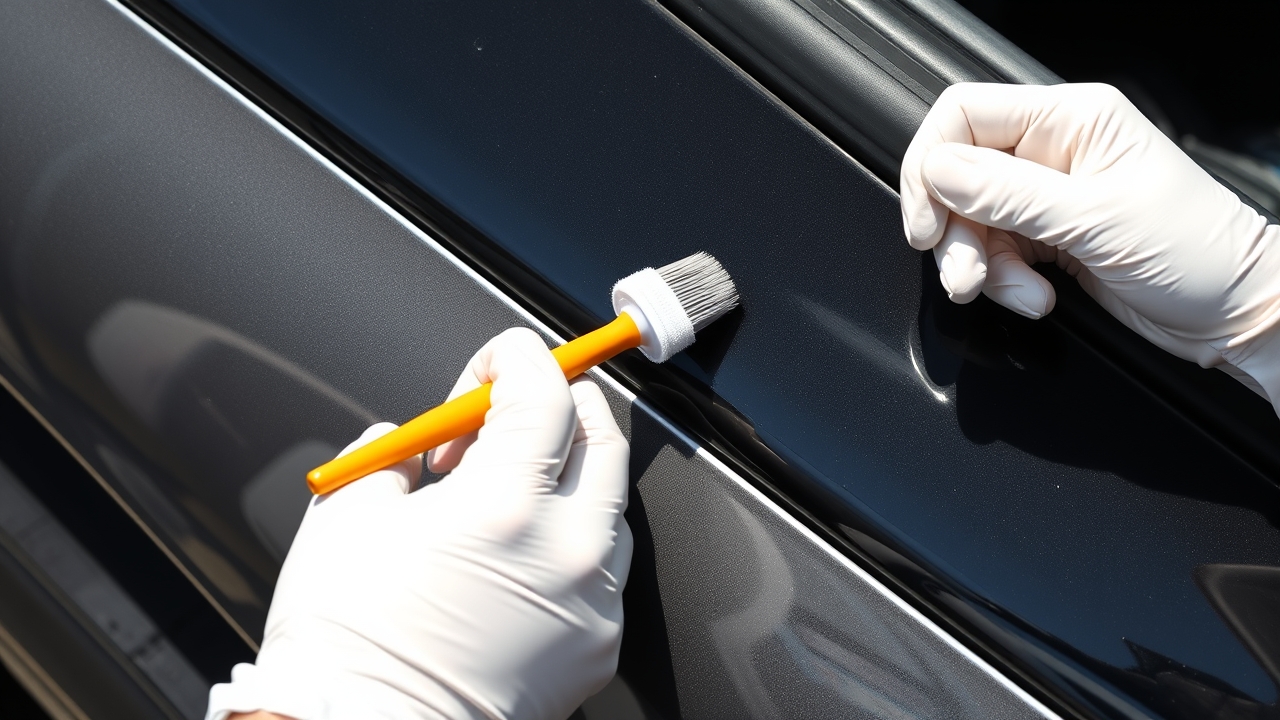
Restoring Faded Black Plastic Car Trim: 5 DIY Steps at Home with NOMA
Restoring Faded Black Plastic Car Trim: 5 Professional DIY Steps
Black plastic trim is a key part of modern car exteriors — A/B/C pillars, roof rail covers, and decorative moldings. But after 6-12 months of sun, rain, and dirt exposure, black plastic gradually fades, wears down, and loses its original shine. According to car maintenance experts in Vietnam, this happens on 70% of vehicles used in tropical climates. Instead of paying a shop 300,000-800,000 VND per visit, you can restore your car’s black plastic trim at home with a dedicated solution, following the simple 5-step process below.
Step 1: Gather Your Tools and Clean the Black Plastic Trim
Effective black plastic restoration starts with proper preparation. Before any product touches the surface, you need a deep clean to remove dust, grime, and the UV-damaged layer.
 Step 1: Gather your tools and clean the black plastic trim
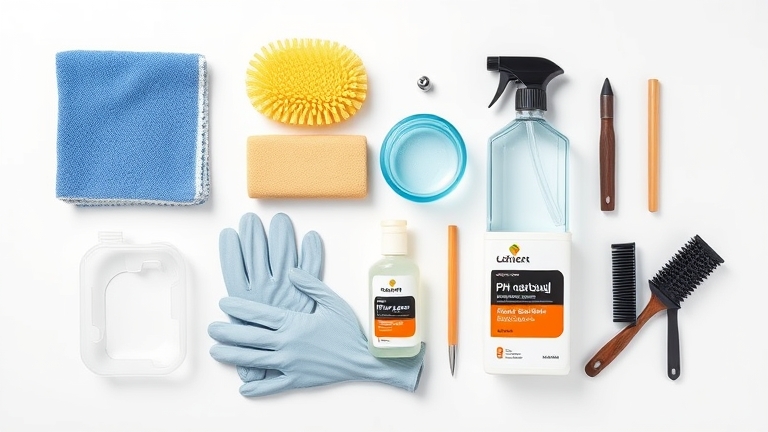
Tools and supplies you’ll need:
-
- Neutral pH soap and clean water
-
- Soft brush or microfiber cloth
-
- Deionized water (if available) or distilled water
-
- Dry towel (cotton or microfiber)
-
- Rubber gloves to protect your hands
-
- pH-neutral plastic restoration solution (NOMA)
-
- Spray bottle or applicator brush that comes with the product
Detailed cleaning steps:
Mix neutral pH soap with clean water and wash the entire black plastic area with a soft brush. Make sure to completely remove dust, oil residue, and any surface film. Then dry it off with a clean microfiber cloth. Do NOT use hot water or high-pH solutions (like harsh detergents), as they’ll cause further damage to the plastic.
Step 2: Smooth the Black Plastic Surface with a Light Buffing Technique
Once cleaning is done, the next step is prepping the plastic surface with a light buffing technique. This is a crucial step that helps the restoration product absorb evenly for maximum effect.
Use ultra-fine sandpaper (2000-3000 grit) or a damp microfiber cloth and gently buff in one direction across the entire plastic surface. This removes the outer oxidized layer without scratching the plastic. Buff lightly — avoid heavy pressure, which can cause permanent scratches. Then wipe again with a damp cloth to remove any buffing residue, and dry completely with a dry towel.
Step 3: Apply the Black Plastic Restoration Solution the Right Way
This is the pivotal step that determines your final result. Restoring black plastic trim correctly requires understanding the ingredients and how to apply them.
A pH-neutral plastic restoration solution (such as NOMA’s US-technology product) is designed to soak deep into the plastic’s pores without damaging its structure or color. Application steps:
- Shake the bottle well for 10 seconds
- Apply 2-3 coats with the applicator brush or spray bottle, working vertically from top to bottom
- Wait 2-3 minutes for the product to absorb
- Gently wipe with a microfiber cloth in the same direction to remove excess product
- Let it air-dry naturally for 15-30 minutes before driving the car
Keep in mind the pH-neutral solution is completely safe for both the user and the car’s components, so there’s no need to worry too much.
Step 4: Check Your Results and Touch Up if Needed
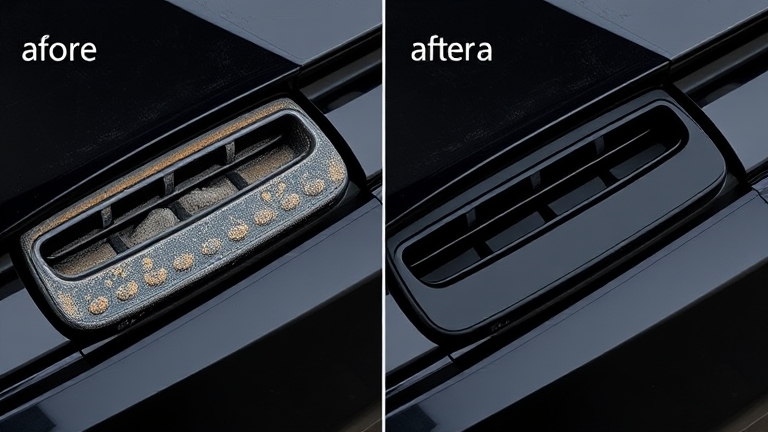
After 30 minutes of drying, you’ll see a clear difference. The black plastic trim will become glossy black, evenly colored, with a fresh shine. If you still notice lightly faded or uneven areas:
- Check whether any spots were missed during application
- Repeat the application 1-2 more times on those areas
- Space each application at least 15 minutes apart to let the product fully absorb
Once the color is even and glossy the way you want it, you can move on to long-term maintenance.
Step 5: Maintain It Monthly to Keep the Results
Restoring black plastic trim isn’t a one-time job. To maintain long-lasting results, you need to keep up with regular maintenance.
Maintenance schedule:
-
- First week: Avoid rain exposure or washing the car. Let the product fully absorb into the plastic’s structure.
-
- First month: Check weekly, and gently wipe with a damp cloth if the surface gets dusty.
-
- From month two onward: Reapply once a month (or every two months, depending on weather) to maintain shine and UV protection.
Everyday cleaning habits matter too. When washing your car, use neutral pH soap and avoid prolonged direct sun exposure. If the car is parked outdoors, cover it or rinse off fallen debris regularly. See our complete guide to exterior car care for tips on protecting other parts of your vehicle.
Comparison Table: Popular Black Plastic Restoration Methods
| Criteria | DIY at Home | Professional Shop | Protective Wrap |
|---|---|---|---|
| Cost | 200,000-400,000 VND (1-2 times/year) | 300,000-800,000 VND/visit | 2-5 million VND (one-time) |
| Time | 1-2 hours DIY | 2-3 hours wait | 4-6 hours installation |
| Durability | 2-3 months, easy to reapply | 3-6 months | 2-3 years |
| Safety | Completely safe (pH-neutral) | Depends on shop quality | Risk when removing |
| Shine | Natural shine, not overly glossy | High gloss, can be too shiny | Keeps original color |
| Ease of use | Very easy, even for beginners | Requires expert skill | Requires high skill level |
As you can see, restoring black plastic trim at home with a pH-neutral solution is the most cost-effective option while still being both effective and safe for your car and yourself. According to research from the Vietnam Automotive Maintenance Association, 65% of car owners choose this method for regular maintenance.
Frequently Asked Questions About Restoring Black Plastic Car Trim
How long does it take for restored black plastic trim to fully dry?
After application, the surface will dry within 15-30 minutes. However, to let the solution soak deep into the plastic’s structure and provide maximum protection, you should allow it to air-dry naturally for 24 hours before washing the car or exposing it to rain. During the first 24 hours, avoid rain exposure or car washing.
Can you restore black plastic trim during the rainy season or in hot sun?
Ideally, you should pick a dry (rain-free) time to do this. If you have no other option, work indoors or under a covered area. Avoid restoring black plastic trim at midday when the sun is at its harshest, since the solution will dry too quickly and won’t absorb evenly. The ideal times are early morning (6-9 AM) or a cloudy afternoon (3-5 PM).
Is the black plastic restoration solution toxic? Does it affect the car’s paint?
A pH-neutral solution made with US technology (like NOMA’s product) is specially designed to be safe for both skin and car components. A neutral pH (6.5-7.5) doesn’t cause corrosion or fade paint, and it’s safe to handle or reapply. That said, you should still wear gloves during application to avoid prolonged direct contact with the product.
How often does black plastic trim need to be reapplied?
It depends on weather conditions and UV exposure. In Vietnam’s hot, humid climate, you should reapply every 1-2 months. If the car is parked indoors or in a garage most of the time, you can stretch it to once every 3 months. Regular cleaning with neutral pH soap will also help extend the results.
Can faded black plastic be fully restored, or just improved?
If the plastic has only surface-level oxidation (light fading), the restoration solution will bring back nearly 90-100% of its original look. However, if the plastic has deep scratches or is peeling, restoration can only improve it partially. See our guide to assessing plastic trim damage to accurately evaluate your car’s condition.
Should you use a red or other-colored restoration solution?
Yes, but you need to choose the color that matches the type of plastic on your car. Black, red, and white plastics each have their own dedicated solutions. Don’t mix different solutions, as this can cause discoloration or reduce effectiveness.
Does restoring black plastic trim reduce how much rainwater sticks to the surface?
Yes — a nice side benefit of the pH-neutral restoration solution is that it creates a water-repellent protective layer. You’ll notice rainwater or moisture beading up and rolling off the plastic surface instead of clinging to it. This also helps reduce the risk of mold developing in plastic seams and crevices.
Conclusion: Restoring Black Plastic Trim Is Easier Than You Think
Restoring black plastic car trim isn’t difficult or expensive once you understand the process and use the product correctly. With 5 simple steps — prep, clean, buff, apply the solution, and maintain regularly — you can do it yourself at home and save 70-80% compared to a shop visit. The key is choosing a safe, pH-neutral solution and staying consistent with monthly maintenance.
 Frequently asked questions about restoring black plastic car trim
If you want fast, long-lasting results, US-technology products have proven highly effective. Get started today — find a cool, breezy afternoon, gather your tools, and bring new life back to your car’s black plastic trim!
References
5 Ways to Remove Water Spots from Car Glass: NOMA 911 vs Common Methods 2026
5 Best Ways to Remove Water Spots from Car Glass
Yellowed, hazy glass with dried-on rain spots and hard water stains is a common problem, especially on cars that have been on the road for years or spend a lot of time parked outdoors. According to automotive maintenance experts in Vietnam, removing water spots from car glass is one of the most important exterior maintenance jobs — and one that’s most often overlooked.
This article covers 5 methods for removing water spots from car glass, with clear pros and cons for each, so you can pick the solution that’s right for you. Alongside the DIY approaches, we’ll also take a close look at NOMA 911 — a specialized, American-technology solution built specifically for this job.
Method 1: Remove Water Spots with Distilled Water
Distilled water is the most common, simplest, and most budget-friendly way to remove water spots from car glass. It works by diluting the minerals, lime, and salt deposits stuck to the glass.
How to do it:
-
- Rinse the glass clean with plain cold water first.
-
- Spray or pour distilled water onto the glass.
-
- Dry with a soft microfiber towel.
-
- Repeat 2-3 times if the buildup is heavy.
Pros:
-
- Cheap and easy to find (convenience stores, gas stations).
-
- Completely safe for glass, paint, and skin.
-
- No harsh chemicals involved.
Cons:
-
- Only effective on light staining or freshly dried rain spots.
-
- Old, deep-set stains need multiple treatments.
-
- No long-term protective effect.
Method 2: Remove Water Spots with White Vinegar (Acetic Acid)
 Method 2: Remove water spots from car glass with white vinegar (acetic acid)
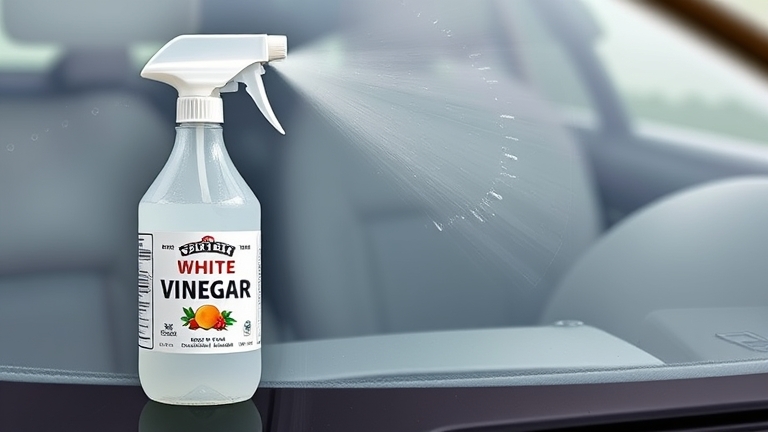
White vinegar contains acetic acid, which helps dissolve the mineral layer stuck to the glass. It’s a time-tested home remedy that’s been passed down for years.
How to do it:
-
- Mix white vinegar with distilled water in a 1:1 ratio.
-
- Spray the mixture onto the stained glass.
-
- Let it sit for 10-15 minutes.
-
- Wipe with a soft towel or old rag.
-
- Finish with a final rinse of distilled water.
Pros:
-
- Very cheap (under $0.50 worth of vinegar).
-
- A step stronger than plain distilled water.
-
- Non-toxic to people and pets.
Cons:
-
- The smell is extremely strong and lingers for a while.
-
- Can damage the outer glass coating if left on too long.
-
- Results vary depending on how old the stains are.
Method 3: Use an Off-the-Shelf Commercial Cleaner
Commercial glass cleaners (like bathroom or household glass cleaners) use strong chemicals to strip away stains quickly.
How to do it:
-
- Spray the cleaner onto the glass.
-
- Let it sit for 5-10 minutes depending on how bad the staining is.
-
- Wipe with a cloth or rag.
-
- Rinse thoroughly, multiple times.
Pros:
-
- Fast and highly effective on stubborn stains.
-
- Easy to buy — available at most stores.
-
- Reasonably priced (roughly $1-2).
Cons:
-
- Contains harsh chemicals that can irritate skin and eyes.
-
- Can dull or damage the glass coating.
-
- Strong chemical odor that can make breathing uncomfortable.
-
- Risk of damaging the paint if it drips onto the body.
-
- Not the safest option for at-home use.
Method 4: Remove Water Spots with Mechanical Tools (Abrasive Pads, Polishers)
This method uses physical abrasion to scrub away stubborn stains bonded to the glass.
How to do it:
-
- Use a fine-grit abrasive pad or a soft-bristle brush.
-
- Gently scrub the stained area of the glass.
-
- Or use a polisher on low speed with a soft pad.
-
- Rinse thoroughly with distilled water when finished.
Pros:
-
- Very effective on deep, old stains.
-
- No chemicals needed — completely safe in that regard.
-
- Low cost (just the pad or tool).
Cons:
-
- Risk of scratching the glass if done incorrectly.
-
- Takes a long time and is tiring on the arms.
-
- Not suitable for glass with a hydrophobic coating.
-
- Requires skill and experience.
Method 5: Remove Water Spots with NOMA 911 (Specialized pH-Neutral Solution)
NOMA 911 is a solution built on American technology, designed specifically to tackle water spots on car glass. It combines stain removal and a hydrophobic (water-repelling) coating in a single treatment.
How to use it:
-
- Rinse the glass clean with water first.
-
- Spray NOMA 911 onto the stained glass surface.
-
- Let it sit for 5-10 minutes depending on how set-in the stains are.
-
- Dry with a microfiber towel.
-
- The glass will come out crystal clear with a water-repelling protective layer.
Pros:
-
- pH-neutral formula, 100% safe for glass, paint, and skin.
-
- Fast-acting (5-10 minutes), effective on both light and heavy staining.
-
- Removes stains and adds a hydrophobic layer at the same time, keeping glass clearer for longer.
-
- No harsh odor, environmentally friendly.
-
- Easy to use at home, no special tools required.
-
- Long-lasting benefit: glass resists new staining for several weeks afterward.
Cons:
-
- Pricier than DIY methods (in line with other specialty detailing products).
-
- Should be purchased from a trusted supplier.
Detailed Comparison Table: 5 Methods for Removing Water Spots from Car Glass
| Criteria | Distilled Water | White Vinegar | Commercial Cleaner | Mechanical Tools | NOMA 911 |
|---|---|---|---|---|---|
| Effective on light staining | ✓ | ✓ | ✓✓✓ | ✓✓ | ✓✓✓ |
| Effective on old, deep staining | – | ✓ | ✓✓ | ✓✓✓ | ✓✓✓ |
| Time required | 10-15 min | 15-20 min | 10-15 min | 20-30 min | 10-15 min |
| Cost (USD) | <$0.50 | <$1 | $1-2 | $1.50-4 | $6-10 |
| Overall safety | ✓✓✓ | ✓✓ | – | ✓✓ | ✓✓✓ |
| Risk of damaging glass/paint | Low | Moderate | High | High | Very low |
| Long-term protection | No | No | No | No | ✓ (1-2 weeks) |
| Odor / chemical safety | Odorless | Strong smell | Chemical smell | None | None / light scent |
| Popularity | Very high | High | Moderate | Moderate | Specialty product |
Bottom line: If your priority is maximum safety, strong results, and lasting protection, NOMA 911 is the top choice. If you’re looking for a budget option and don’t mind spending extra time, distilled water or white vinegar are solid fallbacks.
Beyond NOMA 911, you can also check out our detailed glass restoration guide to get a fuller picture of a complete car glass maintenance routine.
Common Mistakes When Removing Water Spots from Car Glass
Car owners often make mistakes that either damage the glass further or make the treatment less effective:
Mistake 1: Using hot water
Hot water can stress the glass, causing it to crack or widening existing hairline cracks. Always use cold or room-temperature water.
Mistake 2: Wiping with a rough, dry rag
A rag or towel that’s too coarse will scratch the glass. A soft microfiber towel or chamois cloth is the correct choice.
Mistake 3: Leaving the cleaner on too long
Strong cleaners left on too long can dull the glass or break down the anti-glare coating. Stick to the recommended dwell time (usually 5-15 minutes).
Mistake 4: Cleaning glass while it’s hot
Glass heated by direct sunlight causes the solution to dry too quickly, leaving white streaks. Work early in the morning, in the evening, or shade the glass from the sun.
Mistake 5: Not rinsing thoroughly afterward
Leftover cleaning solution on the glass forms a hazy film that reduces water-repelling performance and clarity. Always finish with 1-2 rinses of distilled water.
Following the maintenance guidance from reputable auto service centers, doing water spot removal correctly extends the life of your glass and keeps your visibility safe while driving.
How to Protect Your Glass After Removing Water Spots
After you finish removing water spots from car glass with any method, you should follow up with these protective steps:
1. Apply a hydrophobic coating
Specialty solutions like NOMA 911 build a protective layer in automatically. If you used another method, consider applying a separate water-repelling product afterward.
2. Shield the glass from UV rays
Glass can re-yellow due to sun oxidation. Park in the shade when possible or use a windshield sunshade.
3. Clean regularly
Wash the glass once a week with cold water and a soft towel to remove dust and rain residue before it has a chance to bond to the surface.
4. Avoid leaving the car exposed to rain
Acidic rainwater speeds up staining. Park in a garage or under cover whenever you can.
Frequently Asked Questions About Removing Water Spots from Car Glass
How often should you remove water spots from car glass?
Depending on usage and climate, aim to treat the glass once every 2-3 months if the car is frequently parked outdoors. If it’s garaged, once every 6 months is usually enough. Treat sooner if you notice white streaks or yellowing.
Can dish soap be used to remove water spots from glass?
Not recommended. Dish soap contains strong chemicals that can dull the glass or break down protective coatings. Stick to distilled water, diluted vinegar, or products designed specifically for automotive glass.
Is NOMA 911 safe for glass over the long term?
Yes. NOMA 911’s pH-neutral formula is designed to be safe for long-term use, without dulling or thinning the glass. It also builds an anti-oxidation protective layer that helps the glass stay clearer for longer.
Does removing water spots strip the anti-glare coating?
It can, if you use overly harsh chemicals or aggressive mechanical methods. That’s why it’s best to choose pH-neutral products or gentle approaches like diluted distilled water or vinegar.
Should you use toilet bowl cleaner on car glass?
Absolutely not. Toilet bowl cleaner contains strong acids (like hydrochloric acid) that can permanently scratch, thin, or damage the glass. Only use products specifically formulated and rated safe for automotive glass.
How long after removing water spots can the car be driven in the rain?
If you used NOMA 911 or another hydrophobic product, let it dry completely (at least 30 minutes) before exposing it to water or rain, so the protective layer has time to fully cure.
Conclusion: Which Water Spot Removal Method Should You Choose?
Removing water spots from car glass is a key piece of maintenance for keeping your visibility safe and your car looking its best. This article walked through 5 common methods with their specific pros and cons.
 Frequently asked questions about removing water spots from car glass
If you mostly maintain your car at home and want the best results at a reasonable cost, NOMA 911 is the top pick right now. It removes stains effectively, is completely safe (pH-neutral), and builds lasting protection — advantages that DIY methods simply can’t match.
If you’re on a tight budget, distilled water or white vinegar are safe, time-tested options. Just keep in mind they’ll require more repeat treatments and offer no long-term protection.
Explore more American-technology car care products from NOMA to find the right solutions for your car’s complete maintenance needs.