

Brake Dust Removal on Wheels: NOMA 350 vs. Sonax 2026 Compared

Brake Dust Removal on Wheels: NOMA 350 vs. Sonax 2026 Compared
Brake dust is one of the biggest challenges in at-home wheel care. Black dust clings stubbornly to painted and alloy surfaces, and if it isn’t cleaned off, it can lead to corrosion and ruin the look of your wheels. Many car owners ask the same question: which brake dust remover for wheels is both effective and safe?
According to detailing industry reports, brake dust contains microscopic metal particles and binding compounds from brake pads and tires that bond tightly to wheel surfaces due to heat and humidity. This article compares NOMA 350 with Sonax — two highly rated products on the market — to help you make the right choice.
What Is Brake Dust Removal and Why Does It Matter?
Brake dust removal is the process of clearing away the black residue that brake components deposit onto your wheels. This dust comes from friction between the brake rotor and the wheel, forming a hardened film that plain water or ordinary soap can’t fully remove.
If brake dust is left to sit for too long, it can cause corrosion on alloy wheels, damage the finish, and shorten the wheels’ lifespan. That’s why you should clean off brake dust every 2–4 weeks, depending on how much you drive. Using a dedicated brake dust remover like NOMA 350 gets the job done up to 50% faster than scrubbing by hand.
NOMA 350 — Specialized Brake Disc & Brake Dust Cleaner
NOMA 350 is a dedicated brake dust cleaner engineered to break down and dissolve iron particles and binding residue without harming your wheel’s finish or brake components. The formula is developed to American detailing standards and its safety is documented in a publicly available GHS-compliant MSDS.
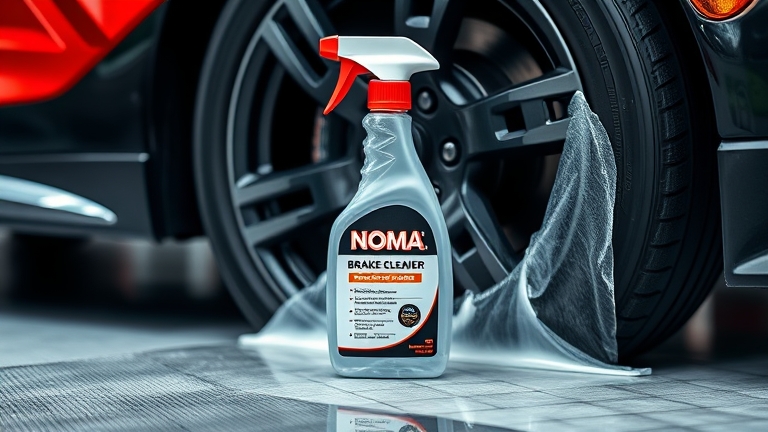 NOMA 350 — Specialized Brake Disc & Brake Dust Cleaner
Key features of NOMA 350:
- Non-abrasive formula, safe on both alloy wheel finishes and standard wheel paint.
- Breaks down heavy dust buildup in 5–10 minutes (depending on how caked-on it is).
- Leaves no chemical residue — rinses off with plain water.
- Affordably priced for regular at-home use.
Cleaning your brakes correctly at home also helps you get the most out of this product.
Sonax — An International Wheel Cleaner
Sonax is a German car care brand known for its fast-reacting formulas. Its brake and dust cleaner relies on powerful degreasing agents that break down dust quickly.
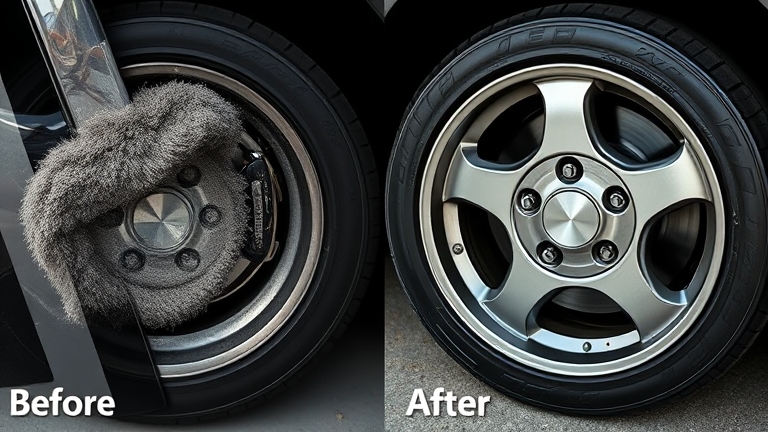 Sonax — An International Wheel Cleaner
Features of Sonax’s brake cleaning line:
- Fast-acting — dust breaks down in 3–5 minutes.
- Formulated with relatively strong degreasing agents.
- Widely available internationally and easy to find.
- Priced above average compared to similar products.
NOMA 350 vs. Sonax: Detailed Comparison Table
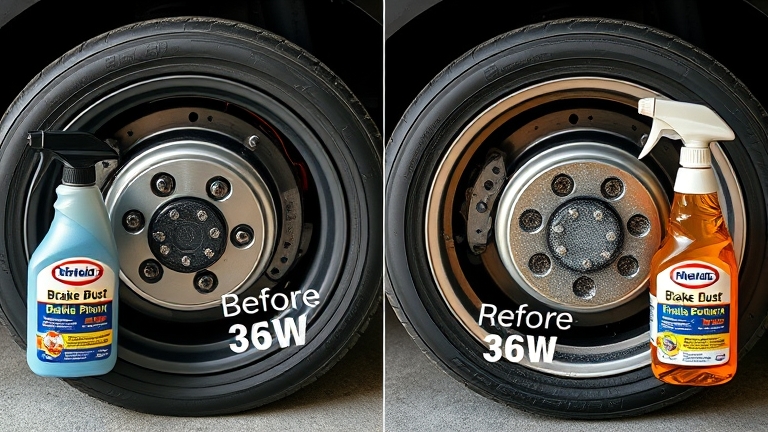 NOMA 350 vs. Sonax: Detailed Comparison Table
| Comparison Criteria | NOMA 350 | Sonax |
|---|---|---|
| Dwell time | 5–10 minutes | 3–5 minutes |
| Safe on wheel finish | ✓ Well-balanced | ✓ Good, but can seep into tight gaps |
| Skin safety | ✓ Non-corrosive (within limits) | ✓ Wash hands immediately after use |
| Ease of use | ✓ DIY-friendly, easy to control | ⚠ Dilution needs adjusting |
| Product economy | ✓ Moderate amount needed, easy to control | ✓ Highly effective, but needs careful dosing |
| Effectiveness on heavy dust | ✓✓ Excellent | ✓ Good, but can be inconsistent on repeat use |
| Ease of rinsing | ✓ Rinses clean in one pass | ⚠ Needs 2–3 rinses to clear residue |
| Local availability | ✓ Authentic product, 24/7 support | ⚠ Depends on the distributor |
Which Brake Dust Remover Is Right for You?
Choose NOMA 350 if you:
- Want a reasonably priced product without sacrificing performance.
- Clean your wheels frequently (every 2–4 weeks) and want better value for money.
- Are new to detailing and need something easy to control with low risk.
- Prioritize local support and a clear warranty.
Choose Sonax if you:
- Prioritize speed — dust breaks down fast, ideal when you’re short on time.
- Have detailing experience and are comfortable adjusting concentration.
- Are willing to pay more for a German-imported formula.
- Deal with heavy brake dust regularly (multi-spoke alloy wheels or high-performance brakes).
How to Safely Remove Brake Dust from Wheels
Whether you choose NOMA 350 or Sonax, the basic steps are similar:
- Prep: Rinse the wheel with clean water first to remove surface dust.
- Spray on the product: Apply evenly to the wheel and let it dwell for 5–10 minutes (depending on the product).
- Agitate gently: Use a soft brush or cloth to work the product in.
- Rinse thoroughly: Rinse with water and check for leftover residue.
- Dry completely: Use a microfiber towel to dry fully and prevent corrosion.
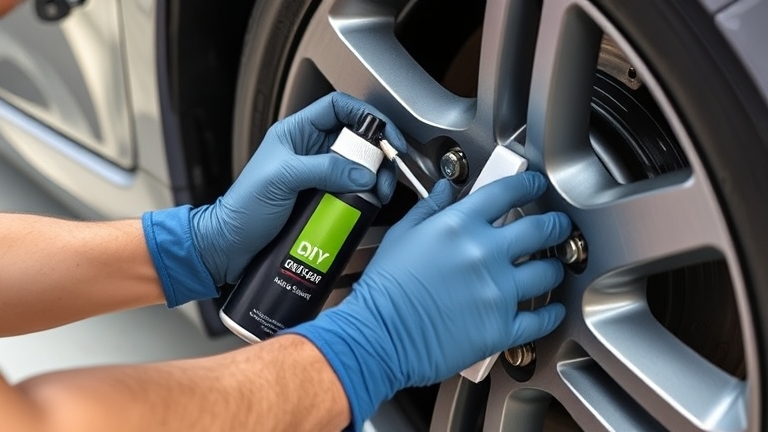
⚠ Safety note when using a brake dust remover on wheels: Avoid direct contact with skin or eyes, wear protective gloves, and work in a well-ventilated area.
A complete guide to caring for your car’s paint can help you further refine your process.
Other Factors That Affect Brake Dust Removal Results
The effectiveness of any brake dust remover also depends on:
- Dust age: Fresh dust (under 2 weeks old) is easier to remove than old dust that has bonded with the finish over time.
- Wheel type: Glossy painted wheels clean up more easily, while textured or anodized surfaces hold onto dust more stubbornly.
- Weather conditions: It’s best to clean brake dust in the morning or evening, out of direct sunlight.
- Salt and humidity: In coastal areas or regions with high humidity, brake dust bonds even more tightly.
You can pair NOMA 350 with NOMA 880 paint protection coating after cleaning to keep your wheels glossy longer and make it harder for brake dust to stick.
Frequently Asked Questions About Brake Dust Removal on Wheels
How often should I remove brake dust?
It depends on how you drive. If you drive daily in the city with frequent braking, clean your wheels every 2–3 weeks. If you mostly drive highways with less braking, once a month is usually enough. Regular brake inspections also help catch issues early.
Can I use regular soap instead of a dedicated brake dust remover?
No. Regular soap only removes surface dust. Brake dust contains binding compounds that don’t dissolve easily and require a dedicated cleaner like NOMA 350 to break down completely. Using regular soap just wastes time and effort.
Will NOMA 350 damage my wheel’s finish?
No. NOMA 350 is formulated to be safe on wheel finishes — it’s non-abrasive and won’t dull the color. That said, you should rinse it off within 10 minutes to avoid leaving it on too long, and always wear gloves to protect your skin.
Which is more effective on very heavy brake dust — Sonax or NOMA 350?
Both are effective, but Sonax acts faster (3–5 minutes). NOMA 350, however, is both safe and easy to control — for very heavy dust, simply let it dwell an extra 2–3 minutes and agitate again. The final results end up nearly identical.
Should I pair brake dust removal with other NOMA products?
Yes. After using NOMA 350 to remove brake dust, follow up with NOMA 890 spray sealant or NOMA 880 nano coating to protect your wheel finish longer and make it harder for brake dust to build up again.
Conclusion: Brake Dust Removal on Wheels — NOMA 350 or Sonax?
NOMA 350 is the best choice for most DIY car owners for three reasons:
 Frequently Asked Questions About Brake Dust Removal on Wheels
- Well-balanced performance and price: Comparable results, at 40–50% less than Sonax.
- Easy and safe to use: An effective formula that’s also easy to control, ideal for beginners.
- Local support: A clear warranty and 24/7 support at noma.vn.
Sonax is a good fit if you prioritize speed and already have detailing experience.
Whichever product you choose, the key is cleaning brake dust off your wheels regularly to keep them looking bright and to extend their lifespan. Choose NOMA 350 to start your professional at-home car care routine — low cost, high performance, and reliable technical support included.
Have you tried NOMA 350 or Sonax before? Share your experience in the comments below — we’re happy to offer more advice on wheel care.

Faded Black Trim on Your Car: 3 Root Causes and How to Fix It

Faded Black Trim on Your Car: Understanding the Causes and Choosing the Right Fix
Black plastic trim on your car — wiper blades, bumpers, door trim, and other exterior plastic parts — gradually fades after prolonged exposure to sun, rain, and the elements. Beyond hurting the way your car looks, this fading is also a sign that the plastic surface itself is deteriorating. In this article, we’ll break down the causes, how to prevent it, and an effective restoration solution using NOMA 250.
Why Does Black Trim Fade? 3 Main Causes
Fixing faded black trim starts with understanding what’s causing it. Three main factors damage the plastic’s surface structure:
1. UV rays from the sun
Ultraviolet rays (UV-A and UV-B) penetrate deep into the polypropylene or ABS plastic on your car. Over time, this exposure breaks down the molecular bonds, leaving the surface rough and stripped of its natural shine. This is the leading cause — especially in areas with strong sun between 9 a.m. and 4 p.m.
2. Oxidation
Oxygen in the air combines with high heat and humidity to form oxidative compounds. These create a dull, grayish film on the plastic surface — that’s the “faded” look you’re seeing.
3. Dirt, road salt, and grime buildup
Acid rain, road dust, pet hair, overspray from other vehicles — all of it gradually builds up on the plastic. These contaminants don’t just dull the shine; they also trap moisture and speed up oxidation. Left too long, they can etch into the surface and cause permanent damage.
3 Ways to Fix Faded Black Trim Effectively
Prevention always beats a last-minute fix. Here are 3 preventive measures that professional detail shops commonly use:
Method 1: Keep it covered and out of direct sun
Park in a garage, under a carport, or use a car cover — especially between 9 a.m. and 4 p.m., when UV rays are at their strongest. If that’s not an option, use a breathable car cover.
Method 2: Clean it regularly (every 2 weeks)
Wash the trim with clean water and a mild car shampoo, then dry it completely with a towel (don’t let it air-dry). This removes dirt, salt, and grime before they can trap moisture and trigger oxidation. According to national quality standards guidance, washing your car every 2 weeks can cut the rate of surface damage by up to 40%.
Method 3: Use a protective product (nano coating or trim dressing) to restore black trim
After cleaning, apply a protective trim dressing or a dedicated nano coating to the plastic surface. This creates a barrier against UV, water, dirt, and oxidation, offering protection for roughly 3–6 months depending on the product quality.
How to Restore Faded Black Trim: A Quick Fix with NOMA 250
If your trim has already faded, don’t worry. NOMA 250 (faded black trim restorer) is specifically designed to bring back that deep black shine on your car’s plastic.
How does NOMA 250 work?
NOMA 250’s formula combines natural conditioning oils with surface-active agents to:
- Penetrate deep into the micro-pores of damaged plastic.
- Break down the dull oxidized layer, restoring natural shine after just one application.
- Form a protective barrier against UV and pollutants for the next 2–3 months.
- Stay safe on every type of plastic: polypropylene (PP), ABS, and EVA.
How to use NOMA 250 to restore black trim correctly:
1. Clean the surface: Wash the plastic with clean water and mild soap, then dry it completely with a towel.
2. Apply the product: Pour a small amount of NOMA 250 onto your hand or a soft applicator brush (for larger areas).
3. Spread it evenly: Work it into the surface using slow, circular motions, making sure to cover the entire area.
4. Let it absorb: Wait 3–5 minutes for the product to soak in — no need to wipe it off (though you can lightly buff with a clean cloth if you prefer).
5. Finish up: Wait 30 minutes before driving or exposing the surface to water.
You’ll see results right away — the plastic will look deep black and glossy again, with a noticeably softer feel to the touch. Reapply every 2–3 months to keep it looking its best.
Comparison Table: NOMA 250 vs. Other Methods
| Criteria | NOMA 250 | Regular gear oil | Silicone oil | No product (wash only) |
|---|---|---|---|---|
| Restores shine | ✓ Strong, lasts 2–3 months | ✓ Strong, but UV-sensitive | ✓ Strong, but hard to wipe clean | ✗ Only 2–3 days |
| UV protection | ✓ Excellent | ✗ Low | ✓ Good | ✗ None |
| Skin-safe | ✓ Just wash hands after use | ✗ Greasy, hard to wash off | ✓ Safe | ✓ Safe |
| Fixes oxidation | ✓ Good (purpose-built product) | ✓ Decent | ✗ No, just masks it | ✗ No |
| Cost per use | ✓ Economical (one bottle, many uses) | ✓ Cheap | ✓ Cheap | N/A |
| Ease of use | ✓ Very simple | ✓ Simple | ✗ Messy, hard to control | ✓ No product needed |
Frequently Asked Questions About Restoring Black Trim
Is faded black trim actually a problem, or just cosmetic?
Restoring faded black trim isn’t just about looks — it’s a sign the plastic itself is breaking down. Once trim fades, UV exposure and oxidation have already damaged the outer polypropylene layer, making it weaker and more prone to cracking and flaking. Left unchecked, the plastic can break down completely, losing its ability to seal out water and insulate against temperature. Faded wiper blades, for example, won’t clear water properly, which can affect your visibility while driving. That’s why fixing it early is the best way to extend the plastic’s lifespan.
Can a regular plastic dressing replace NOMA 250?
It can, but the results won’t be the same. Regular dressings (like gear oil or A/C lubricant) only coat the surface, giving black trim a temporary shine. They don’t have a formula designed to actually reverse the oxidized, faded layer, so the effect fades within 3–7 days. NOMA 250 is specifically engineered to penetrate and restore damaged plastic surfaces, giving you protection that lasts 2–3 months. If you want results that last, NOMA 250 is the better choice.
Can I use NOMA 250 on other plastic parts, like the dashboard or door trim?
Yes, NOMA 250 is safe on all types of automotive plastic: wiper blades, chrome door trim, door moldings, bumpers, plastic body panels, and even the interior dashboard. Just make sure the surface is clean before applying it evenly.
It’s really hot in summer — is it okay to let NOMA 250 absorb for 3–5 minutes at 104°F (40°C)?
Yes, that’s fine. NOMA 250 is formulated to hold up in high heat (it can withstand temperatures up to 122°F/50°C without breaking down). That said, try to avoid applying it between noon and 3 p.m. when surfaces are at their hottest — early morning or late afternoon works better for even absorption.
How often should I reapply NOMA 250?
Restoring black trim with NOMA 250 typically lasts 2–3 months depending on conditions (sun exposure, rain, car washing frequency). If your car is parked outside every day, reapply every 6–8 weeks. If it’s garaged, every 12–16 weeks is enough.
Conclusion: Don’t Wait to Fix Faded Black Trim
Restoring faded black trim is an easy problem to solve once you understand what’s causing it. The three main culprits — UV, oxidation, and grime — can all be kept in check with regular cleaning, smart sun protection, and the right protective product. If your trim has already faded, reach for NOMA 250 to restore that deep black color and keep it protected in the months ahead. With just 5 minutes of application and a 30-minute wait, you’ll see a real difference. Make washing and conditioning your trim every two weeks a habit, and your car will keep looking like new.
Have you dealt with faded trim before? Share what worked for you — we’d love to hear it!