
5 Ways to Remove Water Spots from Car Glass: NOMA 911 vs Common Methods 2026

5 Best Ways to Remove Water Spots from Car Glass
Yellowed, hazy glass with dried-on rain spots and hard water stains is a common problem, especially on cars that have been on the road for years or spend a lot of time parked outdoors. According to automotive maintenance experts in Vietnam, removing water spots from car glass is one of the most important exterior maintenance jobs — and one that’s most often overlooked.
This article covers 5 methods for removing water spots from car glass, with clear pros and cons for each, so you can pick the solution that’s right for you. Alongside the DIY approaches, we’ll also take a close look at NOMA 911 — a specialized, American-technology solution built specifically for this job.
Method 1: Remove Water Spots with Distilled Water
Distilled water is the most common, simplest, and most budget-friendly way to remove water spots from car glass. It works by diluting the minerals, lime, and salt deposits stuck to the glass.
How to do it:
-
- Rinse the glass clean with plain cold water first.
-
- Spray or pour distilled water onto the glass.
-
- Dry with a soft microfiber towel.
-
- Repeat 2-3 times if the buildup is heavy.
Pros:
-
- Cheap and easy to find (convenience stores, gas stations).
-
- Completely safe for glass, paint, and skin.
-
- No harsh chemicals involved.
Cons:
-
- Only effective on light staining or freshly dried rain spots.
-
- Old, deep-set stains need multiple treatments.
-
- No long-term protective effect.
Method 2: Remove Water Spots with White Vinegar (Acetic Acid)
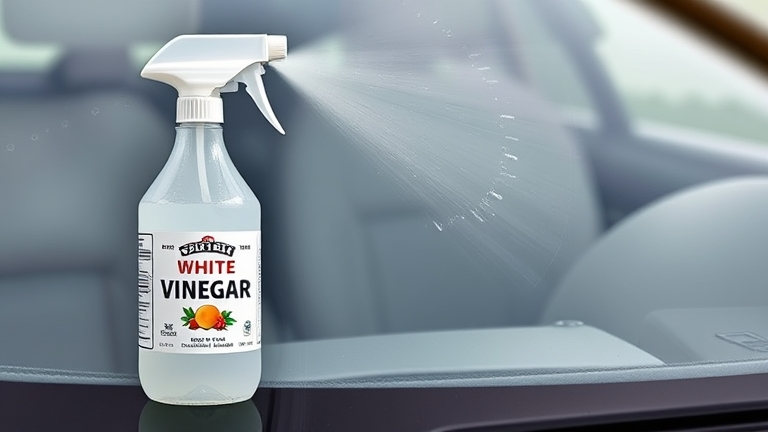 Method 2: Remove water spots from car glass with white vinegar (acetic acid)
White vinegar contains acetic acid, which helps dissolve the mineral layer stuck to the glass. It’s a time-tested home remedy that’s been passed down for years.
How to do it:
-
- Mix white vinegar with distilled water in a 1:1 ratio.
-
- Spray the mixture onto the stained glass.
-
- Let it sit for 10-15 minutes.
-
- Wipe with a soft towel or old rag.
-
- Finish with a final rinse of distilled water.
Pros:
-
- Very cheap (under $0.50 worth of vinegar).
-
- A step stronger than plain distilled water.
-
- Non-toxic to people and pets.
Cons:
-
- The smell is extremely strong and lingers for a while.
-
- Can damage the outer glass coating if left on too long.
-
- Results vary depending on how old the stains are.
Method 3: Use an Off-the-Shelf Commercial Cleaner
Commercial glass cleaners (like bathroom or household glass cleaners) use strong chemicals to strip away stains quickly.
How to do it:
-
- Spray the cleaner onto the glass.
-
- Let it sit for 5-10 minutes depending on how bad the staining is.
-
- Wipe with a cloth or rag.
-
- Rinse thoroughly, multiple times.
Pros:
-
- Fast and highly effective on stubborn stains.
-
- Easy to buy — available at most stores.
-
- Reasonably priced (roughly $1-2).
Cons:
-
- Contains harsh chemicals that can irritate skin and eyes.
-
- Can dull or damage the glass coating.
-
- Strong chemical odor that can make breathing uncomfortable.
-
- Risk of damaging the paint if it drips onto the body.
-
- Not the safest option for at-home use.
Method 4: Remove Water Spots with Mechanical Tools (Abrasive Pads, Polishers)
This method uses physical abrasion to scrub away stubborn stains bonded to the glass.
How to do it:
-
- Use a fine-grit abrasive pad or a soft-bristle brush.
-
- Gently scrub the stained area of the glass.
-
- Or use a polisher on low speed with a soft pad.
-
- Rinse thoroughly with distilled water when finished.
Pros:
-
- Very effective on deep, old stains.
-
- No chemicals needed — completely safe in that regard.
-
- Low cost (just the pad or tool).
Cons:
-
- Risk of scratching the glass if done incorrectly.
-
- Takes a long time and is tiring on the arms.
-
- Not suitable for glass with a hydrophobic coating.
-
- Requires skill and experience.
Method 5: Remove Water Spots with NOMA 911 (Specialized pH-Neutral Solution)
NOMA 911 is a solution built on American technology, designed specifically to tackle water spots on car glass. It combines stain removal and a hydrophobic (water-repelling) coating in a single treatment.
How to use it:
-
- Rinse the glass clean with water first.
-
- Spray NOMA 911 onto the stained glass surface.
-
- Let it sit for 5-10 minutes depending on how set-in the stains are.
-
- Dry with a microfiber towel.
-
- The glass will come out crystal clear with a water-repelling protective layer.
Pros:
-
- pH-neutral formula, 100% safe for glass, paint, and skin.
-
- Fast-acting (5-10 minutes), effective on both light and heavy staining.
-
- Removes stains and adds a hydrophobic layer at the same time, keeping glass clearer for longer.
-
- No harsh odor, environmentally friendly.
-
- Easy to use at home, no special tools required.
-
- Long-lasting benefit: glass resists new staining for several weeks afterward.
Cons:
-
- Pricier than DIY methods (in line with other specialty detailing products).
-
- Should be purchased from a trusted supplier.
Detailed Comparison Table: 5 Methods for Removing Water Spots from Car Glass
| Criteria | Distilled Water | White Vinegar | Commercial Cleaner | Mechanical Tools | NOMA 911 |
|---|---|---|---|---|---|
| Effective on light staining | ✓ | ✓ | ✓✓✓ | ✓✓ | ✓✓✓ |
| Effective on old, deep staining | – | ✓ | ✓✓ | ✓✓✓ | ✓✓✓ |
| Time required | 10-15 min | 15-20 min | 10-15 min | 20-30 min | 10-15 min |
| Cost (USD) | <$0.50 | <$1 | $1-2 | $1.50-4 | $6-10 |
| Overall safety | ✓✓✓ | ✓✓ | – | ✓✓ | ✓✓✓ |
| Risk of damaging glass/paint | Low | Moderate | High | High | Very low |
| Long-term protection | No | No | No | No | ✓ (1-2 weeks) |
| Odor / chemical safety | Odorless | Strong smell | Chemical smell | None | None / light scent |
| Popularity | Very high | High | Moderate | Moderate | Specialty product |
Bottom line: If your priority is maximum safety, strong results, and lasting protection, NOMA 911 is the top choice. If you’re looking for a budget option and don’t mind spending extra time, distilled water or white vinegar are solid fallbacks.
Beyond NOMA 911, you can also check out our detailed glass restoration guide to get a fuller picture of a complete car glass maintenance routine.
Common Mistakes When Removing Water Spots from Car Glass
Car owners often make mistakes that either damage the glass further or make the treatment less effective:
Mistake 1: Using hot water
Hot water can stress the glass, causing it to crack or widening existing hairline cracks. Always use cold or room-temperature water.
Mistake 2: Wiping with a rough, dry rag
A rag or towel that’s too coarse will scratch the glass. A soft microfiber towel or chamois cloth is the correct choice.
Mistake 3: Leaving the cleaner on too long
Strong cleaners left on too long can dull the glass or break down the anti-glare coating. Stick to the recommended dwell time (usually 5-15 minutes).
Mistake 4: Cleaning glass while it’s hot
Glass heated by direct sunlight causes the solution to dry too quickly, leaving white streaks. Work early in the morning, in the evening, or shade the glass from the sun.
Mistake 5: Not rinsing thoroughly afterward
Leftover cleaning solution on the glass forms a hazy film that reduces water-repelling performance and clarity. Always finish with 1-2 rinses of distilled water.
Following the maintenance guidance from reputable auto service centers, doing water spot removal correctly extends the life of your glass and keeps your visibility safe while driving.
How to Protect Your Glass After Removing Water Spots
After you finish removing water spots from car glass with any method, you should follow up with these protective steps:
1. Apply a hydrophobic coating
Specialty solutions like NOMA 911 build a protective layer in automatically. If you used another method, consider applying a separate water-repelling product afterward.
2. Shield the glass from UV rays
Glass can re-yellow due to sun oxidation. Park in the shade when possible or use a windshield sunshade.
3. Clean regularly
Wash the glass once a week with cold water and a soft towel to remove dust and rain residue before it has a chance to bond to the surface.
4. Avoid leaving the car exposed to rain
Acidic rainwater speeds up staining. Park in a garage or under cover whenever you can.
Frequently Asked Questions About Removing Water Spots from Car Glass
How often should you remove water spots from car glass?
Depending on usage and climate, aim to treat the glass once every 2-3 months if the car is frequently parked outdoors. If it’s garaged, once every 6 months is usually enough. Treat sooner if you notice white streaks or yellowing.
Can dish soap be used to remove water spots from glass?
Not recommended. Dish soap contains strong chemicals that can dull the glass or break down protective coatings. Stick to distilled water, diluted vinegar, or products designed specifically for automotive glass.
Is NOMA 911 safe for glass over the long term?
Yes. NOMA 911’s pH-neutral formula is designed to be safe for long-term use, without dulling or thinning the glass. It also builds an anti-oxidation protective layer that helps the glass stay clearer for longer.
Does removing water spots strip the anti-glare coating?
It can, if you use overly harsh chemicals or aggressive mechanical methods. That’s why it’s best to choose pH-neutral products or gentle approaches like diluted distilled water or vinegar.
Should you use toilet bowl cleaner on car glass?
Absolutely not. Toilet bowl cleaner contains strong acids (like hydrochloric acid) that can permanently scratch, thin, or damage the glass. Only use products specifically formulated and rated safe for automotive glass.
How long after removing water spots can the car be driven in the rain?
If you used NOMA 911 or another hydrophobic product, let it dry completely (at least 30 minutes) before exposing it to water or rain, so the protective layer has time to fully cure.
Conclusion: Which Water Spot Removal Method Should You Choose?
Removing water spots from car glass is a key piece of maintenance for keeping your visibility safe and your car looking its best. This article walked through 5 common methods with their specific pros and cons.
 Frequently asked questions about removing water spots from car glass
If you mostly maintain your car at home and want the best results at a reasonable cost, NOMA 911 is the top pick right now. It removes stains effectively, is completely safe (pH-neutral), and builds lasting protection — advantages that DIY methods simply can’t match.
If you’re on a tight budget, distilled water or white vinegar are safe, time-tested options. Just keep in mind they’ll require more repeat treatments and offer no long-term protection.
Explore more American-technology car care products from NOMA to find the right solutions for your car’s complete maintenance needs.