


Black Trim Restoration: NOMA 250 vs Liqui Moly — 2026 Comparison

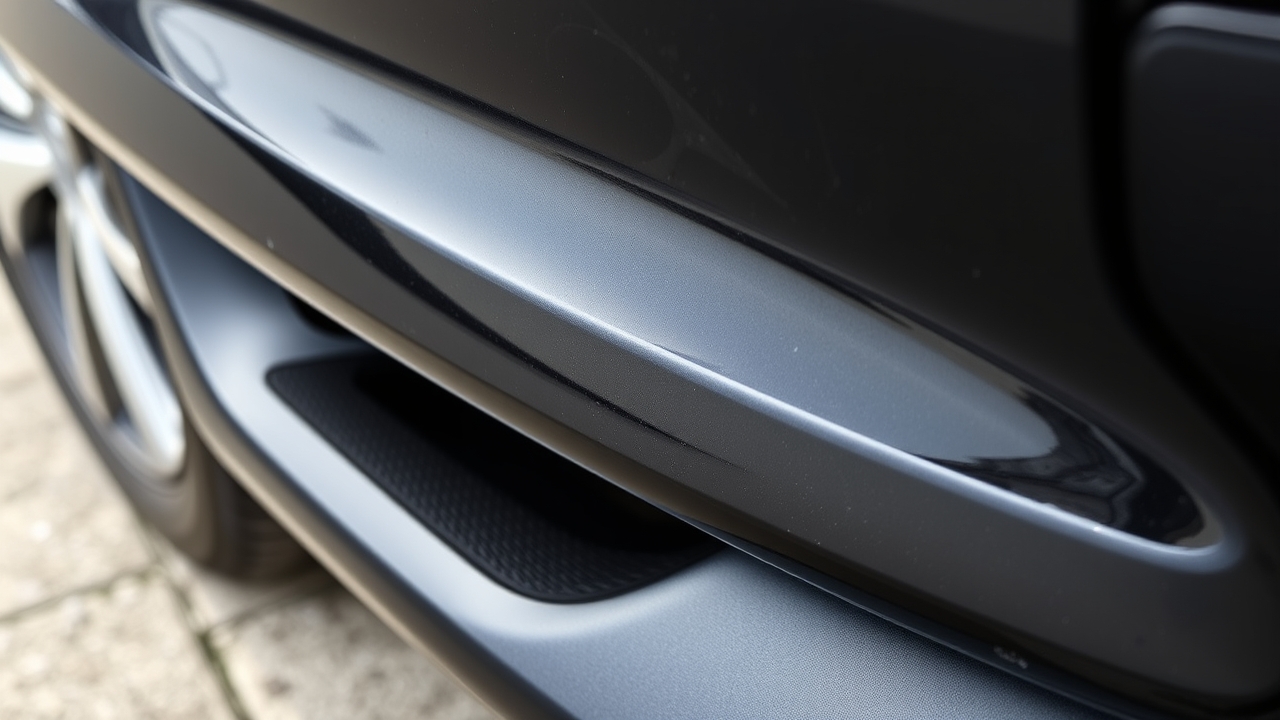
Restoring Black Trim on Your Car: NOMA 250 vs Liqui Moly — Detailed Comparison
Black trim on your car — front and rear bumpers, window trim, rocker panels — tends to fade and lose its shine after just a few months on the road. Per detailing industry material research, the main culprits are UV rays, dust, acidic rainwater, and other environmental chemical agents. To bring black trim back to its original look, two standout products today are NOMA 250 (an American-founded brand) and Liqui Moly (Germany). This article breaks down both options in detail to help you restore your car’s black trim the right way.
Mục lục
NOMA 250 vs Liqui Moly: Two Different Approaches
When it comes to restoring black trim, these two brands take completely different approaches. NOMA 250 is formulated to American standards with a neutral pH, letting it restore black trim gently without causing damage. Liqui Moly, on the other hand, uses a fast-evaporating silicone-oil formula that builds shine quickly but may not last as long as other products.
This difference directly affects the results and lifespan of the trim’s protective coating. NOMA 250 is built for long-lasting black trim restoration, while Liqui Moly prioritizes fast drying and instant shine. If you like immediate results, Liqui Moly might be the pick. But if you want long-term performance and American-style car care, NOMA 250 delivers better durability.
You can also check out our full paint care guide to better understand the complete detailing process.
Ingredients and How They Work
Ingredients determine the effectiveness and safety of any black trim restorer. NOMA 250 contains lightweight polymers and select natural oils, with a neutral pH that won’t leave salt residue or white streaks on plastic. This formula is designed to penetrate deep into the plastic’s micro-pores, restoring rich color from within.
 Ingredients and How They Work
Liqui Moly instead uses a silicone and mineral oil blend, creating a glossy surface coating quickly. This method works well short-term but tends to wear off after 2–4 weeks, especially after washing the car or exposure to rain.
That’s why choosing NOMA 250 for black trim restoration gives you longer-lasting results. Here’s a clear comparison of how each product works:
-
\t
- NOMA 250: Restores from within → Lasts 4–6 months per application
- Liqui Moly: Surface coating → Lasts 2–4 weeks, needs frequent reapplication
\t
Comparison Table: NOMA 250 vs Liqui Moly
| Criteria | NOMA 250 | Liqui Moly | Verdict |
|---|---|---|---|
| Ingredients | Polymers + natural oils, neutral pH | Silicone + mineral oil | NOMA is gentler |
| Durability | 4–6 months per application | 2–4 weeks | NOMA wins on durability |
| Dry Time | 15–20 minutes | 5–10 minutes | Liqui Moly dries faster |
| Shine Level | Natural, matte-satin | High gloss instantly | Comes down to personal taste |
| UV Resistance | Good, contains antioxidants | Average | NOMA performs better |
| Price (approx.) | $7–9 / bottle | $9–13 / bottle | Varies by retailer |
| Effect on Faded Trim | Noticeable restoration, color returns | Temporary shine, doesn’t restore original color | NOMA fixes the root issue |
| Ease of Use | Very easy, no special skill needed | Very easy | Tie |
| Safety Notes | Wash hands after use | Wash hands after use | Tie |
Which One Should You Choose?
Picking the right black trim restorer comes down to your specific needs:
 Comparison Table: NOMA 250 vs Liqui Moly
Choose NOMA 250 if:
-
\t
- You want to restore faded black trim once and have it last 4–6 months
- You like American-style car care, DIY at home without a trip to the shop
- You’d rather have lasting results than instant shine
- Your car has several black trim pieces that need restoring (bumpers, moldings, window trim)
\t
\t
\t
Choose Liqui Moly if:
-
\t
- You need instant shine for an event or an important trip
- You don’t mind reapplying the product every 2–3 weeks
- You want maximum, high-gloss shine
\t
\t
Per general consumer product safety guidelines, both products are properly imported and meet applicable regulations. The main differences come down to effectiveness and how long the results last.
Real-World Results: What to Expect
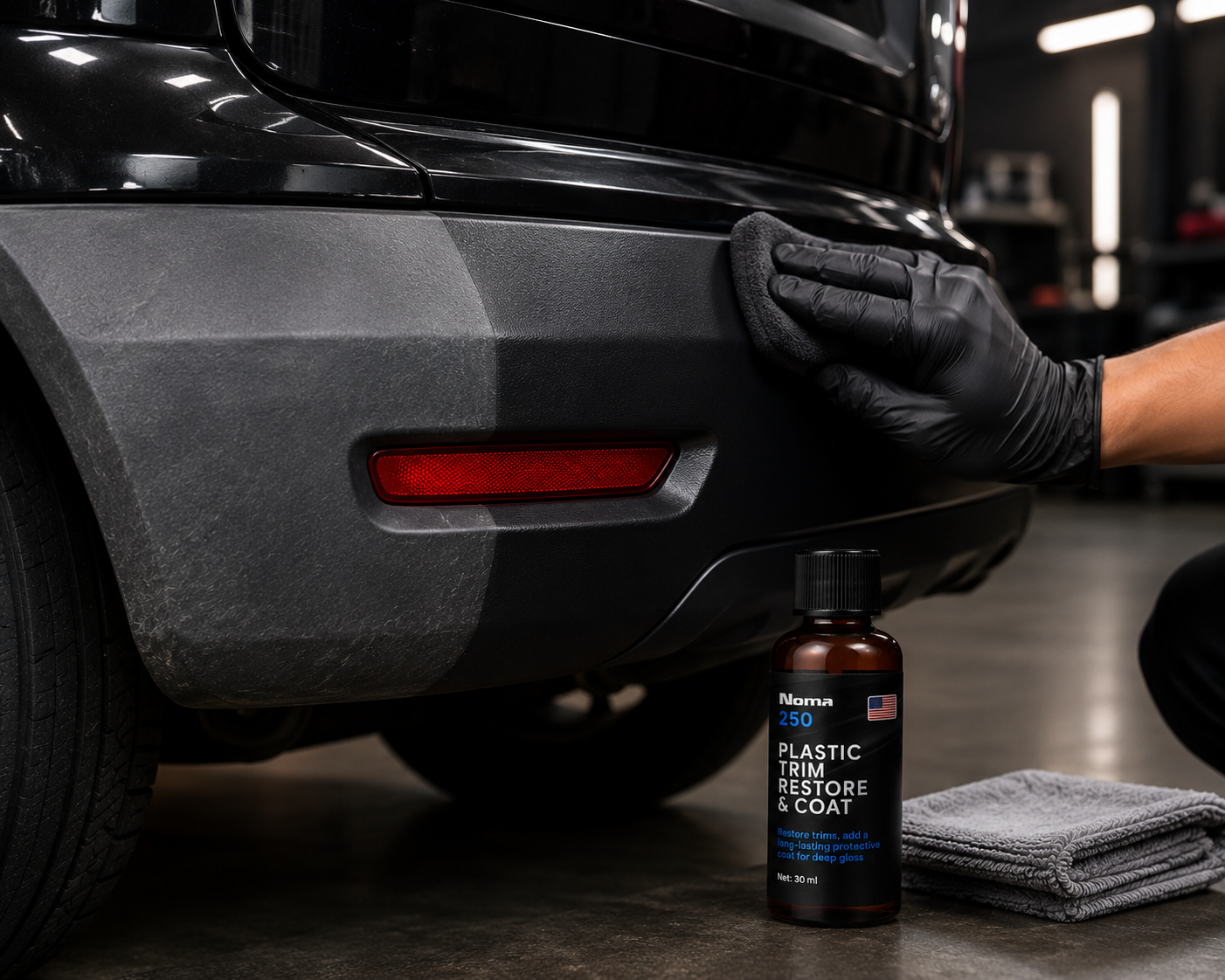
When using NOMA 250 to restore black trim, car owners typically see:
-
\t
- Trim color turns deep and rich again after just one application
- A natural shine, not an “artificial” gloss
- Fade resistance that lasts 4–6 months
- No white streaks once it dries
\t
\t
\t
With Liqui Moly:
-
\t
- Shine appears within minutes
- Needs even application to avoid streaking
- Shorter lifespan, needs reapplication every 2–4 weeks
- Doesn’t restore the plastic’s original condition
\t
\t
\t
So if you’re after an effective black trim restoration solution, NOMA 250 offers the better cost-to-benefit ratio over the long run.
FAQ: Frequently Asked Questions
How often do you need to restore black trim?
With NOMA 250, you can care for your trim every 4–6 months depending on weather and how much the car is used. If your car sits outside long-term or gets washed frequently with a pressure washer, that cycle can shrink to every 3 months. Liqui Moly needs reapplication every 2–4 weeks, so the long-term cost and effort add up faster.
 FAQ: Frequently Asked Questions
Is NOMA 250 safe on skin?
NOMA 250 has a neutral pH and is designed for safe use. Even so, we recommend wearing gloves during application to avoid skin irritation, and washing your hands thoroughly afterward. If the product gets on your skin, rinse immediately with water.
Is Liqui Moly really better than NOMA?
“Better” depends on what you’re optimizing for. Liqui Moly dries fast and delivers high gloss, but NOMA 250 lasts longer. If long-term value matters most, NOMA 250 wins. If you just need instant shine, Liqui Moly is the better fit.
Is restoring black trim at home hard to do?
Not at all. Here’s all it takes:
1. Wash the plastic surface with water and a soft cloth
2. Dry completely
3. Spray NOMA 250 evenly over the surface (or apply with a soft cloth)
4. Let it sit for 15–20 minutes to dry
5. Wipe gently with a clean cloth if needed
No special skills required. Any car owner can do this at home.
Why does black trim fade in the first place?
Faded trim is the result of UV exposure, weather, dust, and chemical contact. The plastic’s surface oxidizes and loses color over time. Restoring black trim with a dedicated product brings back that rich color and adds a layer of protection against these environmental factors.
Conclusion: Choosing the Right Black Trim Restorer
Both NOMA 250 and Liqui Moly are quality products, but each has its own strengths. If you’re looking for a black trim restoration solution that lasts, saves money long-term, and is easy to use at home, NOMA 250 is the smarter pick. It doesn’t just restore color — it protects the plastic for the long haul.
On the other hand, if you need fast shine for a special occasion, Liqui Moly can get the job done. But at a similar price point and with the need for constant reapplication, you’ll end up spending more over time.
Start American-style car care with NOMA at home today. Restoring black trim has never been this easy!