


Black Trim Restoration: NOMA 250 vs. 4 Top Rivals
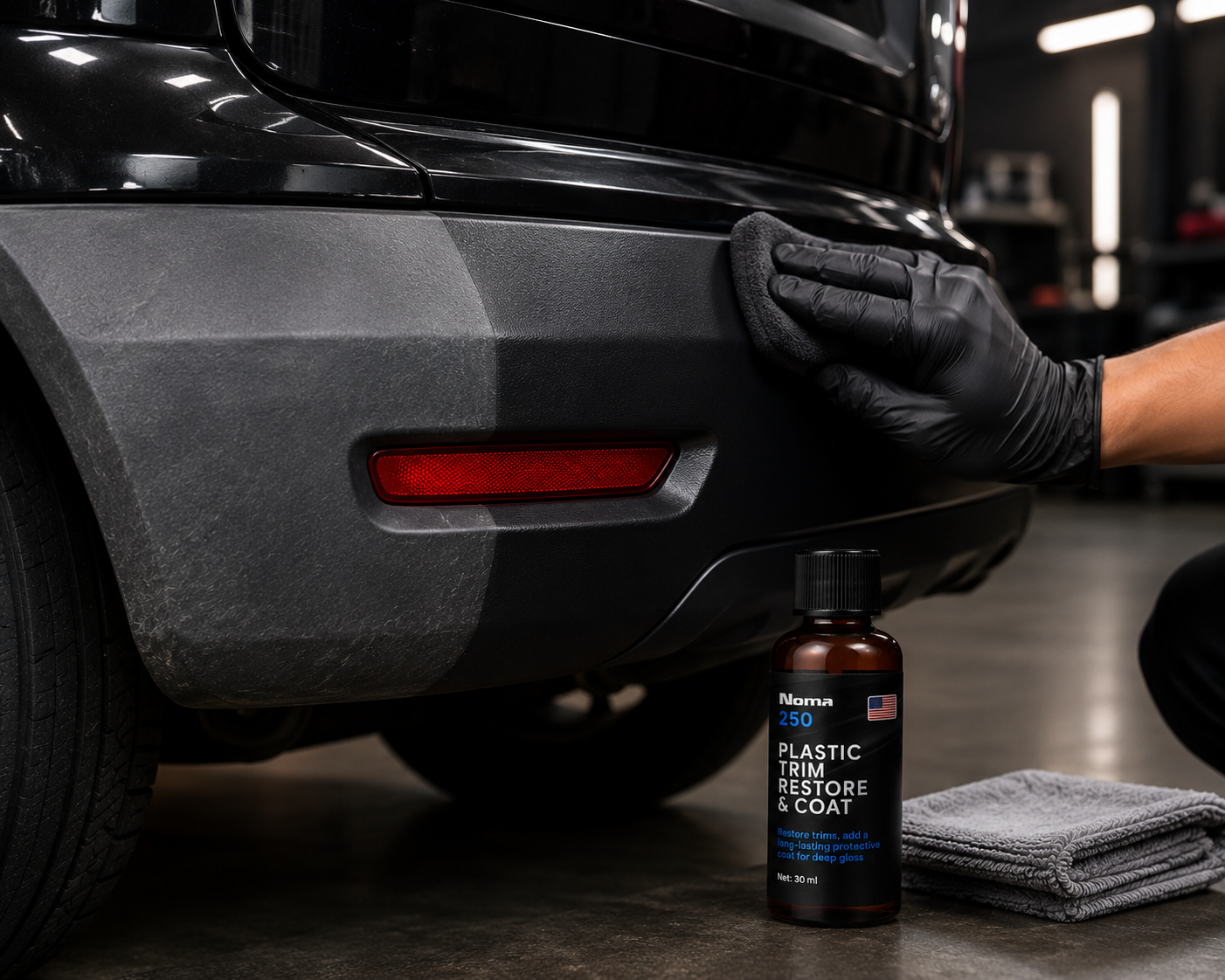
Textured black trim — window trims, door moldings, roof rails, spoilers — tends to fade and turn a chalky gray over time. According to international detailing experts, restoring black trim the right way can add 2-3 years to its lifespan. NOMA 250 is a textured-plastic restorer built to bring back that natural color without a trip to the shop.
Mục lục
This article breaks down black trim restoration against four leading rival products, so you can make the right call for your car.
What Is Black Trim Restoration, and Why Does It Matter?
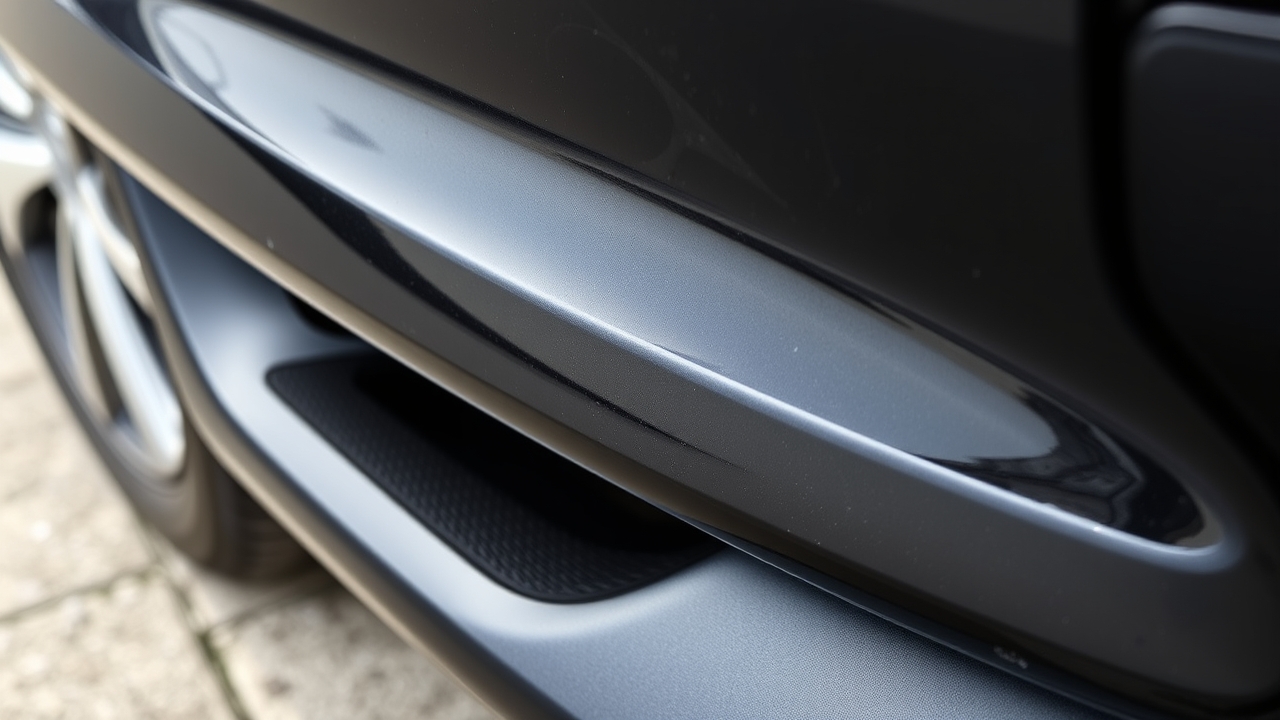
Textured plastic trim takes a constant beating from sun, rain, dust, and UV rays. Over time it loses moisture and oxidizes, which is what causes that dull, chalky fade — and exactly why black trim restoration has become a must-do maintenance step.
Black trim restorers work by adding a protective layer and boosting surface gloss. It’s a job any DIY car owner can handle at home — no special skills required.
Trim that typically needs restoring includes door moldings, window frames, exterior trim pieces, side steps, and rear spoilers.
Detailed Comparison: NOMA 250 vs. the Competition
| Criteria | NOMA 250 | Meguiar’s G190 | Sonax NanoPro | 3M Perfect-It | Chemical Guys VRP |
|---|---|---|---|---|---|
| Key ingredients | Purpose-built trim restorer | Oils and polymers | Nano-composite | Polymer blend | Tung oil base |
| Dry time | 5-10 min | 10-15 min | 8-12 min | 15-20 min | 10-15 min |
| Durability (weeks) | 4-6 weeks | 4-8 weeks | 6-10 weeks | 3-5 weeks | 4-6 weeks |
| Value rating | ⭐⭐⭐⭐⭐ | ⭐⭐⭐⭐ | ⭐⭐⭐ | ⭐⭐⭐⭐ | ⭐⭐⭐⭐ |
| DIY-friendly | ✓ Very easy | ✓ Easy | ✓ Easy | ~ Needs technique | ✓ Easy |
| Gloss build-up | ✓ Builds after 2-3 uses | ✓ Instant on first use | ✓ High from first use | ~ Moderate | ✓ High |
| Skin safety | ✓ Wash hands after use | ~ Rinse thoroughly | ✓ Safe | ✓ Safe | ✓ Safe |
The table above shows NOMA 250 standing out on price and DIY ease of use. Meguiar’s G190 and Sonax last longer, but cost more. 3M Perfect-It needs a more careful, even application technique.
Real-World Scenarios: Which Product Fits You?
Scenario 1: Regular Upkeep on a Budget
If you wash your car every two weeks and want to keep black trim looking fresh without breaking the bank, NOMA 250 is the smart pick. It costs 30-40% less than rival products, is easy to apply, and shows visible results after the very first coat.
 Detailed Comparison: NOMA 250 vs. the Competition
 Detailed Comparison: NOMA 250 vs. the Competition
The trade-off: at 4-6 weeks of durability, you’ll need to reapply more often. But given the low cost, that’s hardly a drawback.
Scenario 2: You Want Longer-Lasting Durability and Don’t Mind Paying More
Meguiar’s G190 or Sonax NanoPro are the better fit if you’d rather restore your trim less often (every 2-3 months). Sonax can last up to 10 weeks.
The trade-off: higher upfront cost. But calculated as a monthly cost, it can even out.
Scenario 3: Detail Shops and Garages Needing a Professional-Grade Product
Shop owners and detailers should consider Sonax NanoPro or Meguiar’s G190, since customers expect — and will pay for — longer-lasting results. NOMA 250 still works well for at-home detailing services.
How to Apply Black Trim Restorer the Right Way
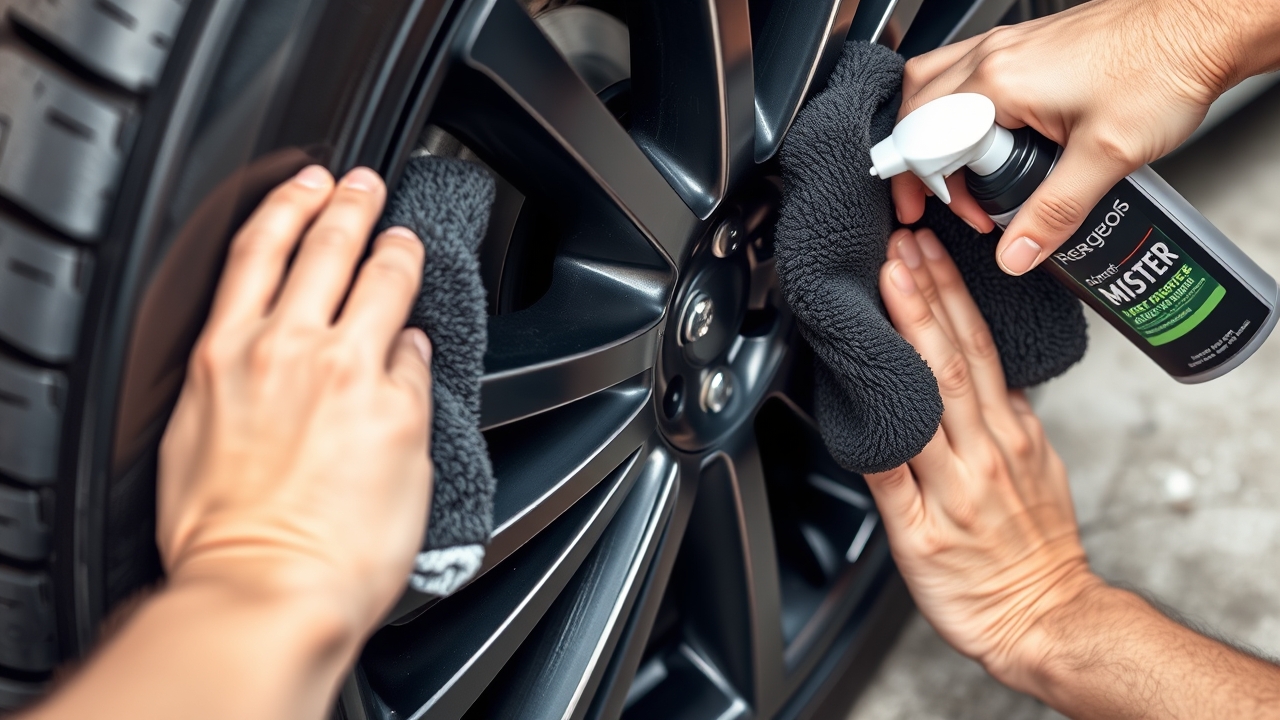
Whichever product you choose, the application process follows the same basic steps:
- Step 1: Wash the plastic trim thoroughly with soap and water, then dry completely.
- Step 2: Shake the product (NOMA 250, for example) well for 30 seconds.
- Step 3: Spray or wipe an even coat onto the surface and let it soak in for 2-5 minutes.
- Step 4: Gently buff with a soft cloth, or let it air-dry.
- Step 5: Repeat 2-3 times over 1-2 weeks to build up gloss.
It’s a simple job, but check the manufacturer’s detailed instructions first to avoid over-applying or uneven coverage.
Common Mistakes When Restoring Trim
Mistake 1: Applying one thick coat instead of several thin ones. Result: a cloudy, dust-attracting finish.
Mistake 2: Skipping the dry-down before applying. Leftover moisture keeps the product from bonding evenly.
Mistake 3: Using the wrong product for the plastic type (like a leather product on textured trim). Result: poor performance.
Mistake 4: Skipping gloves. Some black trim restorers contain ingredients that can irritate skin.
What Affects Restoration Results
How well a restoration turns out depends on more than just the product:
- Starting condition of the trim: Deeply faded plastic needs 3-4 coats; trim in decent shape only needs 1-2.
- Weather conditions: Apply on a dry day between 59-77°F (15-25°C) for even drying.
- Type of plastic: Softer plastic (door moldings) absorbs product more readily than rigid plastic (mirror housings).
- Ongoing care: Regular washing helps the results last longer.
Pricing and Where to Buy Black Trim Restorer
Prices for black trim restorers vary:
- NOMA 250: ~$4-6 (7-12 oz bottle) — the most affordable option in this group.
- Meguiar’s G190: ~$10-14 — a long-established, trusted brand.
- Sonax NanoPro: ~$12-18 — nano technology, longer durability.
- 3M Perfect-It: ~$11-15 — a name trusted across the industry.
- Chemical Guys VRP: ~$8-12 — affordable and widely available online.
Where to buy: auto shops, detailing specialists, and major online marketplaces (Amazon, eBay, Walmart). Stick with authorized sellers with real customer reviews.
Frequently Asked Questions
Q1: Is black trim restoration really necessary, or is it just marketing?
A1: It’s genuinely necessary — fading and chalky discoloration are a natural process for automotive plastic. Restoring trim properly can extend surface life by 2-3 years and helps you avoid a full trim replacement (which costs far more). Professional detailing centers routinely recommend it as part of a regular maintenance plan.
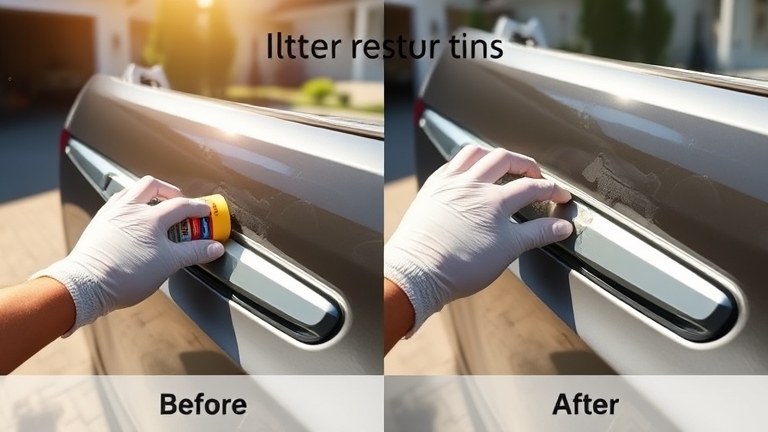 Frequently Asked Questions
Q2: Is NOMA 250 safe on your hands? Do I need gloves?
A2: Wearing gloves while applying NOMA 250 and washing your hands afterward is recommended to avoid skin irritation. If it gets in your eyes, rinse immediately with clean water.
Q3: Can I use NOMA 250 on interior plastic trim (dashboard, doors)?
A3: NOMA 250 is formulated specifically for exterior plastic trim. If you want to try it on interior trim, test a small, hidden area first.
Q4: How often does black trim restorer need to be reapplied?
A4: It depends on the product and how the car is used. NOMA 250 typically lasts 4-6 weeks, Sonax lasts longer (6-10 weeks). Reapply once you notice the trim losing its shine or starting to fade again.
Q5: Should I use multiple trim restorer products together?
A5: Not recommended. Each product has a different formula, and mixing them can reduce effectiveness or cause a chemical reaction. Pick one product and use it up before switching to another if you want to compare results.
Q6: Does black trim restoration work on every type of vehicle?
A6: Yes, as long as the trim is standard plastic (ABS, PVC). That said, on older vehicles (10+ years) with deeply cracked or damaged trim, restoration is only a temporary fix — full trim replacement is the more effective long-term solution.
Conclusion: Getting Black Trim Restoration Right
Restoring black trim is a small but important step in protecting your car’s overall appearance and value. The comparison above shows NOMA 250 as the best all-around DIY pick, thanks to its competitive price, ease of use, and clearly visible results.
If long-lasting durability is your priority and you’re willing to spend more, Sonax NanoPro or Meguiar’s G190 are worthwhile upgrades. Whichever product you choose, stick to the proper process: clean thoroughly first, apply thin coats, and keep up with regular maintenance.
Start restoring your trim today — you’ll notice the difference after the very first application.
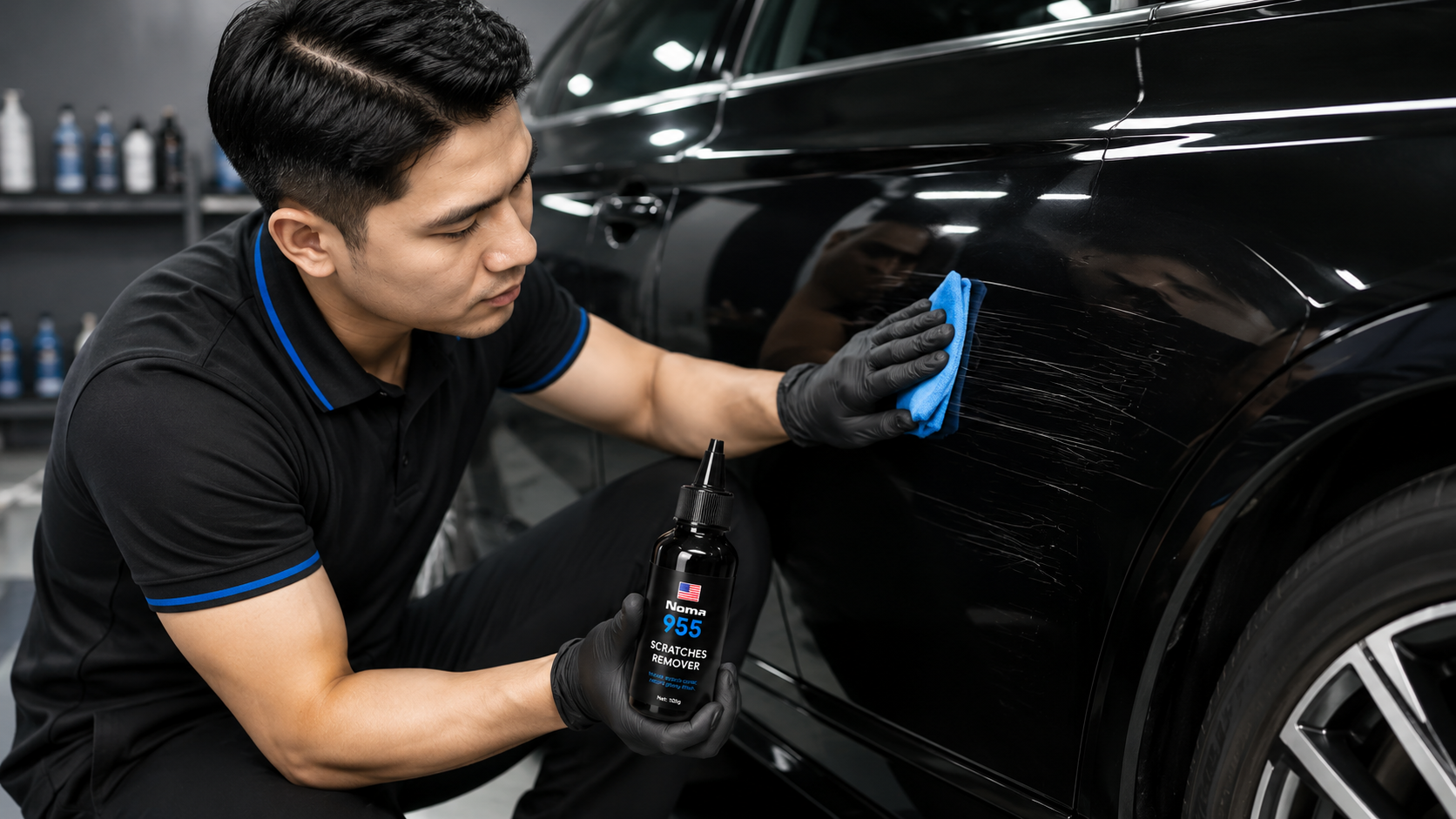
Removing Car Paint Scratches at Home with NOMA 955 – A Detailed Step-by-Step Guide
Removing paint scratches doesn’t always mean a trip to the shop. With NOMA 955, a dedicated scratch-removal product, you can fix small scratches at home in just minutes. This guide walks through the full process from prep to finish, so you can get results like a pro.
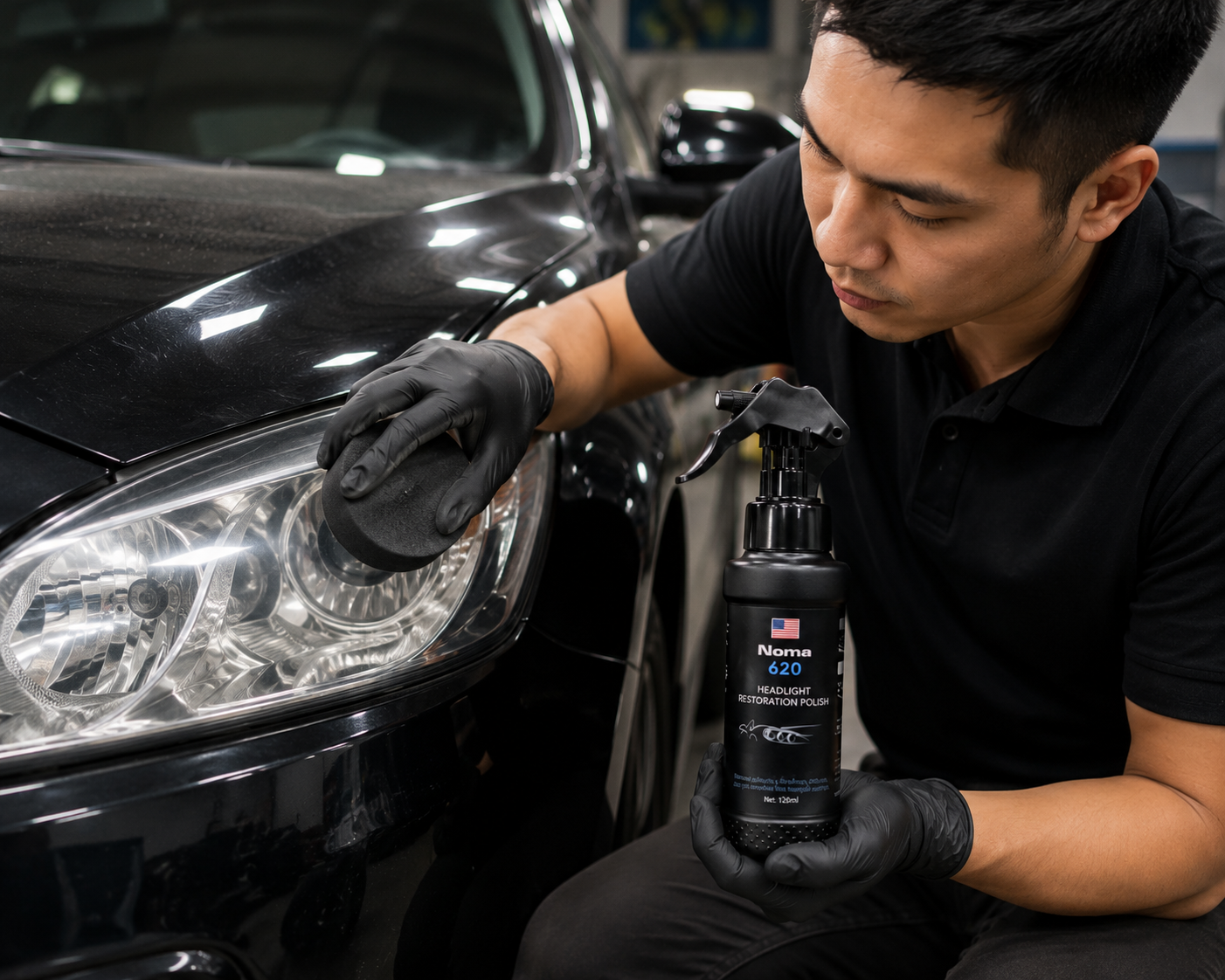
NOMA 620 – Effective At-Home Restoration for Yellowed Headlights in 2026
Yellowed headlights are a common problem that affects driving safety. This guide walks step by step through using NOMA 620 to restore yellowed, hazy headlights, with a comparison against other DIY methods and long-term maintenance tips.
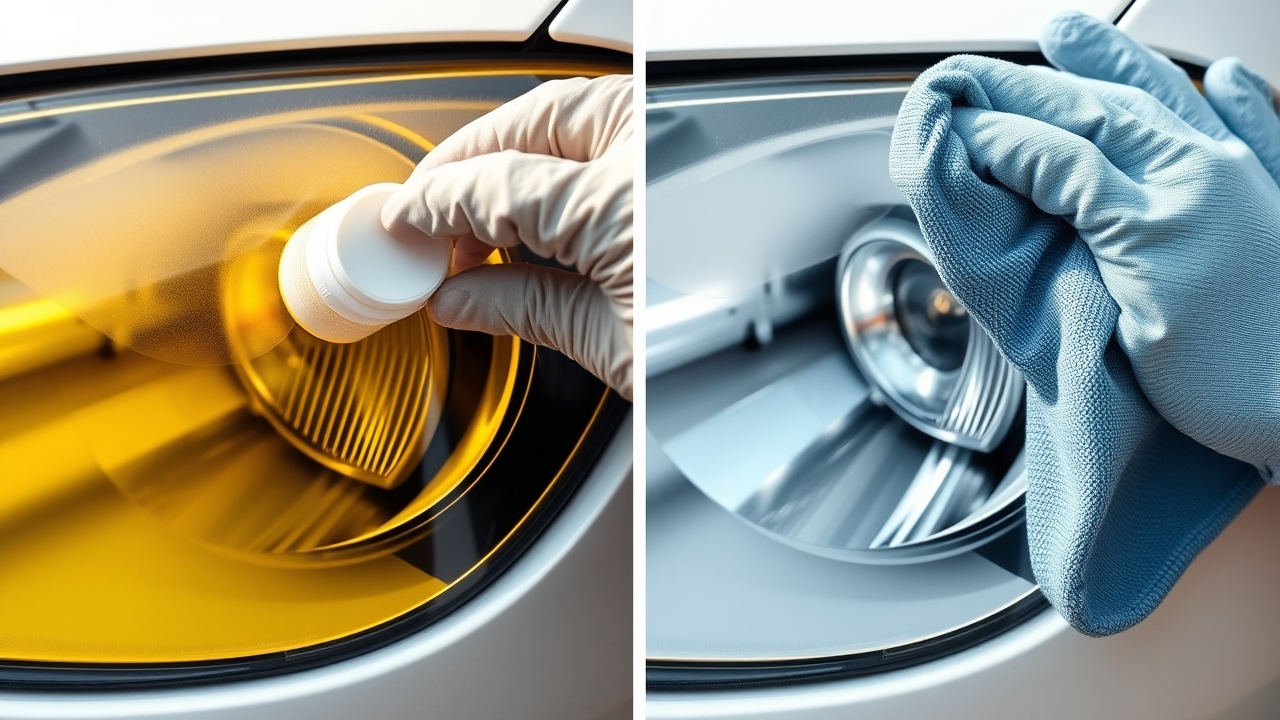
Removing Headlight Yellowing at Home — A Detailed Step-by-Step Guide
Yellowed, hazy headlights are a common issue on older cars. This guide walks through removing headlight yellowing at home in just 30 minutes — safe, effective, and far more affordable than a shop visit. A great option for any car owner who likes to handle their own car care.
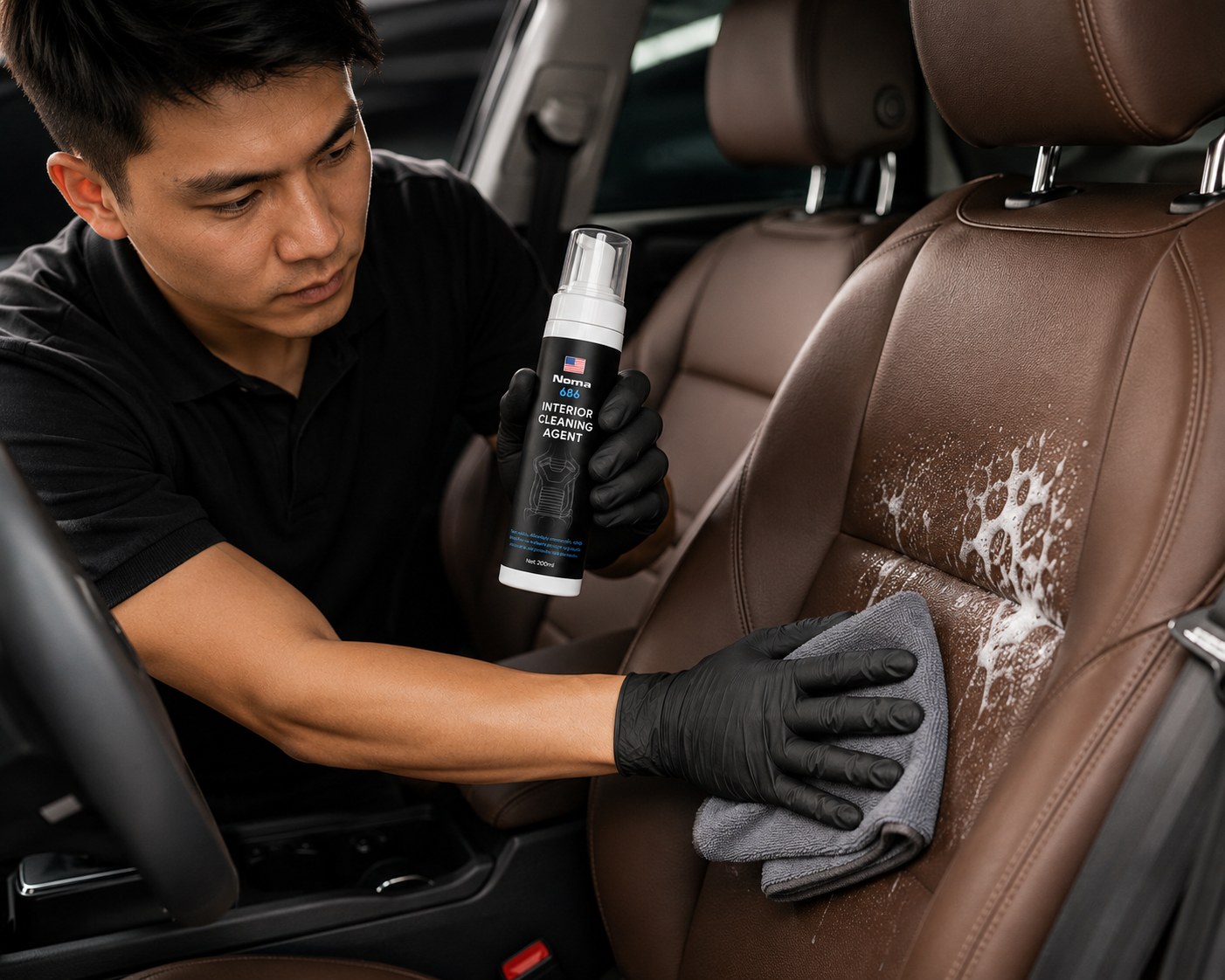
Professional Leather Car Seat Cleaning — A Step-by-Step Process
Cleaning your leather car seats the right way doesn’t just keep your interior looking sharp — it extends the life of the leather. This guide walks through the professional process: prep, cleaning, conditioning, and ongoing maintenance with NOMA 686, a dedicated leather cleaning & conditioning kit built to professional detailing standards.