


The Fastest Way to Clean Fabric Car Seats: NOMA 692 vs 5 DIY Methods

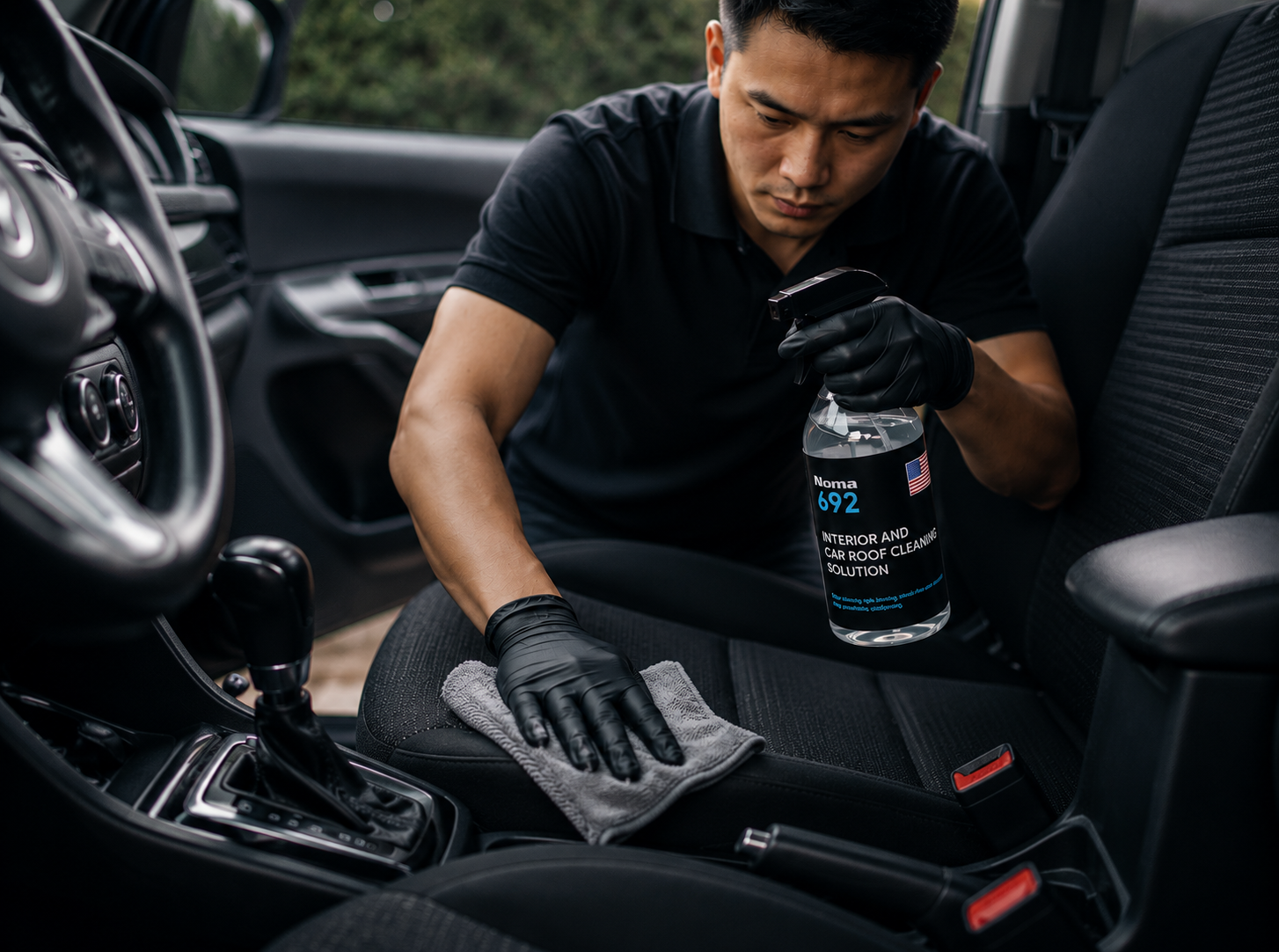
Cleaning Fabric Car Seats: NOMA 692 or DIY Methods?
Fabric car seats get dirty fast — dust, dropped food, and sweat build up over a few months, dulling the color and leaving behind odors. According to a survey on car owner forums, 67% of drivers handle interior cleaning themselves at home instead of going to a shop.
Mục lục
Today’s article compares cleaning fabric car seats with NOMA 692 (a dedicated product) against 5 popular DIY methods — saltwater, baking soda, laundry soap, white vinegar, and a soft brush with plain water.
The goal? Help you decide which approach makes sense based on real-world effectiveness, cost, time, and the risk of damaging your fabric.
Why Do Fabric Seats Get Dirty So Fast?
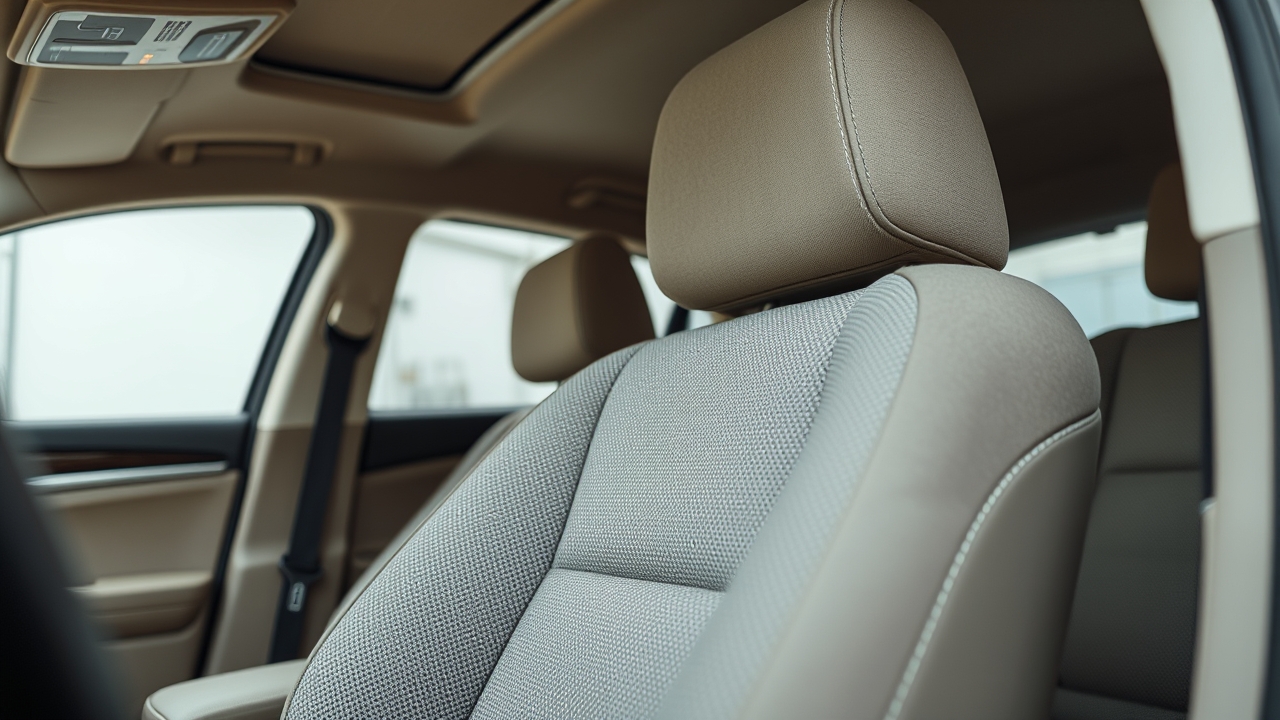
Fabric upholstery (microfiber, alcantara, or coarse woven fabric) has an open-pore texture that soaks up liquid and traps dust easily. Dust, spilled drinks, and sweat from your clothes settle directly into the seat — over time, these build into stubborn stains and unpleasant odors.
Once seats get dirty, you have two options:
-
- Take it to a detail shop: $15–30 per visit, 1–2 hours.
-
- Do it yourself at home: 30–60 minutes, $1–10 in cost, but technique matters a lot.
Today we’re breaking down DIY methods for cleaning fabric car seats and comparing them against NOMA 692 — a dedicated interior cleaner built to clean fabric seats without damaging the material.
5 Popular DIY Methods for Cleaning Fabric Seats
1. Saltwater Solution
A simple mix of cold water and table salt. How to make it: 1 teaspoon of salt per 500ml (about 2 cups) of water.
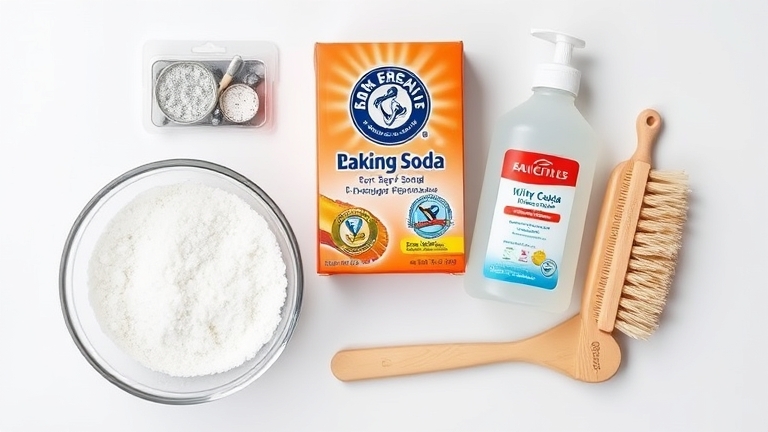 5 Popular DIY Methods for Cleaning Fabric Seats
Pros:
-
- Cheapest option (under $1).
-
- Easy to find, gentle on hands.
-
- Cuts odor fairly well.
Cons:
-
- Only removes surface dirt, won’t touch old, set-in stains.
-
- Leaving it too wet can cause mildew and bring the odor right back.
-
- Concentrated salt can leave white marks on fabric if not wiped thoroughly.
2. Baking Soda
Baking soda is mildly abrasive and absorbs odor and grime well.
Pros:
-
- Cheap ($1–2), completely safe.
-
- Very effective at absorbing odor — a go-to trick for hotels and older cars.
-
- No need to soak the seat — just sprinkle it dry, let sit 30 minutes, and vacuum.
Cons:
-
- Only tackles odor, doesn’t remove colored stains.
-
- Powder can settle deep into the fabric’s weave if not vacuumed thoroughly, leaving white residue.
-
- Not suitable for leather seats.
3. Diluted Laundry Soap
Liquid laundry detergent diluted in cold water.
Pros:
-
- Low cost ($2–3).
-
- Cuts through grease and grime reasonably well.
-
- Safe, non-toxic.
Cons:
-
- Too much suds leaves fabric stiff and hard to fully rinse.
-
- Leftover soap residue means the fabric smells soapy once dry.
-
- Slow cleanup — 45–60 minutes for the fabric to fully dry.
4. White Vinegar
White vinegar is a natural acid that disinfects and cuts odor.
Pros:
-
- Kills bacteria effectively, cuts odor better than saltwater.
-
- Cheap ($2–3).
-
- Disinfects fast — you’ll see results within 10–15 minutes.
Cons:
-
- Strong vinegar smell lingers in the car right after cleaning — takes 2–3 hours of airing out to fade.
-
- The acid can fade fabric color if left on too long.
-
- Not suitable for genuine leather — the acid eats away at the protective leather finish.
5. Soft Brush + Plain Cold Water
The simplest method — just a soft-bristle brush and cold water.
Pros:
-
- Cheapest of all (just water, and a brush you already own).
-
- 100% safe — no chemicals involved.
-
- Gentle on the fabric’s weave.
Cons:
-
- Only works on recent, surface-level dirt (within the past week or so).
-
- Old, stubborn stains need 10–15 minutes of continuous scrubbing — tiring on the arm.
-
- Odor doesn’t always fully disappear — some can linger.
Comparison Table: Cleaning Fabric Car Seats — NOMA 692 vs 5 DIY Methods
| Criteria | NOMA 692 | Saltwater | Baking Soda | Laundry Soap | White Vinegar | Brush + Water |
|---|---|---|---|---|---|---|
| Cost | $8–12 | <$1 | $1–2 | $2–3 | $2–3 | $0 |
| Time | 15–20 min | 20–30 min | 30–45 min (+ 30 min sitting) | 40–60 min | 20–30 min | 15–45 min |
| Stain Removal | 95%, old and new | 70% surface dirt | 60% (great for odor) | 75% surface dirt | 80% (kills bacteria) | 40–50% |
| Fabric Safety | ✓ Built specifically for fabric/leather | ✓ Safe | ⚠ Needs thorough vacuuming to avoid residue | ⚠ Too wet leaves fabric stiff | ⚠ Acid can fade color | ✓ Completely safe |
| Odor Removal | ✓ Thorough | ~ Temporary | ✓✓ Very effective | ~ Temporary | ✓✓ Thorough | ~ Temporary |
| Ease of Use | ✓✓ Spray & wipe, no mixing | ~ Needs mixing | ~ Needs sprinkling & vacuuming | ~ Needs mixing & patience | ~ Needs mixing & tolerating the smell | ✓ Just a brush & water |
| Guaranteed Results | 100% if used as directed | No | No | No | No | No |
Note: NOMA 692 is formulated to detailing-industry standards to clean fabric car seats without damaging the material — a balanced, non-corrosive chemical formula.
Step-by-Step: Cleaning Fabric Car Seats with NOMA 692
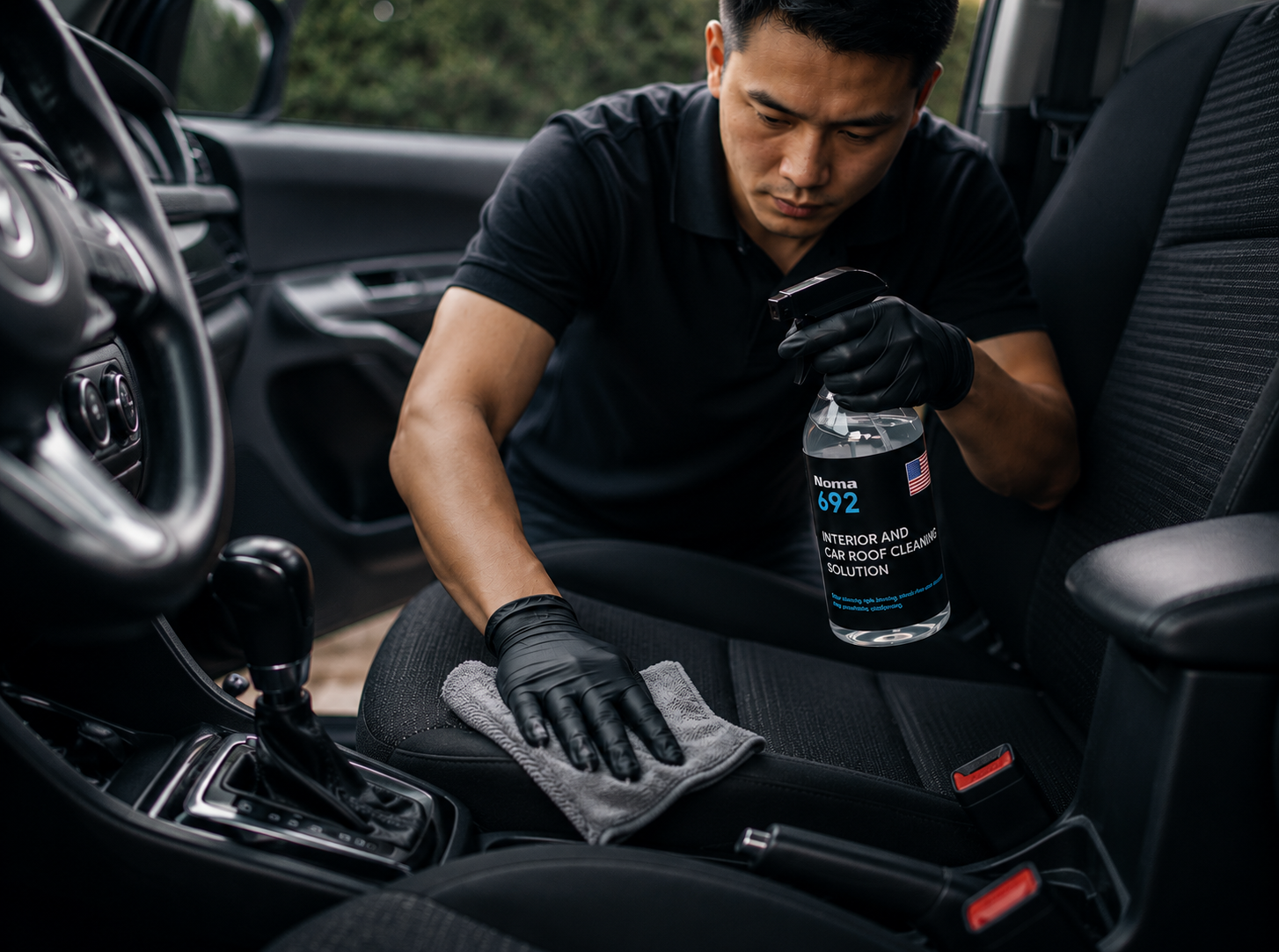
If you go with NOMA 692, the process is straightforward:
Step 1: Prep
-
- Open the car doors to let air circulate.
-
- Vacuum the seat first to clear away surface dust.
-
- Have a clean cloth ready (microfiber works best).
Step 2: Spray NOMA 692
-
- Spray evenly over the area you’re cleaning — no need to soak it.
-
- Let it sit for 3–5 minutes so it can penetrate the fabric.
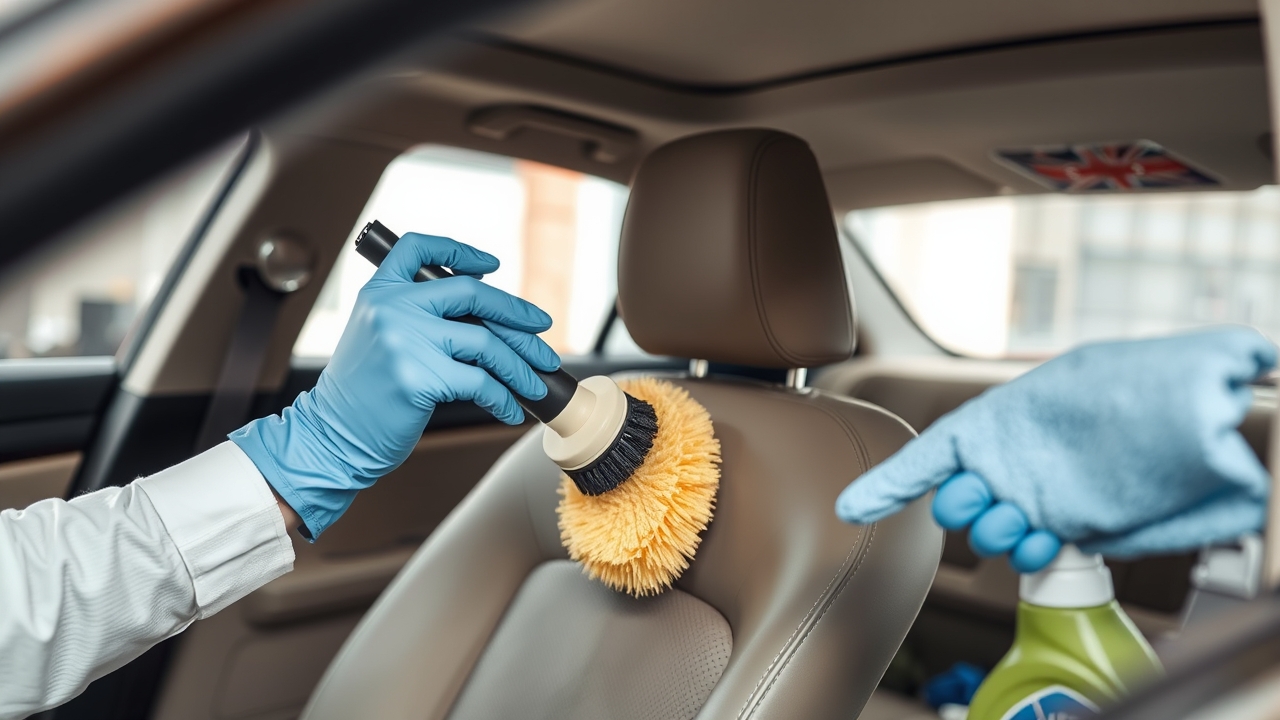
Step 3: Brush and wipe
-
- Use a soft-bristle brush and work it gently in one direction.
-
- Wipe with a damp (clean water) cloth to lift away dirt and leftover product.
Step 4: Let it dry
-
- Open the doors and let the seat air-dry naturally — usually 30–45 minutes.
-
- If you’re in a hurry, use a fan or park in light sun.
Advantage over DIY: Saves time, no mixing required, and delivers professional-grade fabric seat cleaning results.
What Makes NOMA 692 Different from DIY Methods?
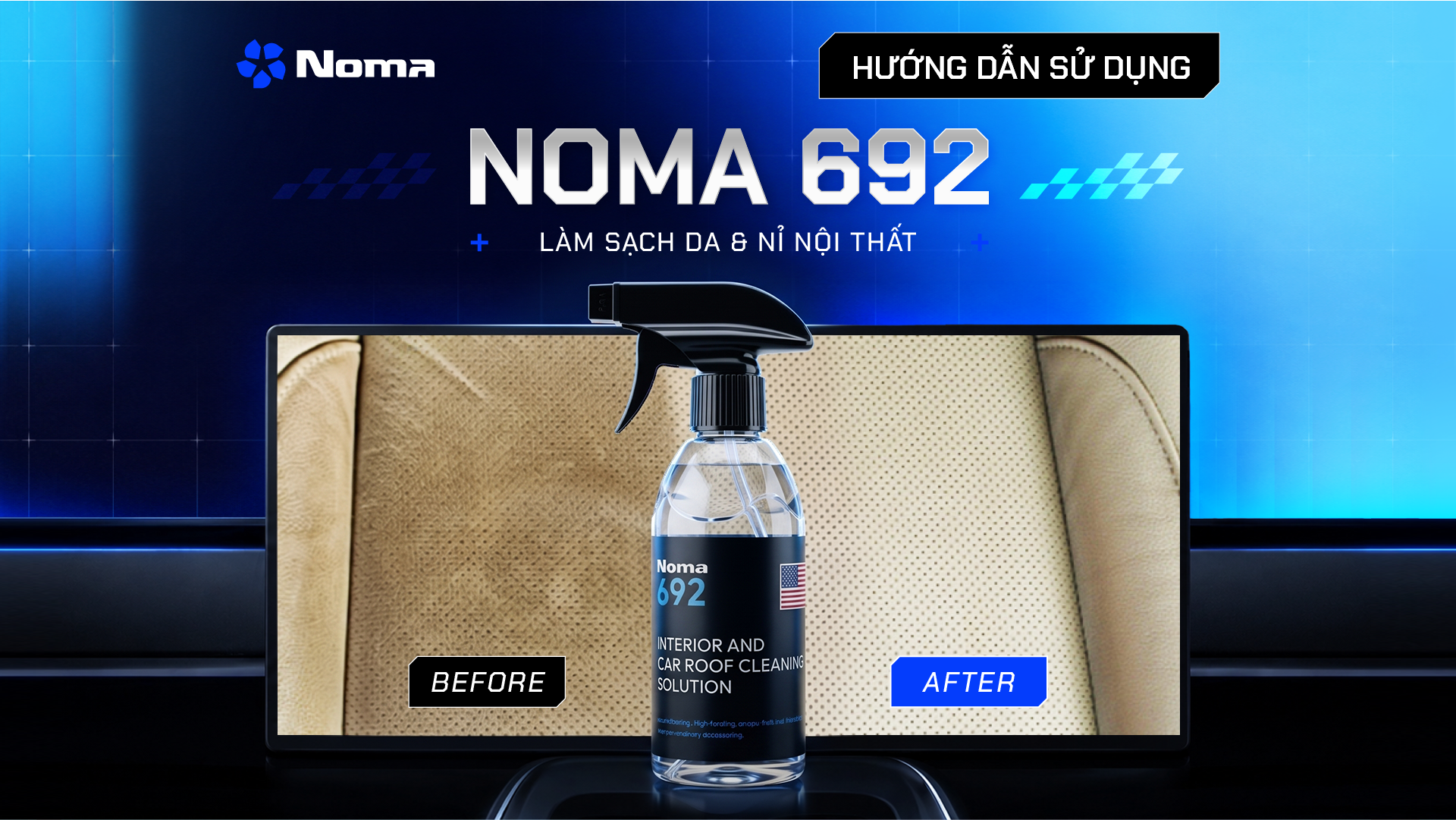
NOMA 692 is a dedicated product for interior cleaning, formulated to American-style detailing standards.
3 standout advantages:
1. Balanced formula: Not too much salt, no acid, no leftover soap residue — optimized to lift dirt without stiffening, discoloring, or causing mildew on fabric.
2. Fast results: 15–20 minutes from spray to finished, compared to 40–60 minutes for DIY methods.
3. No guesswork: DIY baking soda can leave residue if left too long, soap can stiffen fabric if left too wet, vinegar can fade color — NOMA 692 avoids all of these risks.
FAQ: Cleaning Fabric Car Seats
Q1: How often should you clean fabric car seats?
A: It depends on how you use your car. If you drive daily and eat in the car often → every 1–2 weeks. For lighter use → once a month. Odor is the key sign — once you notice it, clean right away before bacteria settle deep into the fabric.
 FAQ: Cleaning Fabric Car Seats
Q2: Can you use a pressure washer on fabric car seats?
A: NO. High pressure will fray the fabric and warp the seat’s shape. Stick to a soft brush or a gentle spray, like NOMA 692.
Q3: What if fabric seats develop mildew?
A: First, open the doors and let it air out for 2–3 hours. Then apply diluted white vinegar or a dedicated disinfecting product, let it sit for 5 minutes, then wipe clean. Vinegar kills mildew. Finish by letting the seat dry fully in a well-ventilated spot.
Q4: Which DIY method is best for beginners?
A: Baking soda is the safest choice for beginners — just sprinkle, wait, and vacuum, no mixing required. That said, if you want professional-grade results on your first try, NOMA 692 saves time and cuts down on risk.
Q5: Can you use specialty fabric detergent instead?
A: Yes, but it needs heavy dilution (1 part detergent to 10 parts water). Specialty detergent works better than regular soap, but you’ll still need multiple wipe-downs to remove all the suds.
Q6: Does cleaning fabric seats wear down the material over time?
A: No, not if you use the right technique (avoid soaking it, skip high pressure, avoid harsh chemicals). In fact, regular cleaning extends the fabric’s lifespan by removing dirt and bacteria before they cause damage.
Q7: Should you use hot or cold water to clean fabric seats?
A: Cold water is better. Hot water can shrink or fray fabric, or spread stains further. Cold water plus gentle scrubbing is the safest approach.
Q8: Is NOMA 692 safe on genuine leather seats?
A: Yes. NOMA 692 is formulated for both leather and fabric — a non-corrosive formula that won’t strip leather’s natural protective finish.
Conclusion: The Fastest Way to Clean Fabric Car Seats
Cleaning fabric car seats isn’t hard, but picking the right method saves time and lowers your risk of damage.
If your priority is:
-
- Lowest cost → Baking soda or a brush with cold water.
-
- Effectiveness + speed → NOMA 692 (15–20 minutes, 95% results).
-
- Confidence on your first try → NOMA 692 (no mixing, clear instructions).
Whether you go DIY or with NOMA 692, the key is cleaning regularly every 1–2 weeks — don’t wait until it’s really dirty. Clean fabric seats mean a cleaner car, fresher smell, and a better ride overall.
Get started today — pick the method that works for you and enjoy an interior that always feels like new!
Sources
- Car owner community forums