

Faded Black Trim on Cars: Why It Happens and How to Fix It
Black trim on your car (dashboard, side molding, door trim, air vents) is one of the most visible parts of any vehicle — and also one of the most prone to fading. Instead of staying deep black and glossy, after a few months it turns a dull, faded gray that hurts the car’s overall look. Per detailing industry material research, polluted environments combined with UV exposure are the main drivers behind polymer aging on vehicles. This article digs into the causes, prevention tips, and effective solutions for restoring faded black trim — especially using NOMA 250 to refresh this trim at home.
Mục lục
Why Does Black Trim on Cars Fade?
Faded black trim is a natural aging process for polymer materials. When your car is new, the plastic looks glossy and rich, but it gradually fades over time.
 Why Does Black Trim on Cars Fade?
UV rays are the main culprit. Sunlight’s UV-A and UV-B rays penetrate the plastic’s surface and break down its molecular structure. The outer layer gradually loses its natural binding agents, leaving the surface looking dull and gray.
High humidity speeds up this process too. In humid climates, cars left outdoors absorb moisture into wood and plastic trim. Water works its way into tiny pores, causing the plastic to swell, develop hairline cracks, and turn rough to the touch.
Dirt and chemical exposure play a role as well. Road dust, exhaust residue, and acid rain (in some industrial areas) build up on the surface. These particles don’t just dull the plastic — they cause pitting and strip away shine.
Environmental Factors Affecting Black Trim
Black trim doesn’t fade from just one cause. It’s a combination of several factors working together.
UV exposure — the biggest factor: Every day, the dashboard and exterior side trim take in 5–8 hours of direct sunlight. Over time, this weakens the plastic’s molecular structure. There’s no avoiding it when a car is parked outdoors.
High heat: In summer, interior temperatures can climb to 140–160°F. The plastic softens, its strength drops, and oxidation speeds up. Repeated cycles of this leave the plastic brittle and faded.
Moisture and rain: Rain and high ambient humidity soak deep into the plastic. Water triggers chemical reactions that cause swelling followed by drying out. Once dry, the surface turns rough and unevenly shiny instead of smooth.
Dust, acid rain, and road salt: Near the coast or along highways, salt and vehicle exhaust residue accumulate on the surface. These substances slowly corrode the plastic, causing pitting and graying.
Exterior vs. Interior Black Trim: A Comparison
| Factor | Exterior Trim (side molding, door trim) | Interior Trim (dashboard, handles) | Impact on Fading |
|---|---|---|---|
| Direct UV exposure | High (8 hrs/day) | Very low (filtered through glass) | Much stronger outside |
| Temperature | 140–160°F | 104–122°F | Exterior ages 2–3x faster |
| Moisture | High (rain, morning dew) | Moderate (interior condensation) | Exterior takes direct rain exposure |
| Dirt (dust, acid) | Very high | Low (interior dust) | Exterior grays faster |
| Initial lifespan | 18–24 months | 24–36 months | Exterior needs restoration sooner |
How to Fix Faded Black Trim
Prevention beats cure. Here are practical steps any DIY car owner can start using today.
Park indoors or under cover: This is the most effective method. If you have a garage, use it. If not, a portable carport or car cover works too. Covering the car blocks up to 80% of UV exposure and shields it from rain.
Use a UV-protective coating: Some specialty coatings include a UV-blocking layer that shields against sunlight. That said, this approach works best on newer cars, costs more, and needs periodic reapplication.
Wipe down dirt regularly: Wipe exterior trim weekly with warm water and a soft cloth.
Apply a conditioning oil regularly: Every two weeks, spray a plastic conditioning oil onto the surface. This layer doesn’t just keep the plastic supple — it also creates a temporary shield against sunlight. It won’t block UV completely, but it noticeably slows down the aging process.
Avoid hot water on plastic trim: When washing your car, avoid spraying hot water directly onto the dashboard or door trim. Hot water triggers plastic expansion, making it more prone to cracking and faster fading.
The Fix: Restoring Faded Black Trim with NOMA 250
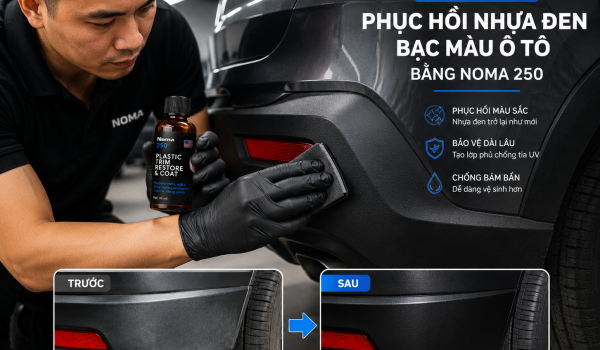
Once trim has already faded, prevention alone won’t cut it. Restoration is the only real fix. NOMA 250 is a dedicated product built to restore both the color and shine of faded black trim.
What is NOMA 250? It’s a black trim restorer formulated to clean, refresh, and protect the plastic surfaces on your car (dashboard, side molding, door trim, handles). It uses a proprietary detailing-grade formula that restores plastic’s natural black color in a single application.
How to use NOMA 250:
- Step 1: Clean the surface. Wipe away dust and dirt with a damp cloth. Let it dry completely (about 5 minutes).
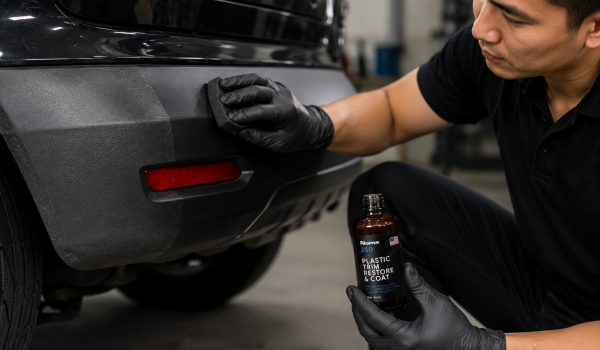
- Step 2: Spray NOMA 250. Apply the product evenly over the trim you’re restoring. You don’t need much — 1–2 spray passes is plenty.
- Step 3: Buff with a clean cloth. Using a clean microfiber cloth, buff gently in one direction. The surface will gradually regain its shine.
- Step 4: Let it air-dry. After 2–3 minutes, the plastic will return to its original deep black shine. Avoid getting it wet for at least 10 minutes so the protective layer can fully bond.
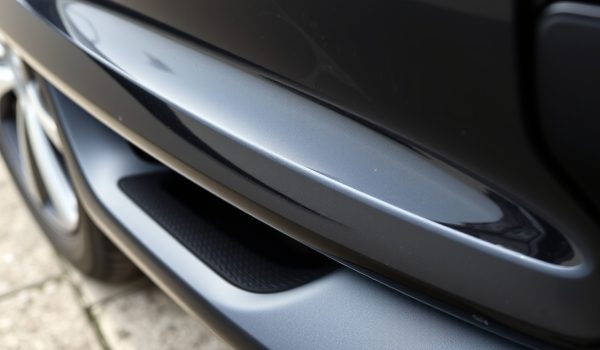
Results: After just one application, faded black trim returns to a deep, glossy black — like it just rolled out of the showroom. Results last 3–4 weeks if the car is parked outdoors, longer if kept in a garage.
Safety: NOMA 250 won’t irritate skin. That said, if it stays on your hands for a while, wash them with soap and cool water after use.
Comparison Table: Black Trim Restoration Methods
| Method | Cost | Time | Instant Shine | Durability | DIY-Friendly |
|---|---|---|---|---|---|
| Professional detail shop | High ($8–20) | 30–60 minutes | Very high | 1–2 months | No (shop visit required) |
| NOMA 250 at home | Low ($2–4) | 5–10 minutes | High | 3–4 weeks | ✓ Ideal |
| Conditioning oil | Low | 3–5 minutes | Moderate | 2 weeks | ✓ Good fit |
| Do nothing, let it keep aging | None | N/A | None | 0 (stays faded) | No |
| Full repaint at a shop | Very high ($40–80) | 1–2 days | Very high | 6–12 months | No (shop visit required) |
FAQ: Faded Black Trim on Cars
Can faded black trim be fully restored?
Yes, though it depends on severity. For moderate fading (3–6 months old), NOMA 250 restores 90–95% of the original shine. For heavily faded trim (over a year), expect 70–80% restoration. For cracked or peeling plastic, you’ll need a shop for a full repaint.
How often should you use NOMA 250?
If the car is parked outdoors, use it once a month to maintain shine. In a garage, every 2–3 months is enough. Avoid using it more than once or twice a week, since too much product buildup can leave the surface looking greasy.
Do you need a professional to restore black trim?
Not at all. The NOMA 250 process is simple: wipe → spray → buff → let dry. Any car owner can do this at home in about 10 minutes with no risk of mistakes. Check out our detailed care guides at NOMA for more tips.
Does NOMA 250 work on interior black trim (dashboard, handles)?
Yes. NOMA 250 works on any textured black plastic surface, whether it’s on the exterior or interior of the car. That said, if the interior surface is very dusty, vacuum and wipe it down first before applying.
Is NOMA 250 safe to use on other plastic parts (vents, speakers, antenna)?
Yes, NOMA 250 is safe on most textured black plastic. That said, avoid spraying it on glossy surfaces (like painted panels or glass), since the product isn’t designed for those surfaces.
Conclusion: Faded Black Trim Isn’t the End of the World
Faded black trim is a natural result of UV exposure, high humidity, and accumulated dirt. That said, with a few simple prevention habits (parking indoors, regular wipe-downs, periodic conditioning oil) and a fast restoration solution (NOMA 250), you can keep your car’s black trim looking glossy without ever setting foot in a shop.
NOMA 250 black trim restorer proves that American-style car care can be done right at home. For just a few dollars and 10 minutes of your time, you can restore that like-new shine — saving both time and money compared to a shop visit. Give it a try and see the difference for yourself!
Sources
- Detailing industry material research
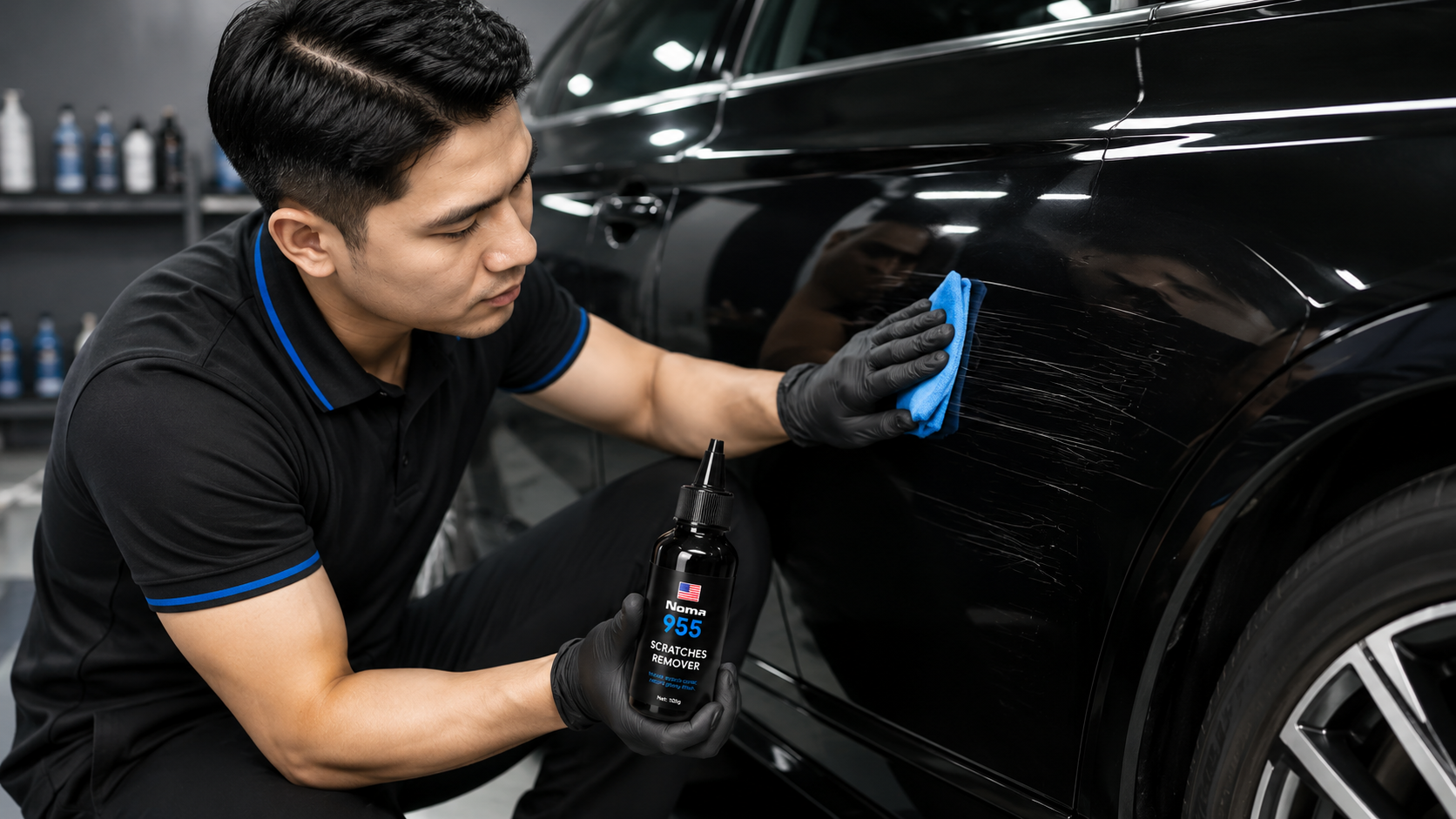
Removing Car Paint Scratches at Home with NOMA 955 – A Detailed Step-by-Step Guide
Removing paint scratches doesn’t always mean a trip to the shop. With NOMA 955, a dedicated scratch-removal product, you can fix small scratches at home in just minutes. This guide walks through the full process from prep to finish, so you can get results like a pro.
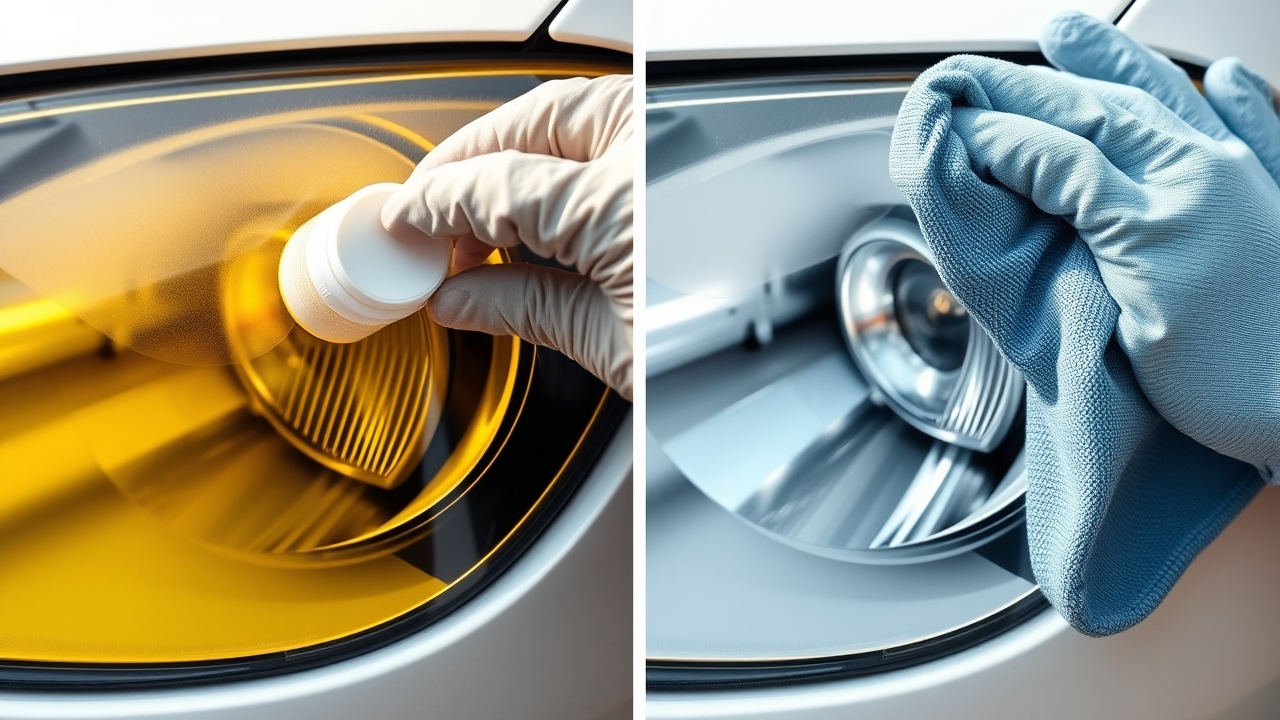
NOMA 620 – Effective At-Home Restoration for Yellowed Headlights in 2026
Yellowed headlights are a common problem that affects driving safety. This guide walks step by step through using NOMA 620 to restore yellowed, hazy headlights, with a comparison against other DIY methods and long-term maintenance tips.
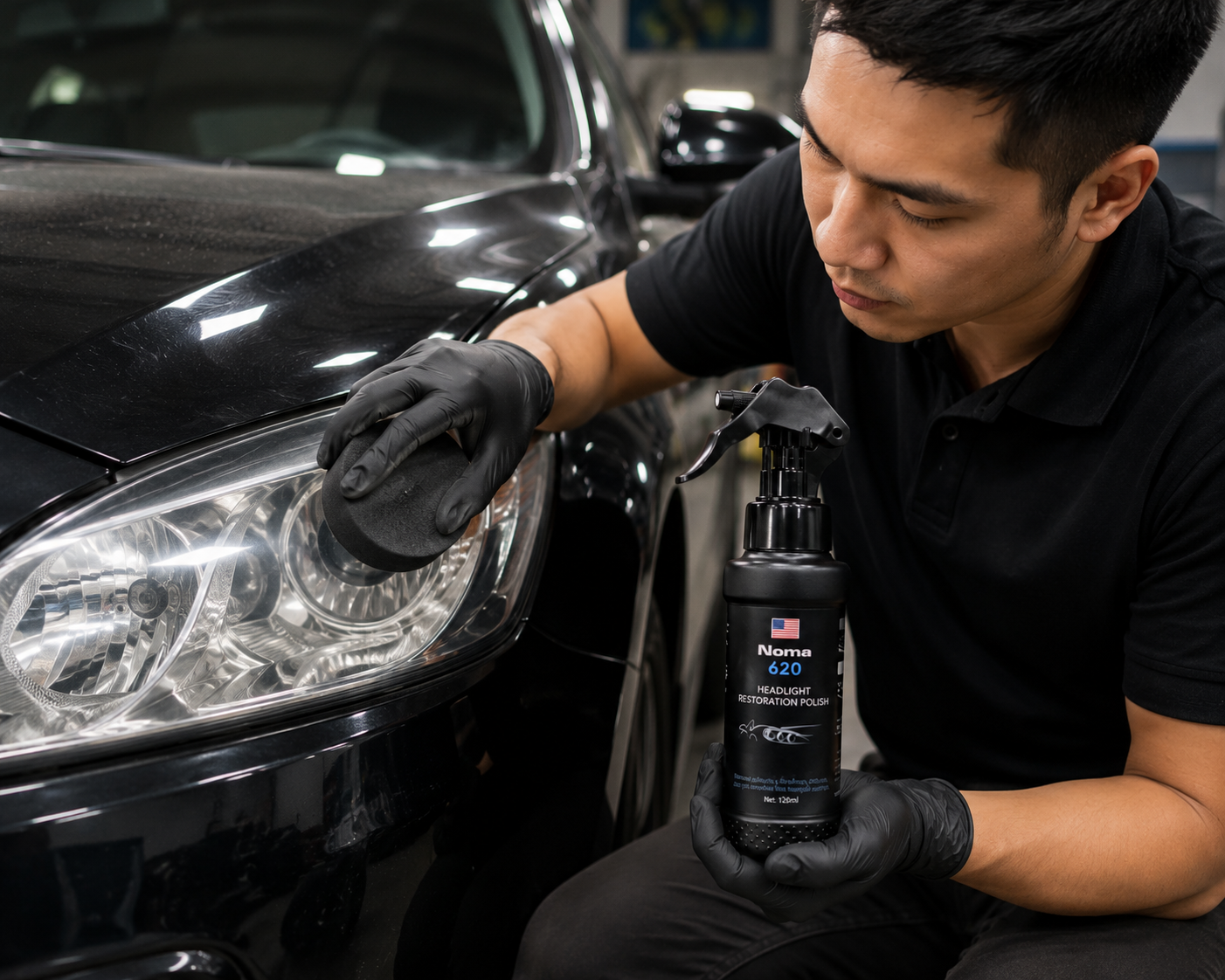
Removing Headlight Yellowing at Home — A Detailed Step-by-Step Guide
Yellowed, hazy headlights are a common issue on older cars. This guide walks through removing headlight yellowing at home in just 30 minutes — safe, effective, and far more affordable than a shop visit. A great option for any car owner who likes to handle their own car care.
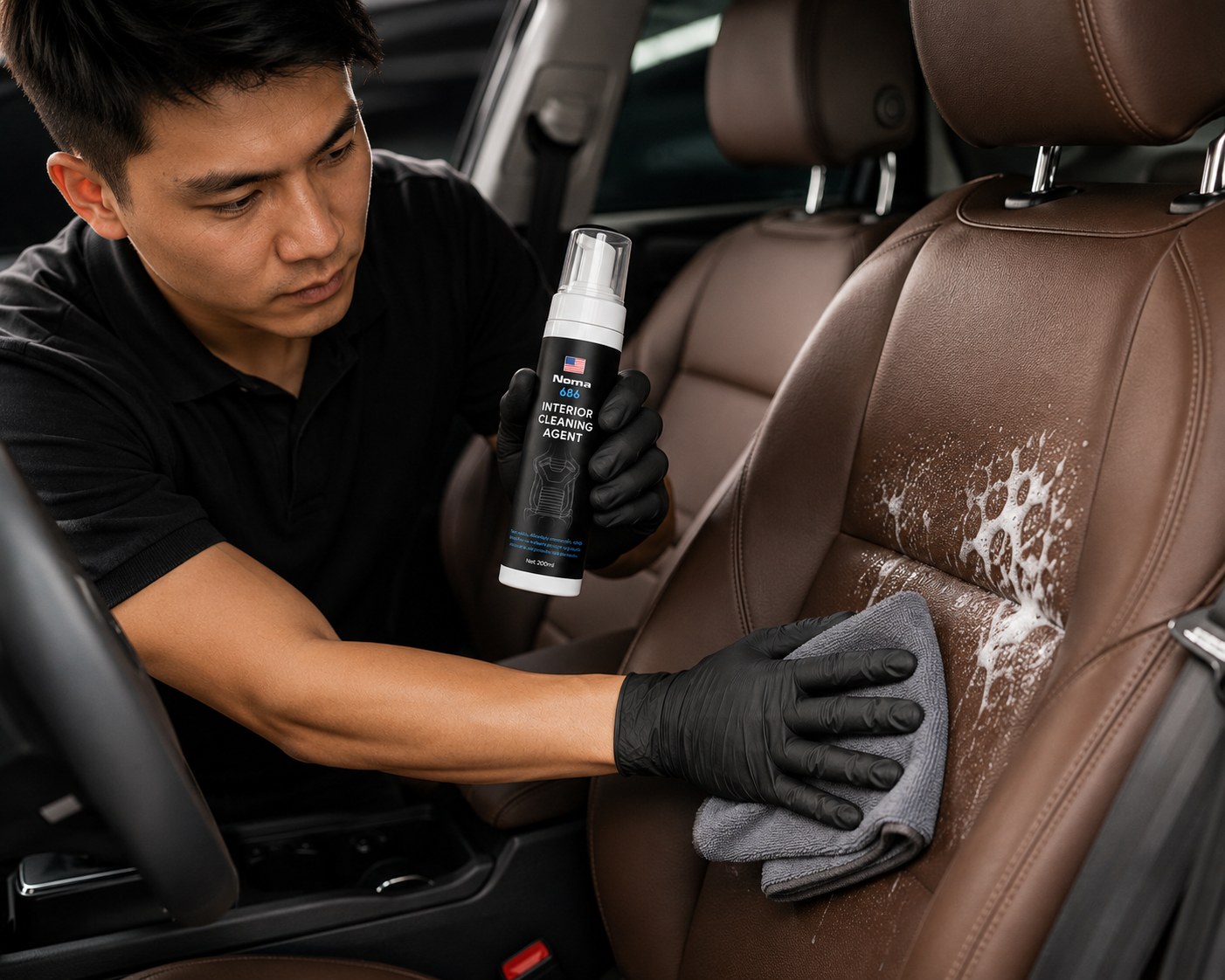
Professional Leather Car Seat Cleaning — A Step-by-Step Process
Cleaning your leather car seats the right way doesn’t just keep your interior looking sharp — it extends the life of the leather. This guide walks through the professional process: prep, cleaning, conditioning, and ongoing maintenance with NOMA 686, a dedicated leather cleaning & conditioning kit built to professional detailing standards.