

Restoring Yellowed Headlights: NOMA 620 vs. 5 DIY Methods

Restoring Yellowed Headlights: NOMA 620 vs. 5 DIY Methods
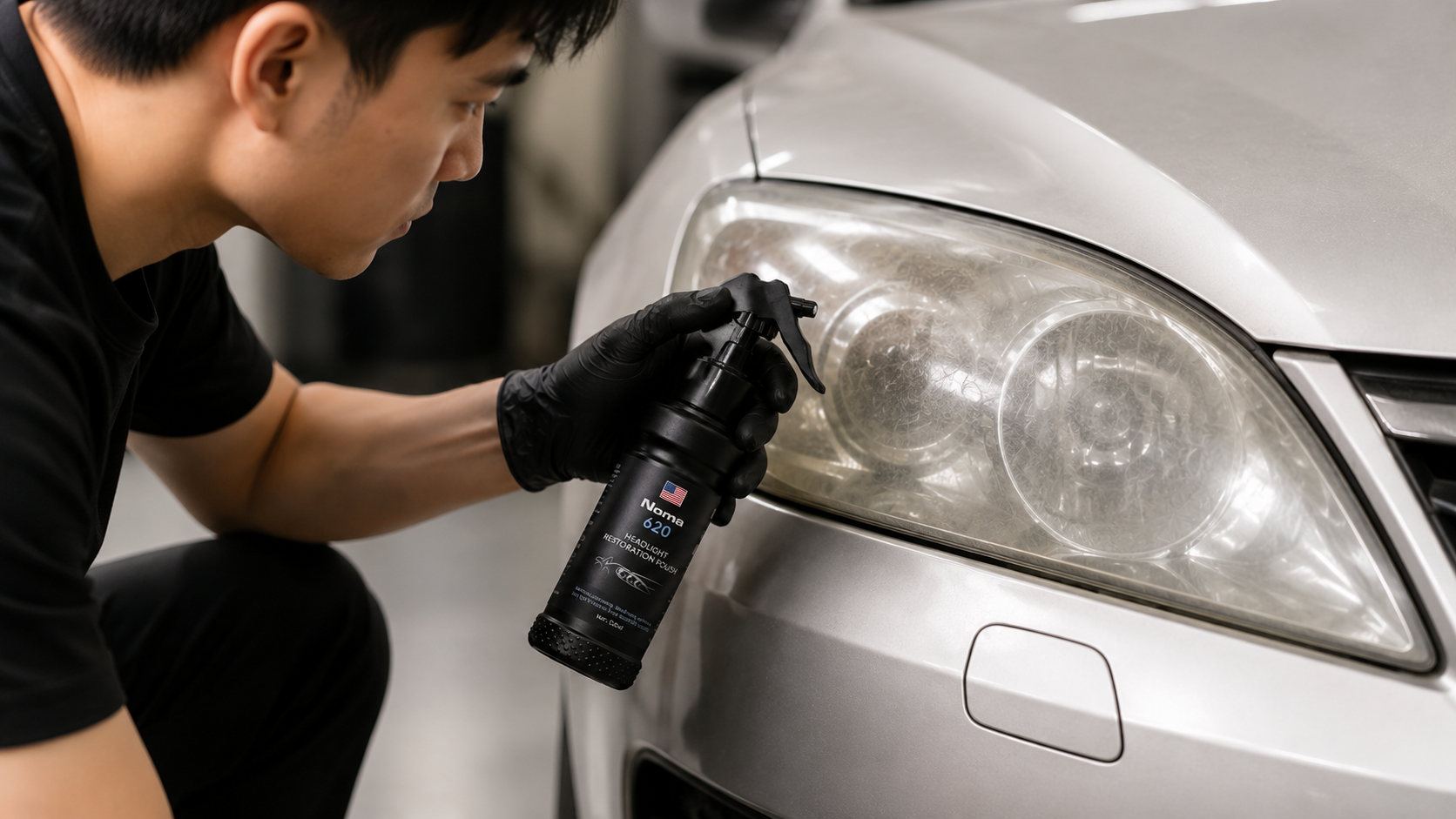
Yellowed, hazy headlights are a common issue on cars after 5–7 years of use. According to consumer advocacy reports, roughly 60% of owners of older cars run into this problem, but only about 30% choose an effective solution. Restoring yellowed headlights can be done at home without removing the housing or visiting a shop, and NOMA 620 is one of the most popular products for the job. This article compares NOMA 620 against other common DIY methods to help you find the best solution.
Mục lục
What Is Headlight Restoration with NOMA 620?
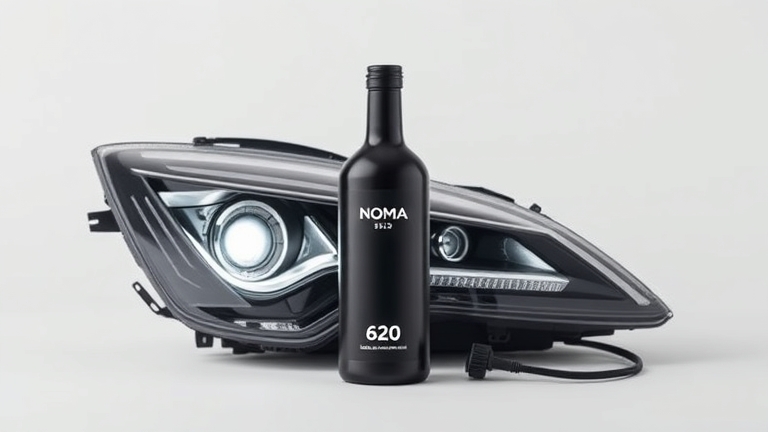
NOMA 620 is a dedicated product for restoring yellowed and hazy headlights. It’s formulated to strip away the outer layer of oxidation on the headlight lens without sanding or abrasive pads. Simply spray the product onto the headlight lens, let it sit for a few minutes, then rinse with water. The result: headlights that look clear and glossy again.
 What Is Headlight Restoration with NOMA 620?
Key advantages:
- Safe on the headlight lens — doesn’t thin the material
- Time-saving (about 10–15 minutes per pair of headlights)
- Long-lasting results, no need for constant reapplication
- Suitable for people with no detailing experience
- Lower per-use cost than a shop visit
Safety note: NOMA 620 can be irritating to skin, so you MUST wear gloves when using it and avoid contact with your eyes. Wash your hands thoroughly once you’re done.
Sanding/Buffing: Effective, but High Risk
Sanding is a classic method used by many auto shops. Using a rotary or angle sander, a technician grinds down the headlight lens surface to remove the oxidized layer. This method works quickly, especially on severely yellowed headlights.
Pros:
- Removes yellowing effectively on the first try
- No lengthy prep or dwell time needed
Cons:
- Can thin the original lens material if sanded too aggressively
- Requires real skill to avoid warping, burning, or overheating the lens and causing cracks
- High risk when attempted at home without proper equipment
- Requires a clear-coat afterward for protection, adding extra cost
- Not suitable for thin modern polycarbonate lenses
Sandpaper: Cheap but Labor-Intensive
An old-school method some people still use: wet-sanding the headlight lens with progressively finer sandpaper (P1000, P1500, P2000), typically with water to keep the surface cool and reduce dust.
Pros:
- Cheap to get started (sandpaper costs very little)
- You can control how much material is removed with hand pressure
Cons:
- Very time-consuming (1–2 hours per pair of headlights)
- Results are often uneven, with some spots sanded more than others
- Physically tiring
- Hard to achieve a high-gloss finish without additional tools
- Still requires a protective coating afterward, just like sanding
Cutting Compound: Moderately Effective
Cutting compounds (like those from 3M or Meguiar’s) are used with a low-power buffer to restore yellowed headlights. It’s a middle-ground option between sanding and chemical restoration.
Pros:
- Moderately priced (roughly the cost of one bottle)
- Offers better control over material removal than sandpaper
- Works well on light to moderate yellowing
Cons:
- Requires a buffer (added equipment cost)
- Pressure and buffer speed heavily affect the outcome
- Can round off edges or overheat the lens if used incorrectly
- Results aren’t long-lasting — often needs redoing every 1–2 years
- Still needs a final protective coating
Temporary Sealants (Wax/Sealant on the Lens): A Surface-Level Fix
Some people simply try to “mask” yellowing with a layer of wax or sealant on the lens. This doesn’t actually restore the headlight — it just makes the lens look glossy temporarily.
Pros:
- Very quick and easy to do
- Low cost
Cons:
- Doesn’t remove yellowing, just hides it temporarily (a few weeks)
- The coating tends to peel off with water exposure or in the shade
- Unsafe, since the lens is still dim underneath — a real road safety concern
- Needs to be reapplied too often, wasting money over time
Detailed Comparison: NOMA 620 vs. Other Headlight Restoration Methods
| Criteria | NOMA 620 | Sanding | Sandpaper | Cutting Compound | Wax Masking |
|---|---|---|---|---|---|
| One-time cost | Low | Shop pricing | Very low | Moderate | Very low |
| Time required | 10–15 min | 30–60 min | 1–2 hours | 30–45 min | 5–10 min |
| Safe for the lens | ✓ Very safe | ⚠ High risk | ⚠ High risk | ⚠ Moderate risk | ✓ Safe |
| Effectiveness at removing yellowing | ✓ Very good | ✓ Best | ✓ Good (labor-intensive) | ✓ Moderate | ✗ Doesn’t remove it |
| How long results last | 2–3 years | 3–5 years | 1–2 years | 1–2 years | 2–4 weeks |
| Skill required | Low | High | Moderate | High | Low |
| DIY-friendly | ✓ Excellent | ✗ Difficult | ⚠ Possible | ⚠ Possible | ✓ Excellent |
| Requires protective coating after | Not required | ✓ Required (added cost) | ✓ Required | ✓ Required | Not required |
Why NOMA 620 Is the Best Option for Restoring Yellowed Headlights
Looking at the full picture, NOMA 620 combines three key advantages:
1. Completely safe for the headlight lens
Unlike sanding or sandpaper, NOMA 620 works at a chemical level without thinning the lens material. This matters a lot, since modern polycarbonate headlight lenses are already thin (just 2–3mm), and aggressive sanding shortens their lifespan.
2. Long-lasting results that save money over time
After using NOMA 620, restoration results can last 2–3 years with routine maintenance. Compared to temporary wax that needs reapplying every month, NOMA 620 saves you both time and money.
3. Ideal for people without detailing experience
Just spray, wait, and rinse. No buffer, no advanced skill, no hours of patience required. That makes NOMA 620 ideal for car owners who handle their own maintenance at home.
If your headlights are lightly to moderately yellowed, NOMA 620 is your best option. A full car glass care guide can also help you keep your glass looking clear for longer.
Frequently Asked Questions About Restoring Yellowed Headlights
How do I know when it’s time to restore my headlights?
When you notice your headlights looking hazy, yellowed, or the beam is more than 30% dimmer than normal, that’s a sign it’s time to restore them. You can check by comparing the two headlights side by side or against a similar-aged car. It’s a good idea to restore your headlights roughly every 2–3 years to maintain road safety.
Can I use NOMA 620 on any type of headlight?
NOMA 620 works on most polycarbonate headlight lenses found on today’s vehicles. However, if your car uses glass lenses or complex “multi-layer” lenses (common on premium vehicles), check your headlight specs or contact the manufacturer to confirm compatibility first. More detail on caring for your car’s glass components is available on the NOMA website.
Do I need to apply a protective coating after using NOMA 620?
It’s not required, but to extend the results, you can apply NOMA 922 (a water-repellent nano glass coating) 1–2 days later. This nano layer helps repel dirt and rain and slows down oxidation from starting up again.
Can NOMA 620 irritate skin or eyes?
NOMA 620 contains ingredients that can irritate skin. You MUST wear rubber gloves throughout the process and avoid touching your face or eyes until you’ve washed your hands. If it does get in your eyes, rinse immediately with clean water and see a doctor if irritation continues.
How long does it take to see results when restoring yellowed headlights?
You’ll see results right after the first use of NOMA 620. Headlights become noticeably clearer with much less yellowing. That said, if the yellowing is very deep (over 5 years old), you may need to repeat the process 1–2 times over 2–3 weeks to fully clear it.
Should I restore my headlights at home or take them to a shop?
For light to moderate yellowing, doing it yourself at home with NOMA 620 is cheap, fast, and safe. For severe yellowing or deep scratches, or if you want a flawless finish, a specialized shop is a better choice — though it will cost 2–3 times more.
Conclusion: Restoring Yellowed Headlights with NOMA 620 Is the Smart Choice
Restoring yellowed headlights doesn’t have to be complicated if you choose the right method. NOMA 620 stands out from traditional methods because it combines safety, effectiveness, and cost savings. No expensive equipment, no advanced skills, no hours of your time — just 10–15 minutes and your headlights will look clear again.
If you’re a car owner who likes handling maintenance yourself, NOMA is a brand you can trust. Give it a try and see the difference for yourself.