

Simple, Effective Tips to Keep Rodents Out of Your Car

Rats and mice tend to seek out damp, dark places to nest. That makes a car’s warm, enclosed engine bay an ideal hideout for these rodents. Rodents in your car aren’t just a hygiene problem — they can also damage the exhaust and other components, especially the wiring. To avoid these headaches, here are some simple, effective tips for keeping rodents out of your car.
Figuring out where rodents are getting into your car
|
Location |
Signs to look for |
|
Engine bay |
A faint smell of urine or droppings when you stand near the car or pop the hood. |
|
Engine compartment |
Odd noises coming from the engine on a regular basis — rattling, scratching, or scurrying sounds. |
|
Air filter |
Debris or droppings showing up in the filter. |
|
Wiring in the engine bay and elsewhere in the car |
The car won’t start, headlights won’t turn on, the horn doesn’t work, and so on. |
|
Seats |
Chew marks, gnawing damage, paw prints, or droppings under the seats, often along with a sharp smell of urine. |
10+ simple, effective tips for keeping rodents out of your car
Here are 10+ easy, effective tips you can use to keep these unwelcome rodents away and protect your car’s components from damage.
Use rodent-repellent bait tablets
Rodent bait is a go-to method plenty of drivers rely on. You can scatter these tablets anywhere in the car, and they kill rodents quickly once eaten. That said, the bait is fairly toxic, so families with young kids should think carefully before using it.
Regularly check and clean the engine bay
The engine bay is a favorite hideout for rodents, especially in cars that sit unused for long stretches. To keep rodents from getting in and causing damage, check and clean the engine bay regularly with a cloth, brush, or duster to clear away dirt and debris.
If you have a pressure washer on hand, give the engine bay a thorough rinse too. If you’re short on time, you can also take your car to a detailing shop to have the engine bay cleaned properly. Regular care like this clears out unpleasant odors, keeps the car clean, and discourages rodents from nesting inside.
Use a rodent-proof mesh cover
A rodent barrier is made from sturdy mesh and a metal frame, sized to wrap around the entire car and keep rodents from getting inside to nest. These covers come with a handy, secure fastening system — it only takes about a minute to unroll one and wrap it around the car, and you can trust it’ll stay put around the clock. Some versions are even up to 80 cm (about 31 inches) tall, sealing off every possible gap, so even a rodent that climbs onto the roof and works its way down can’t get in.
Use rodent-repellent essential oils
Ginger and peppermint oil both have a strong scent that rodents can’t stand. Soak a cotton ball in peppermint or ginger oil and tuck it into the engine bay or engine compartment. The scent of these natural oils will scare rodents off and keep them from making their way into your car.
Rodent-repellent sachets
Rodent-repellent sachets are typically made from natural, pungent ingredients like peppermint, cinnamon, black pepper, or red pine bark. These ingredients overwhelm a rodent’s sense of smell and touch, making them anxious and wary of the area where the sachet is placed. You can hang one of these sachets in the engine bay or under the hood, and it’ll stay effective for 8-12 months. Just keep in mind that you should clean the engine bay thoroughly before placing the sachet, so the scent can do its job as effectively as possible.
Use rodent-repellent spray
Rodent-repellent spray is another effective way to keep rodents away. It leaves behind a protective coating over the electrical components, rubber, and plastic parts in the engine bay, shielding them from gnawing damage and helping keep your car safe to drive.
Before spraying, put on a mask and chemical-resistant gloves. Clean the engine bay and other parts of the car first, then shake the can well and spray it directly onto plastic parts, rubber hoses, and wiring, making sure to cover all four wheel wells.
Use a rodent-repellent device
These devices emit an ultrasonic frequency between 22-60 kHz that constantly shifts, creating an unpleasant, disorienting sensation that scares rodents off. The big advantages here are a compact design that’s easy to install and use, plus no effect on human health.
Use mothballs or camphor
Camphor and mothballs are a rodent’s worst enemy, which is exactly why so many drivers reach for this simple, effective method. Just tuck a few mothballs into spots rodents tend to frequent, and the strong smell will send them packing.
That said, this method only works well at first — rodents can get used to the smell over time, stop being bothered by it, and go back to causing trouble. Mothballs can also affect people’s health, so only use them when no one’s riding in the car.
Use a rodent-deterrent lubricant
Plenty of drivers swear by coating python or ox fat onto pipes and areas in the engine bay that rodents like to chew on. These greases make surfaces too slippery for rodents to grip, making it harder for them to get around or settle in the engine bay. The downside is that engine bay components tend to collect grime much faster this way, making them harder to clean, and the smell can end up drifting into the cabin through the AC system.
Use rodent glue traps
Beyond just trying to repel rodents, plenty of car owners go for a more direct approach and place glue traps around the car, underneath it, and inside the engine bay. That said, this method isn’t always very effective, since rodents are cunning enough to spot and avoid traps set for them.
Keep your car clean, inside and out
Keeping your car clean from top to bottom doesn’t just deter rodents — it also makes for a more pleasant ride. Wipe down the car’s components regularly, especially the cabin and engine bay. If you spot any dropped food in the car, clean it up right away so it doesn’t attract rodents. And if you notice any signs that rodents have been around, deal with it immediately before they can cause serious damage to your car.
5+ tips to help keep rodents out of your car for good
To cut down the odds of rodents getting into your car, keep these tips in your back pocket:
- Don’t park near piles of trash: Avoid parking in damp areas or near drains and garbage, since these are prime rodent hangouts and raise the odds that one will make its way into your car.
- Check the wiring, drive belts, and electrical system at the first sign of rodents: If you notice signs that rodents have gotten in, check the wiring, drive belts, and electrical system right away to avoid serious damage to your car.
- Check the air filter if you notice a smell from the AC: When rodents nest in a car, the urine and droppings they leave behind can dirty up the engine’s air filter, restricting airflow and hurting your AC system’s performance. So if you notice a smell coming from the AC, check the air filter right away to protect its function and lifespan.
- Don’t leave doors open for long stretches: Forgetting to close a car door, or leaving one open too long, is basically an open invitation for a rodent to sneak in. Keep door-open time to a minimum, and always double-check that doors are shut tight whenever you get in or out, to keep rodents from finding their way in.
- Start the engine every 2-3 days if the car isn’t driven often: Cars that sit unused or idle for long periods are especially vulnerable to rodents. Start the engine roughly every 2-3 days to keep rodents from nesting inside, since they dislike the heat and the smell of gasoline.
- Avoid eating in the car: Food scraps left in the car are like a beacon that draws rodents in fast. Keeping the car clean and cutting back on eating inside it reduces food smells in the cabin, which helps keep rodents from finding a way in.
A rodent getting into your car might seem like no big deal, but it can lead to some serious problems — chewed-through wires, damage to the engine bay, and even a fire risk. On top of that, a rodent nest in your car brings a foul smell that’s unpleasant for both driver and passengers. If you notice a strange odor or any signs that rodents have moved in, put the rodent-prevention tips above to work right away. And for the best results long-term, keep checking the engine bay regularly, keep the car clean, and don’t leave food lying around inside.

Safe Driving Tips: Golden Rules for New Drivers
Safe driving habits matter for every driver, but they’re especially crucial if you’re new behind the wheel. To help you start your driving journey with confidence and safety, let’s go through 13+ golden rules every new driver should know for their beloved ride.
1. Right foot only: gas or brake, never both
This rule helps drivers react quickly and correctly in urgent situations. Use only your right foot for both the gas and brake pedals, and keep your left foot off to the side (this applies to automatic-transmission cars). It’s a simple habit that prevents mixing up your feet and keeps you in control no matter what happens on the road.
2. The 3-second rule
The 3-second rule helps you keep a safe following distance between vehicles, especially near traffic lights.
When you see a green light with about 3 seconds left, start preparing to stop so you don’t have to slam the brakes and startle the cars behind you. On the flip side, when a red light has about 3 seconds left before turning green, get your foot ready to ease onto the gas gently so the car moves off smoothly, avoiding a sudden jump that could endanger the car ahead. That’s safe driving in action!

3. Follow another car through flooded roads
When you hit a flooded stretch of road, don’t rush ahead — instead, follow behind another vehicle and watch how it handles the water. Watching the car in front lets you gauge how deep the water actually is and whether it’s safe to cross.
Here’s how to recognize the situation and handle driving through unavoidable flooded roads safely:
- How to tell it’s safe: Water reaching up to roughly the halfway point of your wheel (about 8–10 inches / 20–25 cm) is generally safe
- What to do:
- Drive slowly to avoid creating a bow wave — a wave can push water higher than the axle and into the engine’s air intake
- Turn off the AC so the engine doesn’t have to carry that extra load
- Once you’re clear of the water, pull over somewhere safe and check whether debris got caught in the radiator fan up front, or whether your license plate came loose
- If you were in the water a long time, it can affect your brake pads and reduce braking performance. Drive slowly and tap the brakes repeatedly afterward to dry them out
If the car ahead makes it through safely, you can follow with more confidence. On the other hand, if it struggles or has to turn back, consider doing the same or finding another route. Careful observation is what keeps you — and everyone else on the road — safe.

4. Animals on the road: aim for the head or the tail, depending on the animal
Suddenly encountering animals on the road isn’t rare, especially in rural areas. To handle it safely, remember this old driver’s trick: ease off the brakes to slow down, make sure there’s no one beside or behind you, and avoid any sudden swerve. It’s a small tip worth remembering.
For example, if you suddenly come across a pack of dogs, steer toward their heads — dogs tend to turn and bolt away as a car approaches. Cattle, on the other hand, tend to bolt straight ahead when startled or spooked by a loud noise, so steer toward their tails instead.
5. Build momentum before upshifting, rev-match before downshifting
Shifting gears the right way keeps you safe, saves fuel, and protects your engine from damage. Knowing how and when to shift up or down is a fundamental skill every driver needs.
When shifting up, build enough speed first so the car reaches the right RPM range for a smooth, efficient shift. This avoids “lugging” the engine — forcing it to work too hard, which strains the motor and can even stall the car mid-drive.
When shifting down, ease off the gas first to slow down and keep engine speed steady, which makes engaging a lower gear smooth instead of jarring. Right before you downshift, blip the throttle quickly to rev-match.
Note: this technique only applies to manual-transmission (MT) cars — automatic transmissions (AT) already calculate the right shift points for you.
6. Don’t drink and drive
Studies show that even a small amount of alcohol impairs your ability to drive safely. Drinking and driving isn’t just illegal — it’s a leading cause of serious traffic accidents. Alcohol dulls judgment and slows reaction time, sharply raising the risk of a crash.
If you drove to a place where you end up drinking, choose a different way home instead:
- Call a taxi or ride-hailing service
- Ask a friend or family member to pick you up
- Walk if you can, or take public transit

7. Control your speed and keep a safe following distance
According to Vietnam’s Ministry of Transport, over 80% of traffic accidents stem from speeding or a driver losing control of their speed. As speed increases, your ability to stop in time before an obstacle drops, and the force of any impact grows — making the outcome of a crash far more severe.
Watch the distance markers on the highway to help judge how far you are from the car ahead. Likewise, when stopped behind another vehicle in traffic or at a red light, leave enough space that you can still see its license plate and a bit of pavement beneath it — that’s the safe following gap.
Driving at a reasonable speed helps you maintain a safe gap from the car ahead and gives you enough time to react when needed, avoiding sudden collisions. If the car in front stops abruptly or slows down, you’ll have enough distance to stop safely instead of triggering a chain-reaction pileup.
8. Always wear your seatbelt
A seatbelt keeps your body anchored in your seat, sharply reducing the risk of serious injury in a crash. When a collision happens, the impact throws you forward with tremendous force, and the seatbelt is what absorbs that force and protects your head, neck, and spine. That’s why drivers and passengers should never buckle up the wrong way — like looping it over yourself after the fact, or skipping it out of overconfidence — since that defeats the whole purpose of keeping you secured in the seat during a crash.
9. Stay alert and keep your eyes on the road
Quick judgment and fast reactions to unexpected situations are what keep you safe on the road. Keep in mind: the emptier the road, the more likely everyone gets a little too relaxed. For instance, motorbike riders tend to speed up and drive more recklessly right before rain starts, and long stretches of highway can easily make a driver lose focus and get drowsy.
Just a few seconds of lost focus can lead to serious consequences — injury, even death. To avoid this, stay especially alert at intersections and roundabouts, near residential areas and schools, on curves and blind spots, and in bad weather, as well as on long, empty roads with little traffic. Also keep checking your mirrors continuously to monitor what’s happening behind you and cover your blind spots.
10. Signal before changing lanes
Signal early before you change direction so vehicles behind you can react and know what you intend to do — that’s what makes traffic flow smoothly and safely. Using your turn signal correctly doesn’t just prevent needless accidents; it shows respect and responsibility toward everyone else on the road.
11. Speed up to merge into a new lane
Change lanes one at a time — crossing two lanes at once is essentially driving diagonally across traffic, which is extremely dangerous for the cars behind you. When merging into a new lane, speeding up safely and appropriately is important. Once you’ve checked your surroundings and confirmed it’s clear, accelerate to merge in quickly — this minimizes the time you spend straddling your current lane and reduces the risk of blocking other drivers.
12. Check your mirrors and blind spots
Your mirrors and blind spots are essential to getting a full, accurate picture of what’s happening around your car. Regularly checking your mirrors and knowing exactly where your blind spots are will lower your accident risk and help build a safer driving environment for everyone.
13. Never use your phone while driving
Countless accidents have happened because a driver was on their phone. It’s a dangerous habit with serious consequences — for your health and beyond. Keep your full attention on driving and on what’s happening around you to keep yourself and everyone else safe. Small, simple habits like these are what keep our roads safe for everyone.

14. Get regular checkups for your car
Schedule regular maintenance checks at a certified service center to keep your car in top shape. This lets you catch and fix small issues before they turn into big, expensive problems — and it makes for safer driving overall. Routine checkups reduce the risk of unexpected breakdowns and save you money on maintenance in the long run.
A basic checkup should cover engine oil, tires, brakes, the electrical system, and the cooling system. Sticking to a regular maintenance schedule keeps your car in top condition, boosts safety, and saves you money over time.
That wraps up our full rundown of safe driving tips for new drivers — hopefully this helps you get a solid handle on the rules of the road and drive with confidence. Always stay alert behind the wheel, buckle up, keep your speed in check, and stay calm when handling the unexpected — overconfidence is the one thing you can’t afford while driving!
Long-Distance Driving Tips You Can Actually Use
Long road trips can be a blast — especially those holiday drives home or spring getaways during Tet. The tips below will help you take on a long haul with confidence.
Driving the family back to your hometown, or taking on the role of “captain” for a holiday road trip, can feel a little nerve-wracking, especially if you don’t have much experience with long-distance driving.
On top of that, staring at the road for hours on end, packing kids and a mountain of luggage into the car, and dealing with heavy traffic and jams all add to the stress and fatigue. That’s why every trip needs solid preparation, so the fun doesn’t get derailed by an unexpected hiccup.
The long-distance driving tips below apply whether you’re driving the family home or heading out for a spring road trip over the Tet holiday.
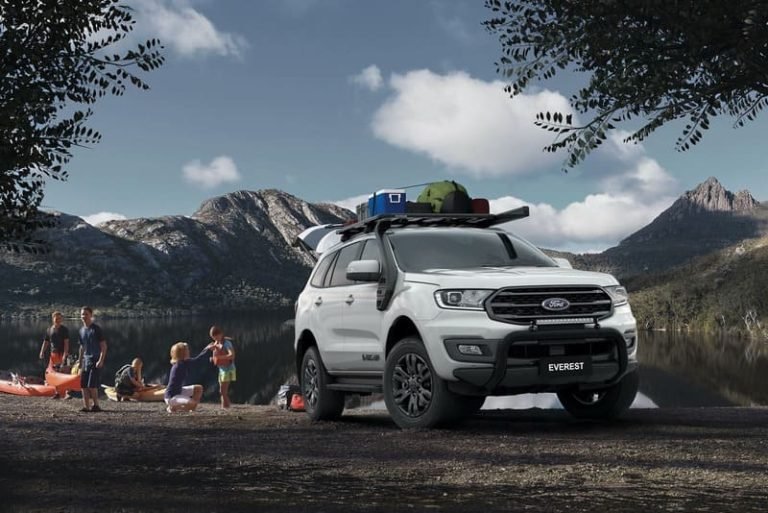
1. Plan ahead and build a suitable itinerary
Every holiday stretches on for several days, so this is exactly the time to map out a concrete plan for your trip, and to get organized on packing the essentials and making sure your car is road-ready.
Building a solid travel itinerary matters a lot for families with young kids. Pack a bit of extra cash, some medicine, and snacks for the road to keep everyone healthy and comfortable along the way.
2. Trade off driving to avoid fatigue
Sitting behind the wheel for hours on end easily leads to drowsiness and exhaustion. Long-distance driving demands not just solid driving skills but also sharp, quick thinking to handle whatever comes up on the road.
So don’t push yourself to grind through the whole trip solo. Hand the wheel over to another passenger for a while. Plenty of people plan carpools with coworkers or people from the same hometown heading the same direction, splitting driving duties so everyone gets a chance to rest — and to enjoy some time behind the wheel too.
3. Schedule rest stops along the way, and avoid stopping in isolated spots
Sitting in a car for hours easily brings on fatigue, drowsiness, and stress. Plan reasonable breaks along the route so everyone’s body can recover, and so passengers have a chance to take care of personal needs.
Stopping to rest and take in the scenery also lifts everyone’s spirits and adds to the fun. How often you stop really depends on how everyone’s feeling, but as a general rule of thumb, plan a break roughly every 25-30 miles (40-50 km).
If your car shows any signs of trouble, head to a populated area where you can get help quickly. If your car breaks down unexpectedly somewhere isolated, stay inside with the doors locked, call for roadside assistance, and stay alert in case you run into anyone suspicious.
4. Bring along a good attitude
Before hitting the road, make sure you and everyone else in the car get enough rest — don’t stay up late, and don’t overeat beforehand. It also helps to pack some gum, energy drinks, or tea for the road to keep your mind sharp.
It’s also worth giving the car a once-over before you go — ideally, get it serviced before the holiday starts, since this is when cars see the heaviest use while repair shops are often closed. A thorough pre-trip check goes a long way toward avoiding surprises on the road.
According to people with plenty of long-distance driving experience, a cheerful, upbeat, happy vibe in the car makes a huge difference in how smoothly a trip goes. Passengers shouldn’t just doze off and forget about the driver — a quiet, sluggish mood can make the person behind the wheel feel weighed down and tired too. So keep the conversation going and be ready to help each other out along the way — it makes the miles fly by.
5. Follow traffic laws and respect local customs
Sticking to traffic laws will keep your trip running smoothly and help you steer clear of bad luck like accidents, collisions, or traffic fines. And for an even smoother trip, take some time to learn about the customs of the area you’re heading to — checking out local Facebook groups for tips is a great way to blend in more easily with the people and places you’ll encounter.
Simple Ways to Remove Stains From Your Car Windows at Home
Removing car glass stains with simple household cleaners
Rainwater and car wash residue that sit on your windows for too long — or don’t get wiped off properly — tend to leave behind stubborn deposits and white streaks. On top of that, the acid in rainwater can make glass look hazy or leave unsightly stains that hurt your car’s appearance and your visibility on the road.
When that happens, you can reach for everyday household ingredients like vinegar or lemon to remove the stains and get your glass clean and clear again. This method is simple, easy to do, and cheap — though it only works well on fresh stains covering a small area.

Removing car glass stains at home with simple, easy-to-find ingredients like lemon and vinegar (Source: Collected)
White vinegar and water
The mild acidity in white vinegar works great for cutting through stains, especially the kind left behind by rainwater. Here’s how to remove glass stains using white vinegar:
- Step 1: Mix vinegar and water in a 50:50 ratio and shake well to create a uniform cleaning solution.
- Step 2: Spray the solution onto the stained area and let it sit for 1-2 minutes for better results.
- Step 3: Gently wipe the sprayed area with a damp, soft cloth.
- Step 4: Wipe the glass once more with a dry, soft cloth to remove any leftover water, solution, or residue.
Fresh lemon
The acidity in fresh lemon juice helps break down stains and grime on car glass. Here’s the process for removing stains with fresh lemon:
- Step 1: Mix lemon juice with clean water to create a uniform solution and pour it into a spray bottle.
- Step 2: Spray the solution directly onto the stain and let it sit for 2-3 minutes.
- Step 3: After that, wipe the glass clean with a soft cloth or sponge. The lemon-water mix will help lift the stains and grime off the glass.
- Step 4: Rinse the glass with clean water, then dry it once more with a soft cloth.
With just a few simple steps and ingredients you already have at home, you can effectively get rid of stains on your car’s glass.
Removing car glass stains at home with simple, easy-to-find ingredients like lemon and vinegar (Source: Collected)
Baking soda or toothpaste
Besides vinegar and lemon, baking soda or toothpaste are also good options for removing glass stains at home.
- Step 1: Prepare a mixture of vinegar and baking soda, or simply use toothpaste. Apply it directly to the stained area on the glass.
- Step 2: Gently scrub with a soft cloth, sponge, or brush to loosen the stain, then let it sit for 4-5 minutes.
- Step 3: Wipe off the baking soda or toothpaste mixture with a damp, soft cloth. Finish by wiping the glass once more with a dry cloth to remove any remaining residue.
Using dedicated glass stain and calcium deposit removers
In many cases, stains that have set in for a long time or cover a large area of glass won’t respond well to the DIY methods above. When that happens, you’ll need to turn to glass cleaning solutions or stronger cleaning agents.
The advantage of these methods is that they’re simple and quick to apply, and they deliver solid cleaning results.
Foaming glass cleaner
Cleaning your car’s glass with a foaming glass cleaner is simple, fast, and highly effective. You can easily find these products at car care stores for just a few hundred thousand dong.
When sprayed, foaming glass cleaner produces a fine foam that clings to the glass surface without dripping. Simply wipe it off with a soft cloth afterward — no rinsing needed. The fine foam breaks down stains on the glass quickly.
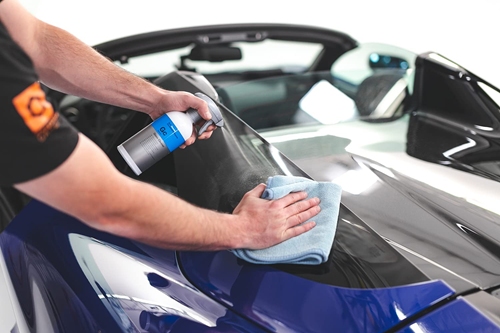
Foaming glass cleaner removes stains quickly and effectively (Source: Collected)
Strong household cleaners like Vim, Duck, or Gift
Using strong household cleaners is another common approach many car owners take. Products like Vim, Duck, and Gift are easy to find and are already sitting in most households. With their high concentration of cleaning agents and strong solvent power, these products effectively cut through stains, grime, and calcium deposits.
That said, because they’re so corrosive, these cleaners can potentially damage the glass surface. For that reason, only use strong cleaners like these when it’s truly necessary.
Melamine sponge
Melamine sponges are made from melamine-formaldehyde foam, forming a fine, slightly abrasive texture similar to natural sponge material. Using a melamine sponge makes cleaning stained glass surfaces remarkably easy.
You can pick up melamine sponges at most car care stores for just a few tens of thousands of dong, depending on size. To use one, simply wet the sponge and gently scrub the stained or dirty area on the glass — no additional cleaning products needed. Finish by rinsing the glass surface once more with clean water.
Using heavy-duty glass cleaning agents
For glass with stains that have set in over a long period, cover a large surface area, are hard to clean, or simply didn’t respond to the methods above, you can turn to cleaning products specifically formulated for cars. These solutions are made with stronger active ingredients — including bleaching agents, stabilizers, and dyes — that more thoroughly break down stubborn stains and grime on car glass.
Here’s the process for using a dedicated glass stain remover:
- Step 1: Clean the glass surface with water, then dry it with a soft cloth.
- Step 2: Apply some of the cleaning solution to a soft cloth and wipe the stained area using circular motions. Repeat until the stains are completely removed.
- Step 3: Rinse the glass with clean water.
- Step 4: Dry the glass surface with a dry cloth to avoid leaving streaks behind.
*Note: While cleaning, wear gloves and a mask to protect your skin and overall health from the cleaning chemicals.
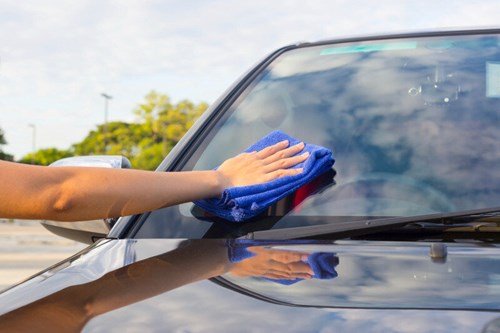
Using a dedicated cleaning product for long-set, hard-to-remove stains (Source: Collected)
Cleaning your car’s glass regularly is essential for keeping your car looking good, lasting longer, and keeping you safe on the road. Choose the method that best fits the type of stain you’re dealing with. And when needed, don’t hesitate to take your car to a trusted detailing shop to avoid accidentally damaging the glass.
You can also check out our own line of professional glass stain removers to give your windows a like-new finish.

Noma 911 Car Glass Stain Remover
What to Pack and Prep Before a Long Road Trip
What to prepare before a long road trip is always the deciding factor between a smooth, safe journey and one full of headaches. Being fully prepared doesn’t just help you avoid unexpected risks and breakdowns — it also gives you and your travel companions real peace of mind. Let’s walk through it together with Noma in the article below.
1. What to Prepare Before a Long Road Trip
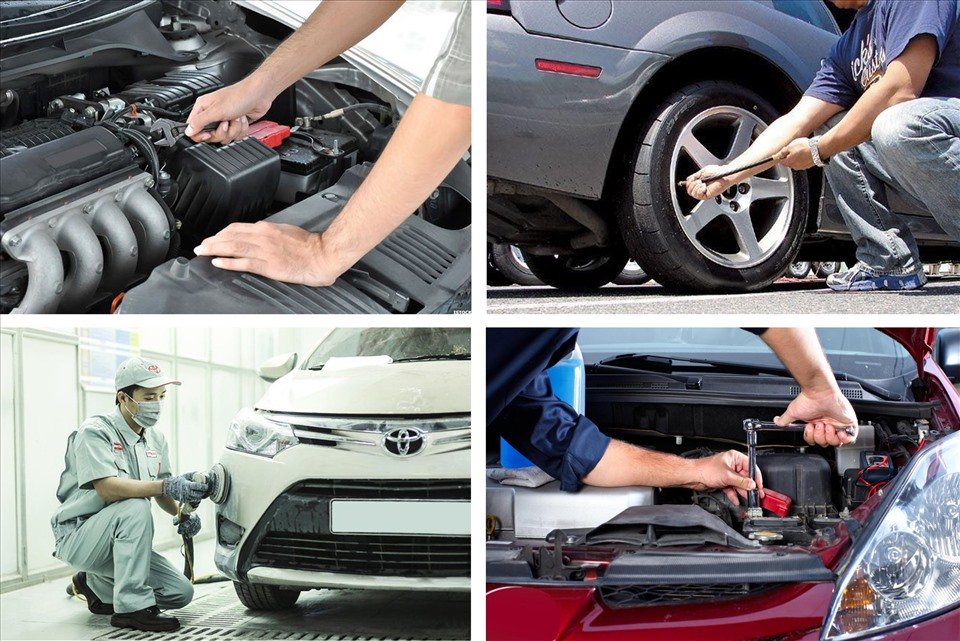
A successful road trip comes down to two things: a car that’s in top running condition, and a driver who’s prepared. Skipping basic checks can lead to trouble you didn’t see coming, turning what should be a fun getaway into an exhausting ordeal. To help you enjoy a safe, stress-free trip, the experts at Noma have put together a detailed checklist covering exactly what to prepare before hitting the road for a long drive.
2. Part 1: Your Car’s Condition — The Make-or-Break Factor for Any Trip
This is the most important part of your prep, and it’s never something to take lightly. Check your car at least 2-3 days before departure so you have enough time to fix any issues you find.
2.1. Tires
Tires are the only part of your car that actually touches the road — and they’re also behind many dangerous breakdowns.
- Check tire pressure: Inflate all tires, including the spare, to the manufacturer’s recommended pressure (usually listed on a sticker on the driver’s side door jamb). Both underinflated and overinflated tires are dangerous and waste fuel.
- Check tread wear: Look at the tread wear indicators in the grooves. If the tread has worn down flush with these markers, it’s time for new tires.
- Inspect the tire surface: Look for cracks, bulges, or any foreign objects lodged in the tire.
2.2. Brakes
- Check brake fluid: Open the hood and check the brake fluid level in the reservoir. If it’s below the “MIN” line, top it off and check for leaks.
- Feel how the brakes respond: During a test drive, pay attention to how the brakes engage — listen for squealing and feel for any vibration in the pedal. If you notice either, take the car to a shop to have the brake pads and rotors inspected.
2.3. Fluids Under the Hood
- Engine oil: Pull the dipstick, wipe it clean, reinsert it, then pull it out again to check the level. It should sit between the “MIN” and “MAX” marks.
- Coolant: Check the level in the overflow reservoir. Never open the main radiator cap while the engine is still hot.
- Windshield washer fluid: Keep the reservoir topped off so you always have a clear view of the road.
2.4. Electrical and Lighting Systems
- Battery: Check the terminals for corrosion or looseness. If your battery is more than 2-3 years old, have it tested at a shop with proper diagnostic equipment.
- Lights: Have someone stand outside the car and check every light: headlights (low and high beam), taillights, brake lights, turn signals, and fog lights.
2.5. Other Essentials
- Wiper blades: Check for hardened or worn rubber. If the wipers streak or leave water marks, replace them right away.
- Air conditioning: Turn it on and make sure it’s cooling properly.
Expert tip: If you’re not confident doing this yourself, or if your car is due for routine maintenance anyway, your best bet is to bring it to a trusted shop like Noma. We offer a [comprehensive pre-road-trip inspection] package, so every part of your car gets a thorough check from professional technicians.
3. Part 2: Essential Items for Your Trip
Once your car is in top shape, it’s time to pack the essentials.
3.1. Personal ID and Vehicle Documents
- Vehicle registration, inspection certificate, and mandatory liability insurance.
- Driver’s license and ID/passport.
- Double-check that your inspection and insurance are still valid before you leave.
3.2. Emergency Repair Kit
- Tire-change tools: A jack and lug wrench. Make sure you know exactly where they’re stored in your car.
- Mini air compressor: An incredibly handy tool to have on hand.
- Jumper cables: In case your battery dies.
- Flashlight: Essential if you run into trouble after dark.
3.3. Driving Aids
- A fully charged smartphone.
- Portable battery pack and charging cable for the car.
- Phone mount.
- Dash cam (make sure the memory card has enough free space).
3.4. Driver Health and Alertness
- Get a full night’s sleep before you set off.
- Pack some snacks, water, and gum to help you stay alert.
- Plan your route and rest stops in advance.
Final Thoughts
Answering the question of what to prepare before a long road trip with a thorough checklist is simply what a responsible driver does. Careful preparation is never wasted effort — it’s the key to a safe, enjoyable trip free of unpleasant surprises. By taking a little time to check your car’s condition and pack the right essentials, you’re giving yourself and your loved ones real peace of mind.

How Often Should You Disinfect Your Car?
Disinfecting your car doesn’t just clear out unpleasant odors — it also eliminates most of the bacteria that can put your health at risk. So how often should you actually get your car disinfected? Let’s dig into the details with CarCare SaiGon below.
1. What causes that bad smell inside your car?
Almost every driver has dealt with an unpleasant odor in their car at some point — and it’s especially noticeable on long drives.
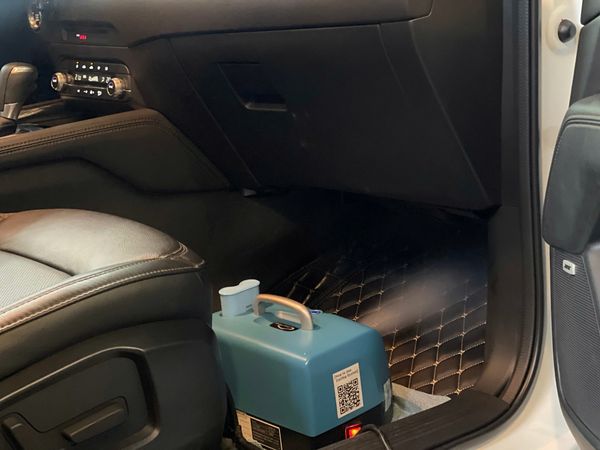
- Moisture and mold: Floor mats, leather seats, and the trunk are all prone to trapping moisture, which creates the perfect environment for mold and mildew to grow — and with it, a musty smell.
- Cigarette smoke: Nicotine and other chemicals in cigarette smoke cling stubbornly to interior surfaces, leaving behind an odor that’s notoriously hard to get rid of.
- Food and drink spills: Accidental spills are one of the most common causes of bad smells in a car.
- The AC system: When your air conditioning system goes too long without cleaning, it becomes a breeding ground for dust, bacteria, and mold — and you’ll smell it every time you turn the AC on.
- New-car smell: The smell of new plastic and leather can also be off-putting for some people, especially those with sensitivities.
2. The most effective way to get rid of the smell
2.1. Disinfecting the cabin
Odors can settle into carpets, leather seats, and every nook and cranny of your AC’s ventilation system — areas that are nearly impossible to clean 100%. Left unchecked, these spots can become long-term breeding grounds for bacteria, viruses, and other pathogens. This is where disinfection becomes the most effective solution.
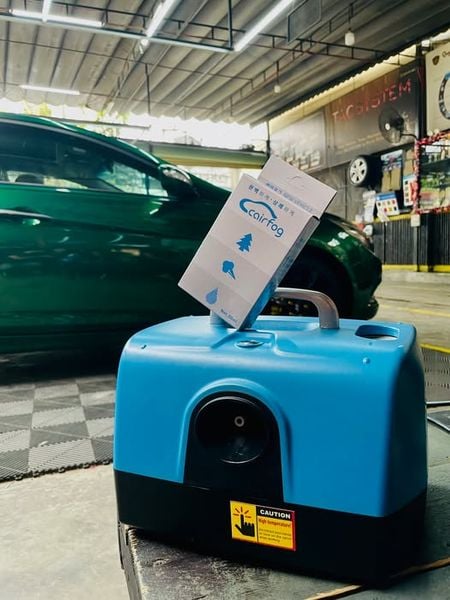
Cairfog disinfection service is an advanced sanitizing and air-purifying treatment that eliminates over 700 types of bacteria, neutralizes odors, and removes mold from interior surfaces and the air itself — all while being completely safe for occupants.
2.2. Interior cleaning
Even small items like old newspapers, used napkins, or food packaging can cause lingering odors in your car. That’s why it’s worth cleaning your interior regularly — a vacuum works great for getting into carpets and tight crevices for the best results.
3. How often should you fog and disinfect your car?
Prevention is the best strategy for keeping your ride in top shape. Experts recommend fogging and disinfecting your car every 3 to 6 months. Doing so brings several benefits:
- Fast, thorough odor elimination
- Removes up to 99% of bacteria and viruses inside the car
- Prevents mold and mildew from forming on interior surfaces
- Saves you money on cleaning and detailing costs down the line
If you’d like to get your car disinfected, reach out to CarCare Saigon through our hotline for detailed advice tailored to your needs.

Cleaning Your Engine Bay: The Secret to Better Performance and a Longer-Lasting Engine
What does cleaning the engine bay actually involve?
Cleaning your car’s engine bay means thoroughly washing the entire area that houses the engine — a space packed with sensitive electrical components, sensors, and wiring. Done right, it clears away the dust, grease, and residue that build up during everyday driving.

Why bother cleaning your engine bay regularly?
1. Better engine performance
When dust and grease cake onto engine surfaces, they interfere with heat dissipation. The result: your engine runs hotter and burns more fuel than it should.
2. Protects sensors and electrical connectors
Mud or oil residue on electrical connectors and sensors can disrupt the signals sent to your ECU, causing sluggish throttle response and reduced overall performance.
3. Extends the life of your car
A clean engine bay lowers the risk of electrical shorts and corrosion, and makes it much easier to spot early warning signs like oil leaks, coolant leaks, or worn-out parts before they become expensive repairs.
How often should you clean your engine bay?
The right frequency depends on how and where you drive:
- Dusty conditions or frequent driving on dirt roads: every 3 months
- Normal city/highway driving: every 6 months
- After heavy rain, driving through standing water, or off-roading: check and clean it right away
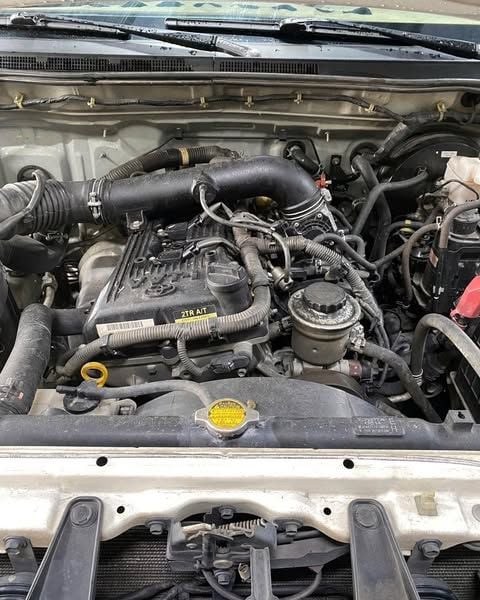
Things to keep in mind when cleaning the engine bay
- Never blast electrical components and connectors directly with a high-pressure hose
- Use purpose-made engine bay cleaning products to avoid corroding sensitive parts
- For best results and peace of mind, take your car to a trusted detailing center where the job is done correctly and safely
Professional car care services at Noma
Like any machine, a car wears down over time — parts degrade and the fluids running through its systems lose their effectiveness. Nothing lasts forever without maintenance, and this is especially true for cars, which operate continuously under demanding conditions. Keeping up with care is essential for safety and reliable performance.
– AC evaporator cleaning
– Engine bay cleaning
– Interior detailing
– Paint polishing
– Ceramic coating for paint and glass
– C-fog disinfection
– Paint correction
– Glass stain removal
Auto Industry Forecast: EV Trends Are Only Growing
Newsweek recently rounded up expert predictions on where the auto industry is headed, and the picture is one of major change. These shifts could have a direct impact on the auto repair trade here at home in the years ahead. If you’re studying or pursuing a career in automotive repair, this is worth paying attention to. Let’s break down what the experts are forecasting.
1. New car prices are set to climb sharply
New car prices are rising fast, driven by strong demand and climbing production costs.
Demand for new vehicles has stayed strong through 2024–2025, even as inventory remains tight — which means dealers have less reason to discount, and manufacturers get to hold onto healthier margins.
Production costs keep climbing too, from raw materials (lithium batteries, chassis components) to labor and logistics, all of which push sticker prices higher.
The budget end of the market is shrinking: only 20% of total 2023 sales were vehicles under $20,000, while the average new-car price hit $32,000 in 2024 and is expected to keep climbing through 2025.

Auto industry trends for 2025: new vehicle prices are climbing sharply.
New technology is reshaping how cars are priced: EVs, hybrids, AI, self-driving features, and the software-defined vehicle (SDV) model are all pushing up the total cost of ownership — not just the sticker price, but ongoing costs like software subscriptions and feature unlocks.
Consumers should expect higher prices in 2025, especially for EVs and tech-heavy models. If you’re planning to buy, it’s worth thinking carefully about your budget and timing.
2. The vehicle customization market keeps growing
The “Vehicle Customization Market” is basically just what it sounds like: building cars to match what customers actually want. Manufacturers assemble vehicles to spec, then finish and ship them straight to the buyer.
This market is already on a strong growth trajectory and is projected to explode from 2025 onward, reaching an estimated $8.5 billion by 2028.
- Since 2022, demand for personalized vehicles has surged, especially around EVs like the Ford Lightning, GM’s Hummer EV, and other mainstream electric models.
- From 2025 onward, the market will accelerate further thanks to AI, IoT, software-defined vehicles (SDVs), and expanded aftermarket services.
- Customization isn’t just about exterior looks or engine mods anymore — it now covers software upgrades, digital interfaces, and smart services, sparking a whole new wave in the auto industry.
- Partnerships between manufacturers and aftermarket service providers will speed things up further, with more factory-backed customization packages hitting the market.
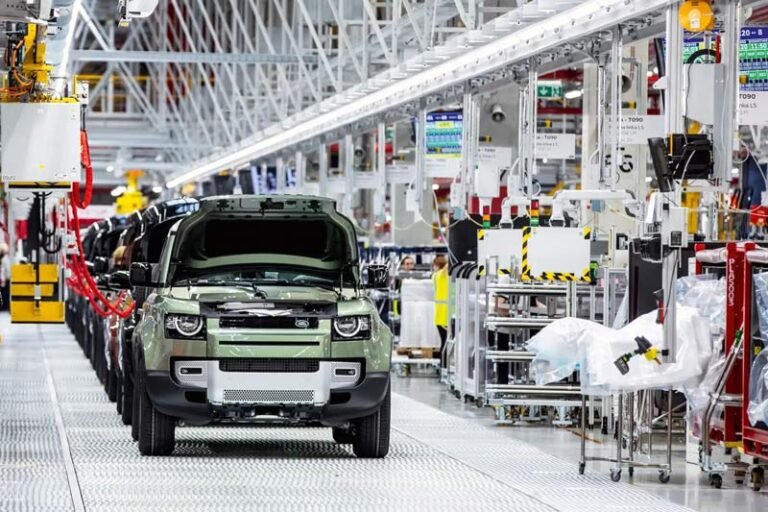
The global vehicle customization market is projected to reach $8.5 billion by 2028.
Entrapeer’s forecast on auto industry growth checks out — but the real boom will hit from 2025 onward, once EV technology, AI, and software-defined vehicles become the new standard.
3. Demand for EVs will keep climbing
From 2025 onward, EV demand will keep accelerating, fueled by global emissions policy, advancing technology, and shifting consumer habits. Automakers are being forced to expand their EV lineups to meet both market demand and tightening emissions standards.
Even though the industry is still wrestling with supply chain headaches, tight inventory, and high production costs, government incentives and ongoing tech improvements are making EVs more appealing than ever.
EV technology keeps maturing too — better performance, smarter software, and over-the-air updates are closing the gap with traditional gas cars. Vietnam’s VinFast, for example, is leading the charge on EV adoption locally, with models like the VF3 poised to reshape the green vehicle market.

Demand for electric vehicles will keep growing in the years ahead.
EVs are no longer a passing trend — they’re becoming the inevitable future of the global auto industry.
4. The hybrid market will grow fast
Starting in 2025, the hybrid market will keep growing worldwide, becoming the go-to choice for consumers thanks to fuel savings, lower emissions, and compatibility with existing infrastructure.

Hybrid sales jumped more than 40% in 2023, hitting 10 million units, and double-digit growth is expected to continue through 2025. In Vietnam, hybrid market share is expanding too — sales doubled in 2023, and hybrids are projected to account for 15–20% of total passenger car sales by 2025.
Major automakers like Toyota, Honda, Hyundai, and Kia are investing heavily in hybrids, giving buyers more options while meeting stricter emissions standards. Even as EVs grow fast, hybrids remain a crucial bridge technology, especially in regions without solid charging infrastructure yet — think Southeast Asia, Latin America, and parts of the US.
You might also like: The Vietnamese Auto Market — From Its Beginnings to Today
5. Sports cars and new sedans will draw less interest
Sports cars and sedans will keep losing ground to SUVs and pickups starting in 2025, which already account for 81% of global sales thanks to their sheer practicality. That said, sedans aren’t disappearing — they’re shifting toward hybrid and electric powertrains, with models like the Toyota Camry Hybrid, Honda Accord Hybrid, and BMW 5 Series still pulling in buyers.

The industry’s overall direction is pushing sports cars to evolve with hybrid and electric tech, as Porsche, Ferrari, Bugatti, and McLaren all focus on high-performance models that are more environmentally friendly. Asia remains a key sedan market, and while sedans and sports cars aren’t the priority they once were, both will stick around thanks to electrification and modern tech.
Even though they’re not top priority anymore, sedans and sports cars will keep their place in the market thanks to electrification and ongoing tech upgrades.
6. Demand for classic sports cars is rising
From 2025 onward, demand for classic sports cars is climbing fast — not just for the collector value, but as a genuinely attractive investment. As modern sports cars get phased out in favor of EVs and hybrids, 1990s–2000s icons like the Ferrari F355, Porsche 911 (996), Honda NSX, and Toyota Supra Mk4 are only getting more expensive as supply shrinks.
Classic car enthusiasts are willing to pay big money for legendary models, and it shows — auctions keep setting new records for names like the Porsche Speedster, Ferrari Dino, and Jaguar E-Type. Younger buyers are fueling the trend too, particularly JDM culture fans and those drawn to classic European sports cars.

Classic sports cars aren’t just a hobby anymore — they’re becoming a genuinely valuable investment, with values only expected to climb over time.
7. Utility vehicles will keep gaining market share
Utility vehicles (SUVs, crossovers, pickups) are steadily replacing sedans as consumer priorities shift toward more space, better performance, and greater versatility. Automakers are scaling back or discontinuing sedans altogether to focus on the utility segment, which delivers better margins and matches where the market is heading.
In Vietnam, SUVs and pickups keep gaining popularity, with new models rolling out from Toyota, Hyundai, Kia, and VinFast. Utility vehicles are expected to keep expanding their market share, becoming the dominant choice in the auto market going forward.

8. Trucks, cars, and SUVs will get more features

Starting in 2025, the semiconductor shortage is no longer the crisis it once was, freeing automakers to add more tech and modern features instead of cutting them. Systems like driver-assist (ADAS), IoT connectivity, augmented reality (AR) displays, and electrification tech will all get baked in more aggressively.
EVs and hybrids will keep evolving too, packed with new tech for a better overall experience. Instead of the feature-cutting we saw between 2020 and 2023, from 2025 onward cars, SUVs, and trucks are getting a full upgrade.
9. Used cars won’t depreciate as fast as before
From 2025 onward, depreciation on used vehicles will slow down, especially for trucks, SUVs, and hybrids, thanks to strong demand and solid fuel economy. Used EVs, on the other hand, will keep depreciating faster, since ongoing battery tech improvements make older models look less appealing by comparison.
While used car prices won’t keep climbing the way they did between 2020 and 2023, they’ll still hold their value better than in the past, thanks to a more stable market and continued strong demand.

We hope this rundown helps you get a feel for where the auto industry is headed. If you’re passionate about cars or curious about automotive training programs, reach out to us using the contact details below for a detailed consultation!