
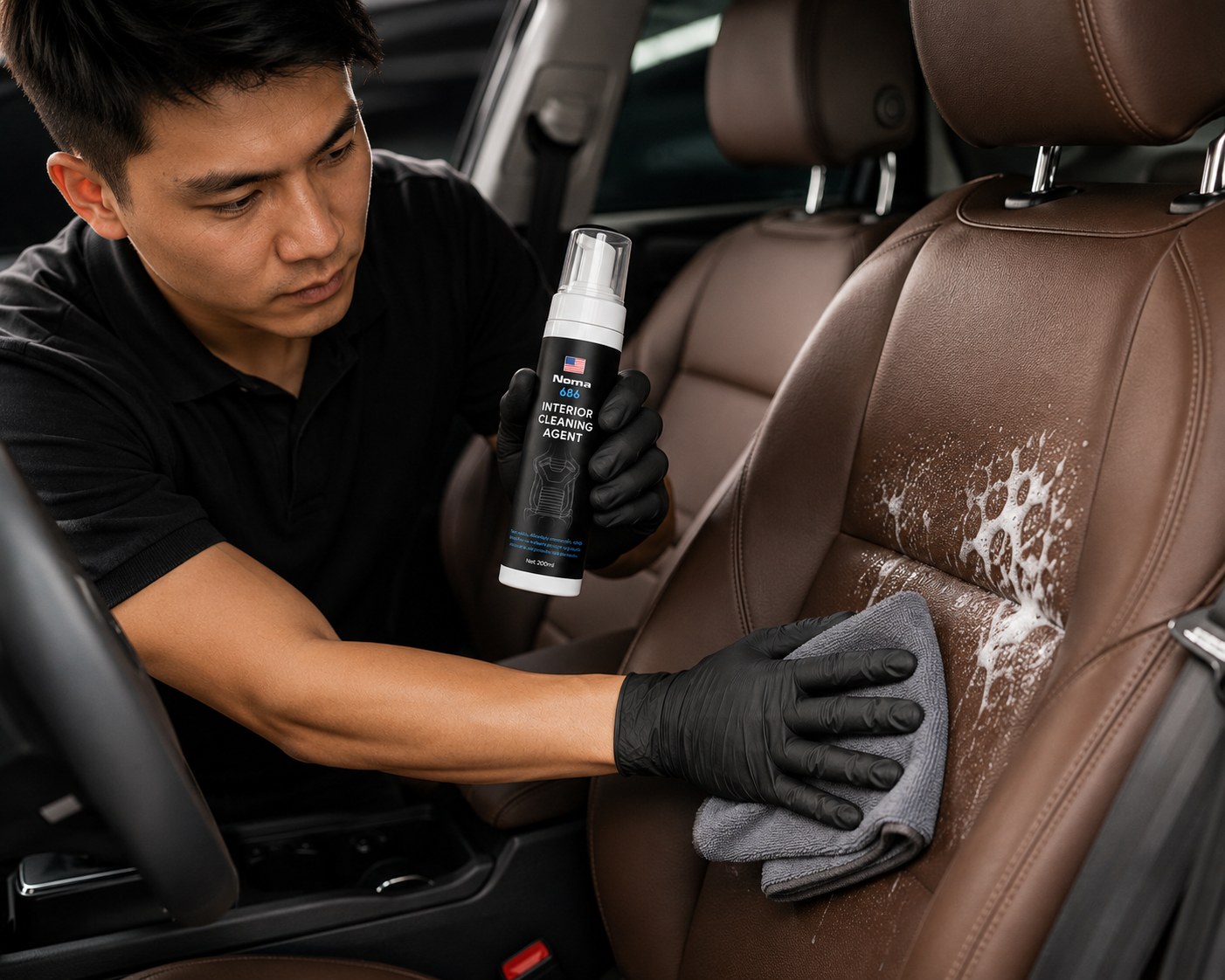
Professional Leather Car Seat Cleaning — A Step-by-Step Process

Professional Leather Car Seat Cleaning — A Step-by-Step Process
Leather seats are a real highlight of any car’s interior, but they’re also prone to dirt, fading, and cracking without the right care. Cleaning your leather car seats properly extends the life of the leather, keeps that upscale look intact, and helps protect your car’s resale value. A professional leather seat cleaning process comes down to four main steps: prep, cleaning, conditioning, and ongoing maintenance.
According to industry reports on vehicle interior condition, more than 70% of car owners don’t know how to properly clean leather car seats, which leads to premature wear and damage. With a product like NOMA 686 — a dedicated leather seat cleaning & conditioning kit — you can follow a professional detailing process at home without a trip to the shop.
Prepping and Assessing Your Leather Seats Before Cleaning
Prep is the step that determines how well the rest of the cleaning process goes. Start by checking the current condition of the seats carefully: is there dust and grime, mold, oil stains, or stubborn dirt buildup?
If the seats are heavily soiled, vacuum them first with a strong vacuum to remove dust, crumbs, and loose particles. Pay close attention to the tight gaps along the seams.
Set up your workspace inside the car — open the doors for airflow and avoid direct sunlight, since UV rays dry out leather. Gather clean microfiber cloths, a dedicated soft brush, and your main product, NOMA 686 — a leather cleaning & conditioning kit that includes both a cleaning solution and a conditioning cream.
A spray bottle of clean water also comes in handy for an initial rinse. The ideal water temperature is around 77–86°F (25–30°C) — avoid water that’s too hot, since it damages the leather’s natural protective finish.
The Right Way to Clean Your Leather Car Seats
Cleaning is the most important step in the process — this is where you remove built-up grime, oils, and dead skin cells that accumulate over time.
Step 1: Mix a cleaning solution using NOMA 686 according to the bottle’s instructions (typically diluted 1:5 or 1:10 with water, depending on how dirty the seats are). This is a gentle foaming formula that won’t damage leather the way harsh cleaners can.
Step 2: Apply the solution to one section of the seat at a time, then use a soft brush — not too stiff, to avoid scratching the leather — and gently scrub from top to bottom. Give stubborn stains extra time, but keep your touch light.
Step 3: Once you’ve finished scrubbing, use a damp (not soaking wet) microfiber cloth to wipe away the foam. Wipe gently in one direction — going back and forth pushes dirt deeper into the leather’s pores.
Step 4: Repeat the process for the remaining sections of the seat. If the seats are especially dirty, you can run through the cleaning steps twice.
Finally, use a clean, dry towel to blot the leather completely dry. Don’t move on to conditioning while the seat is still damp — it reduces how well the conditioning cream absorbs.
Conditioning and Restoring Softness to Your Leather Seats
Conditioning is what keeps your leather car seats soft, glossy, and protected against UV rays and shifting humidity.
NOMA 686 includes a dedicated leather conditioning cream formulated with moisturizing and protective ingredients. Start by taking a small amount of cream on your fingertip — not too much, or the leather will feel greasy — and spreading it evenly across the seat surface.
Use your fingers or a soft foam applicator to work it in with small circular motions until the cream fully absorbs. It typically takes 5–10 minutes to fully soak in, depending on how dry the leather is.
Pay extra attention to tight seams and folds in the seat — these areas dry out fastest, so they need more thorough conditioning. Avoid over-applying cream to any one spot, since that creates uneven patches.
Once you’re done conditioning, let the seat air-dry naturally for about 30 minutes before sitting on it or closing the car doors. It’s best to condition in the evening or overnight so the cream has enough time to fully absorb.
Ongoing Maintenance: Caring for Your Leather Seats Every Week
Regular upkeep is what keeps your leather seats soft and glossy over the long haul. You don’t need to run the full cleaning process every week — instead, stick to small weekly tasks.
Weekly: Lightly vacuum the entire seat and wipe it dry with a microfiber cloth. For small spots, dampen a cloth with a bit of diluted cleaning solution (weaker than your full cleaning mix) and spot-clean.
Monthly (every 4 weeks): Do a light conditioning pass — just work NOMA 686‘s conditioning cream into any dry spots without doing a full clean. This helps maintain moisture and shine.
Quarterly (every 3 months): Run the full leather seat cleaning process described above — complete cleaning and conditioning. This is the ideal maintenance cycle for leather seats, especially in hot, humid climates with strong UV exposure.
During humid or rainy stretches, add an extra maintenance session mid-quarter, since higher humidity speeds up mold growth. Always leave the car doors open for 10–15 minutes after each cleaning session to air out any leftover moisture.
For more on caring for the rest of your interior, check out our multi-purpose interior cleaning guide.
Comparing Leather Car Seat Cleaning Methods
| Criteria | At-Home Cleaning with NOMA 686 | Cold Water + Soap | Professional Detail Shop | No Cleaning |
|---|---|---|---|---|
| Cost | Affordable per quarter | Cheapest per session, but far less effective | Highest cost per visit | $0 — but leather deteriorates |
| Time | 45–60 min for the whole car | 20–30 min | 2–3 hrs plus travel time | — |
| Cleanliness | 95% (removes deep grime) | 60% (surface only) | 99% (professional equipment) | 0% |
| Post-Clean Protection | Yes (dedicated conditioning cream) | No (leather dries out) | Yes (full protection) | No |
| Convenience | High (done at home) | High | Low (requires an appointment) | — |
| Leather Safety | High (gentle formula) | Medium | High | Low (leather deteriorates) |
Cleaning your leather car seats at home with NOMA 686 delivers the best results in terms of cost, convenience, and long-term leather protection. You stay in control of the quality, you can redo any spot you’re not happy with, and you build up skill that makes every session better than the last.
Common Mistakes to Avoid When Cleaning Leather Car Seats
Mistake 1: Using water that’s too hot or too cold. Hot water damages the leather’s protective finish, while very cold water stiffens the leather and makes it harder for conditioner to absorb.
Mistake 2: Using a brush that’s too stiff or scrubbing too hard. A lot of people assume harder scrubbing means cleaner results, but in reality it scratches the leather’s surface, and those scratches attract more dirt over time.
Mistake 3: Not rinsing off all the cleaning foam. Leftover foam residue dries the leather out and can lead to cracking within a few days.
Mistake 4: Using too much conditioning cream. The leather ends up greasy, dulled, and prone to attracting dust. Rule of thumb: a pea-sized amount of cream is enough for one seat.
Mistake 5: Cleaning repeatedly without letting the seat fully dry in between. If you’re doing two cleaning passes in one day, let the seat air-dry naturally — at least 1 hour — before starting the second pass.
Frequently Asked Questions About Leather Car Seat Cleaning
How often should I clean my leather car seats?
You should do a full seat cleaning once per quarter (every 3 months). If your seats get dirty often or you’re in a dusty environment, you can bump that up to twice per quarter. Weekly upkeep just needs vacuuming and a wipe-down with a microfiber cloth. Using NOMA 686 ensures your seats get thoroughly cleaned and properly conditioned.
My leather seats feel damp and smell musty — what should I do?
That’s a sign of mold. Clean the seats right away with a stronger cleaning solution (higher concentration) and leave the car doors open for 30–45 minutes to air out. If the smell persists, try spraying an odor eliminator on the seats or leaving activated charcoal in the car overnight. To prevent it from coming back, always air out the car after every cleaning session.
My leather seats are cracking in patches — can they be saved?
If the cracking is minor (just a slight sheen loss on the surface), thorough cleaning plus conditioning will improve it. But if the cracking is extensive or the leather is tearing, you’ll need professional leather restoration or reupholstering — that’s shop-level work. Prevention is the better strategy: clean and condition your leather seats on a regular schedule.
Can I use the same routine I’d use on my home sofa?
No. Leather car seats deal with high heat, UV exposure, and constantly shifting humidity — completely different conditions from an indoor sofa. Sofa conditioners may not be compatible with automotive leather and can leave it dull or greasy. Stick with a dedicated product like NOMA 686 for safe, effective results.
Should I clean my leather seats before or after washing the car?
Wash the car first (to rinse off dust and road salt), then let it dry completely before cleaning the leather seats. If the seats are still damp from rain or a car wash, the conditioning cream won’t bond well and will just get wiped away.
Why use NOMA 686 instead of another leather seat cleaner?
NOMA 686 is a complete leather cleaning & conditioning kit — both the cleaning solution and the conditioning cream are formulated to professional detailing standards. It’s built specifically for automotive leather, easy to use, gentle on leather, reasonably priced, and delivers longer-lasting results than generic products.
Conclusion
Professional leather car seat cleaning isn’t complicated once you understand the process: prep, clean, condition, and maintain on a regular schedule. With NOMA 686 — a dedicated leather seat cleaning & conditioning kit — you can run a shop-quality car care routine right at home, save on detailing costs, and keep your leather seats looking their best.
Start with one full cleaning session this quarter, then keep up with weekly and monthly maintenance. After 6 months, you’ll notice seats that are glossier and softer, and a car that holds its value better. Try this process today — professional-level leather care that anyone can do at home.
Sources
- Industry reports on vehicle interior condition
Related Reading
- Multi-purpose interior cleaning guide