


How to Use NOMA 130 – Lubricant for Car Windows and Rubber Seals

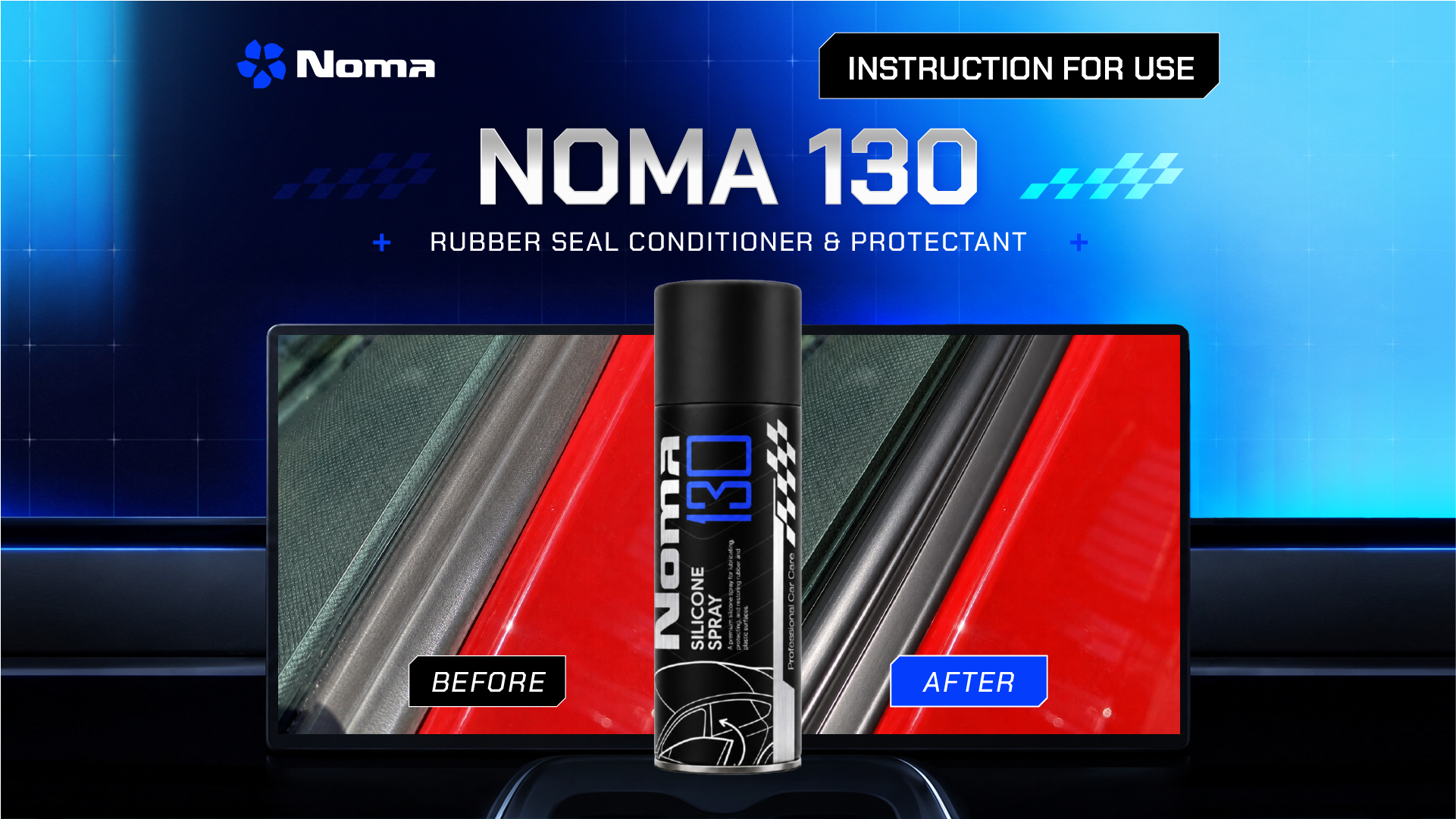
Over time, the rubber seals on your car’s doors, trunk, and windows can dry out, lose their elasticity, and start squeaking every time you open or close them. Without regular maintenance, those seals age faster, crack, and gradually lose their ability to keep water out. NOMA 130 is a specialized rubber seal conditioner that softens, protects, and extends the life of your seals, while cutting down on squeaks and helping resist moisture buildup.
Mục lục
Read on to find out exactly how to use this product the right way!
PRODUCT OVERVIEW
NOMA 130 is a specialized formula that conditions and restores elasticity to your car’s rubber seals. Its Silicone Oil formula forms a thin protective film that keeps seals soft, resists drying and cracking, and reduces friction every time you open or close a door. It works great on door seals, window seals, trunk seals, roof seals, and other rubber or plastic trim around the car.
WHAT PROBLEMS DOES NOMA 130 SOLVE?
NOMA 130 helps with the following:
- Softens rubber seals and restores their elasticity.
- Helps prevent seals from drying out, cracking, and aging.
- Reduces squeaking when opening or closing doors.
- Helps resist moisture buildup and protects seals from the elements.
- Keeps seals looking clean and lasting longer.
WHY DO SO MANY CAR OWNERS CHOOSE NOMA 130 RUBBER SEAL CONDITIONER?
- Specialized Silicone Oil formula: Penetrates the seal’s surface to keep it soft and flexible for longer.
- Long-lasting protection: Forms a protective film that helps shield against UV rays, moisture, and aging.
- No mineral oil: Doesn’t leave a greasy residue, so it stays cleaner and attracts less dust when used correctly.
- Easy to use: A few simple steps are all it takes to condition your rubber seals right at home.
QUICK-START GUIDE
- Clean and dry the rubber seal.
- Shake the bottle well before use.
- Spray evenly over the surface from about 10–15 cm (4–6 in) away.
- Wait 2–3 minutes for the solution to absorb.
- Wipe gently with a clean cloth and let it air dry.
DETAILED APPLICATION INSTRUCTIONS
For the best results, follow these steps:
- Step 1 – Clean: Wipe dust and dirt off the rubber seal and let the surface dry completely.
- Step 2 – Prep: Shake the NOMA 130 bottle well, and attach the extension nozzle if you need to reach tight gaps.
- Step 3 – Spray the solution: Apply an even, thin layer over the rubber seal from about 10–15 cm (4–6 in) away.
- Step 4 – Let it absorb: Give the solution 2–3 minutes to soak in.
- Step 5 – Finish up: Wipe gently with a clean cloth, then open and close the door a few times to help the solution spread evenly across the whole seal.
A FEW TIPS FOR BETTER RESULTS
To get the most out of this product, keep these tips in mind:
- Use only on rubber surfaces (seals, gaskets). DO NOT use on car paint.
- Mask off the paint around the seal while spraying to keep the solution off of it.
- If any solution gets on the paint, wipe it off right away with a dry, clean cloth.
- Don’t spray onto a dirty seal — clean and dry it first.
- Don’t overspray, as pooling underneath the seal can leave it sticky.
- After conditioning, remember to open and close the door several times so the solution spreads evenly.
- For seals with deep cracks: NOMA 130 only softens the rubber — it can’t repair physical damage. Cracked seals need to be replaced.
SAFETY PRECAUTIONS
While using this product, NOMA recommends the following:
- Use in a well-ventilated area.
- Avoid inhaling the spray directly.
- Avoid contact with eyes and skin.
- Do not use near heat sources or open flames.
- Do not smoke while using this product.
- Keep out of reach of children.
STORAGE GUIDELINES
- Store in a cool, dry place.
- Avoid direct sunlight and heat sources.
- Close the cap tightly after use.
- Do not store in high-temperature environments.
FREQUENTLY ASKED QUESTIONS
Q: How often should I condition my rubber seals?
A: About every 3–6 months. If your car is regularly parked outdoors or exposed to harsh weather, you may want to condition more often.
Q: Can NOMA 130 be used on door hinges?
A: No. This product is designed specifically for rubber seals. For metal hinges, use a dedicated lubricant such as NOMA 110.
Q: Will it repair a cracked seal?
A: No. NOMA 130 softens and conditions seals that are still intact — it can’t repair a seal that’s already cracked or torn.
Q: What if I accidentally spray some onto the paint?
A: It won’t damage the paint, but you should wipe it off right away to avoid leaving a glossy streak on the surface.
Q: Will it make the seal attract more dust?
A: No. As long as you use the right amount and wipe away any excess, the seal’s surface won’t attract extra dust.
old coating, creating a clean surface so the nano coating bonds well and performs at its best.
WARRANTY POLICY
We offer a 1-to-1 replacement within 7 days if the product arrives damaged or broken during shipping. Please inspect your order as soon as it arrives so we can assist you promptly.
TECHNICAL SUPPORT & CONTACT
We hope this guide makes it easy to condition your rubber seals at home. If you run into any issues or need more product advice, feel free to reach out to us through:
Hotline: 1900 638990
Address:
- Location 1 – Hanoi: 38B Trieu Viet Vuong, Hai Ba Trung District, Hanoi
- Location 2 – Ho Chi Minh City: No. 22, Street 12, City Land Urban Area, Ward 10, Go Vap District